 IITA – Bénin Campus, 08 BP 0932 Tri Postal, Cotonou – République du Bénin
 @Taat_Africa
 TAAT Africa
 @taatafrica
TAAT: AfDB’s proven catalyst for scaling innovations to feed Africa
Climate change, population growth, and shifting consumption patterns are shaping the global food landscape, making the development of resilient food systems more critical than ever for sustainable agricultural transformation.
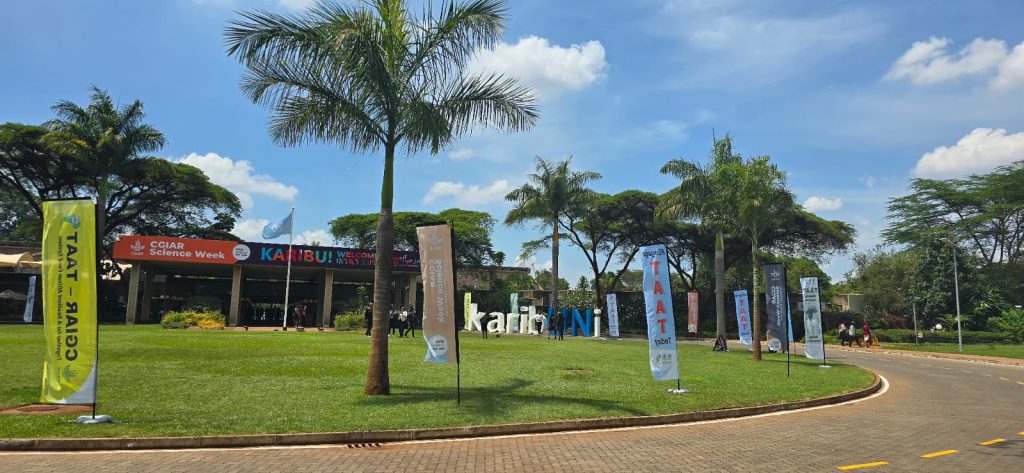
A multi-faceted approach to food system resilience, combining insights from key research and development institutions, was recently presented in Nairobi, Kenya, during the CGIAR Science Week, held from April 7th to 12th, 2025.
An opening session during the week showcased scaling pathways for Consultative Group on International Agricultural Research (CGIAR) innovations, emphasizing the role of strategic partnerships, including the Technologies for African Agricultural Transformation (TAAT) programme, with an emphasis on aligning CGIAR’s research agenda with Africa’s policy frameworks, notably the CAADP-Kampala Targets and Abidjan II Action Plan, ensuring that agricultural innovations reach the farmers and stakeholders who need them most.
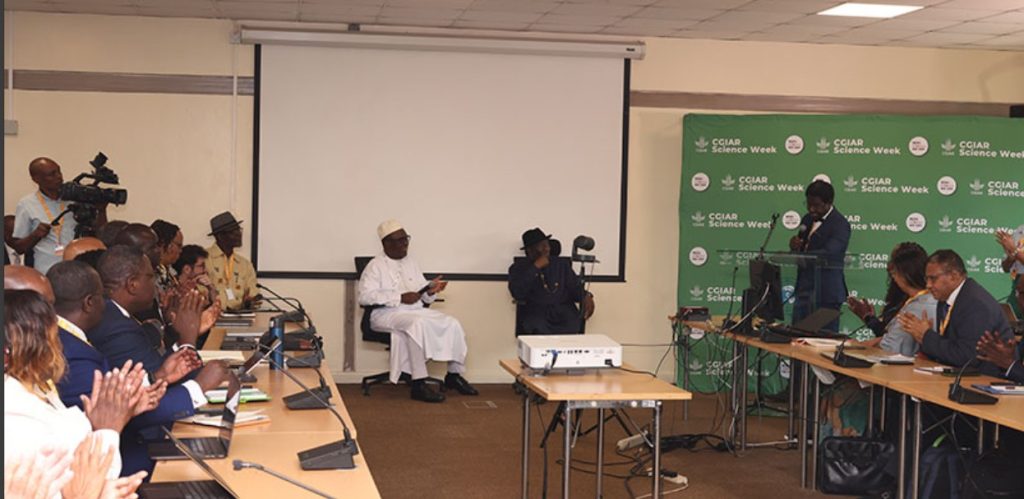
The CGIAR Science Week in Nairobi, Kenya, featured a critical session dissecting the power of research partnerships to achieve agricultural transformation at scale across Africa.
The session, which held on the 7th of April 2025 at the United Nations Campus in Nairobi, Kenya, had in attendance Dr Goodluck Ebele Jonathan
former President of Nigeria and Dr Simeon Ehui, CGIAR Regional Director for Africa and Director General of the International Institute of Tropical Agriculture.
Dr Jonathan, in his keynote remarks, highlighted the centrality of research and partnerships in efforts to achieve food systems transformation in Africa.
“I would like to identify the African Development Bank’s Technologies for African Agricultural Transformation (TAAT) programme as a laudable effort in this regard for its effective deployment of partnerships and innovations, which ensure its tangible success in scaling vital agricultural technologies across Africa,” Dr Jonathan said.
Other experts at the session, including Dr Aggrey Agumya, Executive Director, Forum for Agricultural Research in Africa (FARA), and Dr Solomon Gizaw, Head of TAAT Clearinghouse, made presentations on the imperatives of Strengthening CGIAR Engagement with African Agricultural Research, Innovation and Education Institutions (AARIEIs) in Research and Scaling, CGIAR-AARIEIs Collaboration and Engagement framework in Alignment with CAADP, TAAT: CGIAR’s Pathway to Transforming African Agriculture, and Scaling CGIAR technologies and leveraging large-scale investments from IFIs: Lessons from TAAT.
A panel discussion on “Addressing Partnership Experience in Research, Innovation, and Scaling – Institutional Perspectives” ensued. The panel convened experts from across the agricultural spectrum, including CGIAR, African research institutions, development partners, and the private sector.
They include Prof. Appolinaire Djikeng, Director General at International Livestock Research Institute (ILRI), Dr Olufunke Cofie, Africa Regional Director at International Water Management Institute (IWMI), Dr Silim Nahdy, Executive Director at African Forum for Agricultural Advisory Services (AFAAS), Dr Moumini Savadogo, Executive Director of West and Central African Council for Agricultural Research and Development (CORAF), and Prof. Patrick Okori, Regional Universities Forum for Capacity Building in Agriculture (RUFORUM) Executive Director.
converged on the imperative of strategic alliances for sustainable progress.
TAAT: An extensive ecosystem of partners
The session underscored that impactful agricultural transformation is inherently a collaborative endeavour. TAAT, according to the panellists, exemplifies this through its design, actively forging partnerships with CGIAR centres, National Agricultural Research Systems (NARS), and the African Development Bank.
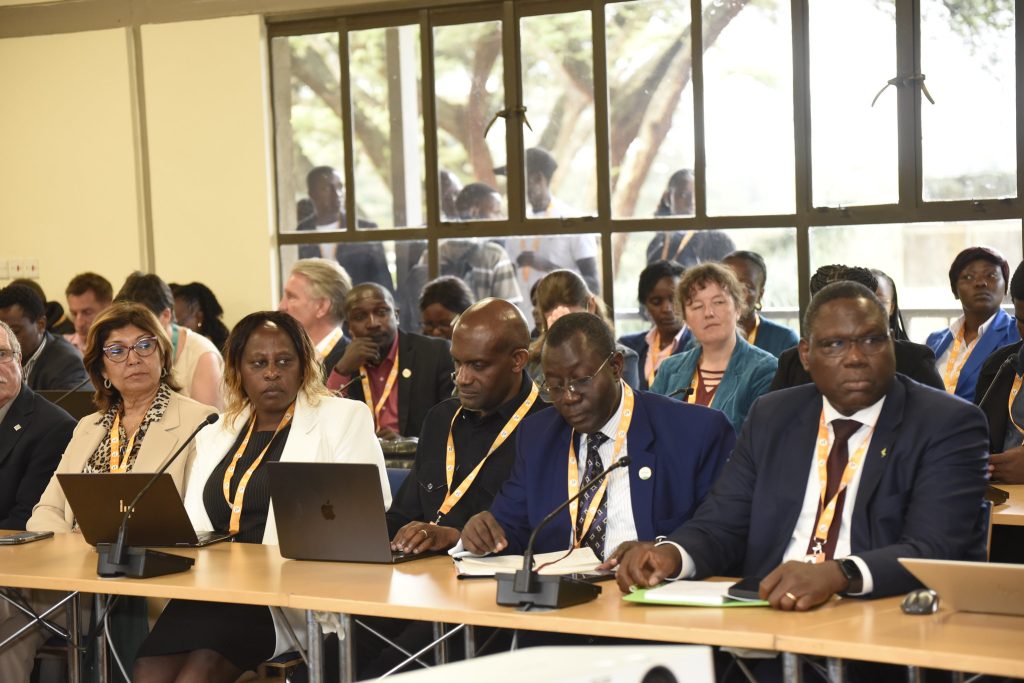
The emphasis on a robust engagement framework between CGIAR and the African Agricultural Research, Innovation & Education Institutions (AARIEI) directly benefits TAAT’s ability to function as a cohesive and efficient platform for technology delivery.
Established since 2018 and currently being implemented in over 31 African countries as a central pillar of the African Development Bank (AfDB) Feed Africa strategy, TAAT deploys over 177 selected, proven, and high-performance agricultural technologies in collaboration with about 300 public and private partners, including the donor organisations, CGIAR, National Agricultural Research Systems, seed companies, farmers’ cooperatives and not-for-profit organisations.
Through its commitment to delivering high-quality seeds, breeds, and fingerlings to beneficiaries, TAAT has facilitated the dissemination of seeds to 19 million smallholder farmers. The programme has provided 11 million farmers in 28 countries with climate-smart seeds, fertilisers, and technical support – helping African food production increase by more than 12 million metric tonnes.
TAAT acquires cutting-edge technologies from developers and agricultural research institutions, including those led by the CGIAR, for several agricultural value chains, encompassing crops, livestock, and fisheries. It vets these technologies for scaling readiness and integrates them into its electronic technology catalogue called the TAAT e-catalogs.
The TAAT programme engages governments and international financial institutions (IFIs) to integrate proven technologies into their large-scale agricultural investment programmes and partners with the private sector to commercialise them.
Through its African Cereal and Legume Breeding Consortium (ACLBC), a TAAT initiative in collaboration with the African Seed Trade Associations (AFSTA), is scaling the adoption of elite varieties/hybrids by seed companies through a well-defined protocol to facilitate farmers’ access.
TAAT: A Commitment to Deep and Meaningful Adoption
The session went beyond mere dissemination, emphasising the importance of “scaling deep” – ensuring that technologies are effectively adopted and sustainably integrated into farming practices. TAAT recognises that effective communication and understanding local contexts are paramount.
Dr Emmanuel Njukwe from CORAF articulated this, noting that while “scaling out is what we’re doing regularly,” the real challenge lies in “scaling deep…What are the perceptions of the people, the habits of the people?” This highlights TAAT’s need for nuanced engagement strategies.
TAAT: Leveraging African Institutional Capacity
The strategic role of African agricultural institutions is integral to TAAT’s operational success and long-term sustainability. Panellists and participants at the session agreed that by partnering with National Agricultural Research Systems (NARS), universities within the RUFORUM network, and regional bodies like FARA and CORAF, TAAT ensures that technologies are adapted to diverse African conditions and that local expertise drives the transformation process.
Professor Patrick Okori, Executive Secretary of RUFORUM, affirmed the significance of this collaboration, stating, “…it’s one of the first times in my short life that I’ve seen the high agricultural education ecosystem actors brought to discuss, together with research and development actors, how to make agriculture work for this continent.”
TAAT: Harnessing Innovation for Future Impact
The transformative power of data, digitalisation, and youth engagement for agricultural modernisation was a recurring theme. TAAT, according to panellists, is strategically positioned to capitalise on these trends to enhance its efficiency and reach. Dr Selim Nadi, Executive Director of AFAAS, emphasised the need for using tools and applications, such as digital ones. “We have to adapt ourselves to what the youth want,” he said. This accentuates TAAT’s extensive work connecting with the next generation of agricultural actors through its ENABLE TAAT platform.
TAAT as a Driving Force for African Agricultural Transformation
The CGIAR Science Week session unequivocally highlighted the critical role of strategic partnerships and effective scaling mechanisms in achieving agricultural transformation. “The TAAT programme embodies these principles in a powerful way in Africa,” Innocent Musabyimana, Chief Agricultural Technologies at the African Development Bank, said.
“Through its commitment to collaboration, its proven ability to scale impactful technologies, and its focus on deep and sustainable adoption, TAAT is a central driving force towards a food-secure and prosperous future for the continent,” he added.
Recent Stories

Related Stories
- How ACLBC is Catalysing the Adoption of New Climate-smart Seed Varieties
- TAAT Illuminates Innovation Pathway at Kilimo Biashara Expo as National Soybean Campaign begins
- Kenya: TAAT holds ToT Workshop on Soybean Agronomy, Seed Production and Entrepreneurship
- TAAT Expands Toothpick Technology for Striga Biocontrol to Uganda and Beyond
- South Sudan: TAAT strengthens the varietal release system