 IITA – Bénin Campus, 08 BP 0932 Tri Postal, Cotonou – République du Bénin
 @Taat_Africa
 TAAT Africa
 @taatafrica
CAMEROON: TAAT targets self-sufficiency in Rice
Between 2008 and 2018, increases in rice yields from 2.17 tons per hectare (t/ha) to 2.36 t/ha were registered in Africa’s West and Central (WCA) regions. This was accompanied by an increase in rice area of 53% and 37% in WCA, respectively. Between 2018 and 2023, the data suggested continued variability, influenced by climate change, the COVID-19 pandemic, and the war in Ukraine.
These events led to price hikes in food and farm inputs, fertilisers, and pesticides. Paddy production has tremendously increased, but milled rice consumption has greatly surpassed production due to population demographics, such as growth and concentration in cities where rice serves as a convenience food.
Climate-smart agricultural practices to adapt to climate change effects, as well as improved and hybrid high-yielding rice varieties, are being disseminated in WCA countries and will further increase paddy rice production.
However, the increase in paddy production resulting from the increase in yield and rice area is not enough to drive WCA to rice self-sufficiency. Therefore, the need to address paddy processing, nutritious quality milled rice, and marketing to reach millions of consumers in cities and rural areas has necessitated this workshop.
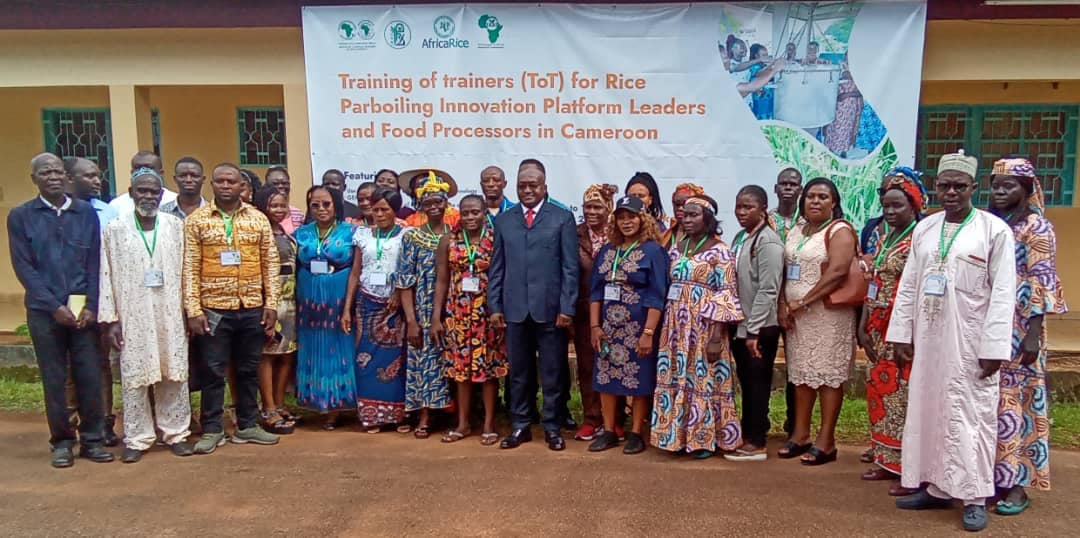
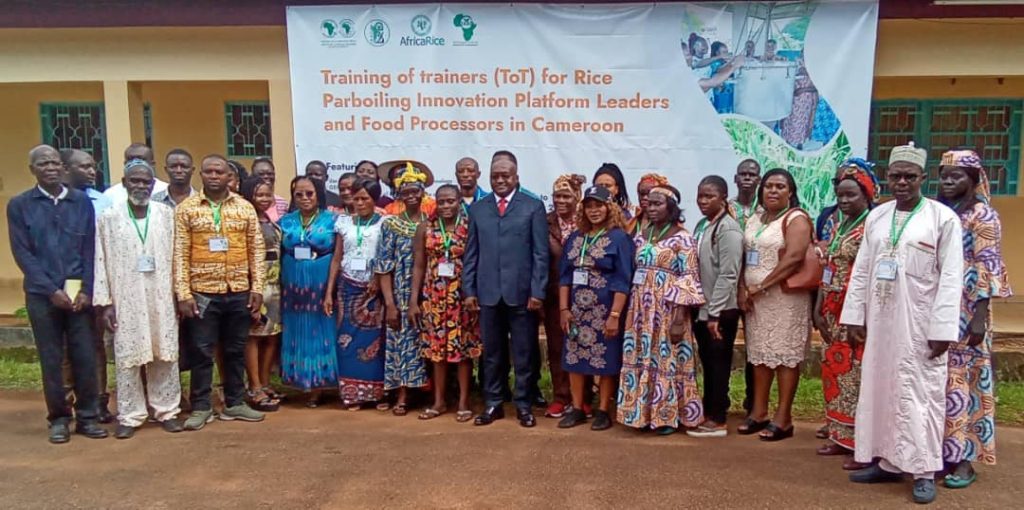
With sights set on equipping rice value chain actors (from harvesting to consumption) with the skills and technologies that will permit them to reach wider markets while responding to consumer demands, the Rice Compact of Technologies for African Agricultural Transformation (TAAT), led by the Africa Rice Center hosted a Training of Trainers (ToT) Workshop for rice parboiling Innovation Platform (IP) leaders and food processors in Cameroon.
The ToT workshop, which held from September 9th to 13th, 2024, at the Cameroonian Institute for Agricultural Research for Development (IRAD) at Nkolbisson, Yaounde, was organised in partnership with the Institute for Agricultural Research for Development (IRAD), Cameroon. The training targeted 30 rice champions from 30 rice processing SMEs from Lagdo, Yagoua, Ndop, Noun and Southern rice production zone of Cameroon.
At the opening and closing of the proceedings, the Deputy Director General/Director of Scientific Research (DGA/DRS) of IRAD, Dr. Francis NGOMÈ, reiterated the importance that the public authorities attach to agricultural research in general and rice in particular.
He urged the participants to share, once they return to their respective localities, the knowledge acquired from this seminar in order to boost the rice sector in Cameroon.

According to Dr Sali Atanga Ndindeng, the TAAT Rice Compact Leader, “the workshop capacitated leaders of rice parboiling IPs and food processors in Cameroon with skills and cutting-edge technologies for the production of micronutrient-rich, low-glycemic-index, premium-quality parboiled rice.
“This ToT for rice parboiling IP leaders and food processors in Cameroon will enhance participants’ understanding of the use and management of GEM parboiling technology, structure and function of efficient rice value chains, good processing practices (GMP), rice processing and grain quality, value addition, rice postharvest value-chain management and business opportunities in the rice value chain,” Dr Ndindeng said.
It would be recalled that AfricaRice, through the HealthyDiets4Africa project, provided two milling systems and two GEM parboilers to two newly created platforms in the Ndop rice development hub: Bamunka and Babessi Innovation Platform. Due to the conflict in the Anglophone regions of Cameroon, many youths and women in the Ndop rice hub have lost their livelihoods as most of them had abandoned their rice farms and rice processing businesses.
Through TAAT intervention, climate-resilient rice varieties were provided and are being multiplied for distribution to these vulnerable farmers; hence, the ToT will go a long way to stabilising these vulnerable populations and encouraging them to return to their rice production businesses.
Through this ToT, TAAT is set to reach thousands and millions of direct and indirect beneficiaries to ensure household food and nutrition security and income generation and contribute to sustainable development (SDG1 and SDG2) of small-scale rice processors in Cameroon.
After four days of theoretical and practical training from distinguished experts from IRAD and AfricaRice, the thirty participants from Cameroon’s 10 regions returned home with a wealth of knowledge on the processes of washing, rinsing, drying, soaking, steaming, hulling, and packaging rice.
“From now on, we will be able to sell quality rice in sufficient quantity on the national market for consumers,” one of the participants enthused.
Established in 2018 as a central pillar of the African Development Bank’s Feed Africa strategy, TAAT represents a transformative initiative to reverse the trend of declining food productivity in Africa through the scaling of modern food production technologies to 40 million farmers across Africa, focusing on supporting young people and women in low-income regions.
TAAT has scaled up the dissemination of climate-smart rice varieties, agronomic and post-harvest practices, heat-tolerant wheat varieties, drought-tolerant maize, high-yielding rice, cassava, high-iron bean, sorghum, millet, orange-fleshed sweetpotato varieties and high-quality livestock breeds, and fingerlings to more than 12 million farmers, boosting crop production by an estimated 25 million tonnes. This increase in food production is a testament to the programme’s effectiveness in enhancing agricultural productivity across the continent.
Recent Stories

Related Stories
- TAAT Demonstrates that Food Systems Transformation and Sustainability Can Go Hand in Hand
- TAAT eyes self-sufficiency in Rice for West and Central Africa
- Nigeria: TAAT and Partners target Impact at Scale through Extension Master-Trainers
- TAAT targets climate-resilient and market-oriented soybean value chain in Cameroon
- Guinea-Bissau: How TAAT is Cultivating the Next Generation of Agribusiness Leaders