 IITA – Bénin Campus, 08 BP 0932 Tri Postal, Cotonou – République du Bénin
 @Taat_Africa
 TAAT Africa
 @taatafrica
South Sudan: TAAT strengthens the varietal release system
The establishment of resilient food systems in Africa requires ensuring that farmers have rapid access to new agricultural technologies and improved crop varieties adapted to their production environments.
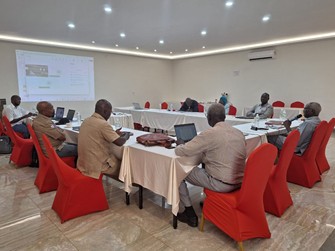
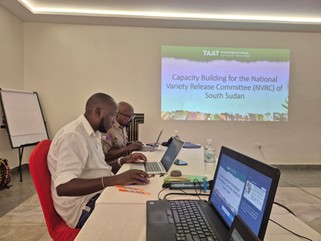
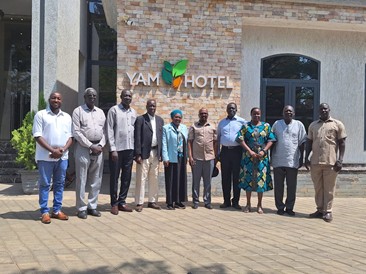
To strengthen South Sudan’s capacity to evaluate and approve new agricultural varieties, the Technologies for African Agricultural Transformation (TAAT) programme, in collaboration with the International Institute of Tropical Agriculture (IITA), partnered with the Food and Agriculture Organisation of the United Nations (FAO) and the Ministry of Agriculture and Food Security (MAFS) to organise a targeted capacity-building session for the National Variety Release Committee (NVRC).
Facilitated by experts in seed systems and plant breeding, the training held from 3 to 4 February 2026 in Juba.
It brought together NVRC members, technical staff from the Ministry of Agriculture and Food Security, researchers involved in variety evaluation, seed regulatory and inspection officers, representatives of private seed companies, and leaders of farmers’ organisations, to improve science-based decision-making and accelerate the deployment of improved agricultural technologies.
Indeed, limitations in technical capacity, particularly in standardised variety testing procedures, interpretation of trial data, and the application of harmonised regional frameworks, have constrained the efficiency of approval processes.
These challenges delay the introduction of improved varieties emerging from national and international research programmes, thereby slowing the pace at which farmers can access innovations to enhance agricultural productivity and resilience in South Sudan.
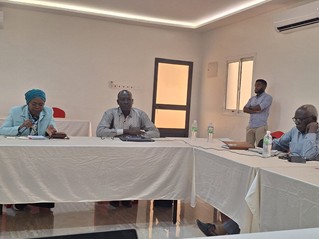
Recognising that strengthening regulatory institutions is essential to accelerating the dissemination of agricultural technologies, TAAT and its partners designed this practical training to improve transparency, technical rigour, and the timeliness of variety approval decisions.
The sessions adopted a practical approach through technical presentations, guided discussions, and exercises based on real or simulated trial data.
Participants strengthened their capacity to interpret multi-location trial data, apply Distinctiveness, Uniformity and Stability (DUS) and Value for Cultivation and Use (VCU) testing principles, align national procedures with regional seed harmonisation frameworks, and document transparent, evidence-based approval decisions.
The participatory approach also encouraged peer learning and the sharing of experiences, thereby strengthening collaboration within the national seed sector.
This training builds on ongoing collaboration between TAAT, CGIAR centres, and the Ministry of Agriculture and Food Security to introduce elite maize, sorghum, and groundnut varieties developed through international breeding programmes, including those of ICRISAT and CIMMYT.
Following preliminary and adaptive trials conducted with specialised technical support, these varieties are currently being tested under farmer field conditions across different agro-ecological zones of South Sudan.
“This strengthening of operational capacity represents a critical step towards ensuring that high-performing varieties emerging from these trials and supported by TAAT can be evaluated efficiently and released within reasonable timeframes” citation Dr Charles Murekezi, the TAAT Country Engagement and Partnership Coordinator, said.
“By strengthening national seed systems and improving farmers’ access to quality planting materials, this initiative will contribute to higher yields, greater climate resilience, and the sustainable improvement of livelihoods. In the long term, enhanced institutional capacity will help ensure that investments in agricultural research translate into tangible impacts on productivity, food security, and rural livelihoods” added Dr Murekezi.
“Beyond the training itself, the activity lays the foundation for sustainable institutional strengthening, as training materials, standardised procedures, and technical competencies acquired will remain within the NVRC to guide future decision-making processes and improve the quality and consistency of variety approval operations,” recalled George Tadu, Director General for Research at MAFS.
“As South Sudan continues its efforts to rebuild and strengthen its agricultural sector, investments in regulatory capacity and governance remain essential to building resilient seed systems capable of supporting farmers in the face of climate variability and persistent food security challenges,” adds George Tadu, Director General for Research at MAFS.
By strengthening the effectiveness of South Sudan’s national variety release system, TAAT continues to ensure that innovative agricultural technologies move efficiently from research laboratories to farmers’ fields, contributing to more resilient agricultural systems and sustainable development across the African continent.
Recent Stories

Related Stories
- South Sudan: TAAT facilitates workshop on Strengthening Emergency Preparedness and Response to Food Crisis
- South Sudan: TAAT holds High-level Consultative Workshop on Food Systems Transformation
- TAAT spearheads new drive to unlock South Sudan’s agricultural potential
- How TAAT is cultivating hope and uniting for Agricultural Transformation in South Sudan
- SEPAREF: How TAAT and Partners are strengthening Seed System and Early Warning Tools in East Africa