 IITA – Bénin Campus, 08 BP 0932 Tri Postal, Cotonou – République du Bénin
 @Taat_Africa
 TAAT Africa
 @taatafrica
New Paradigm for Scaling Innovations as TAAT Clearinghouse transitions into CGIAR
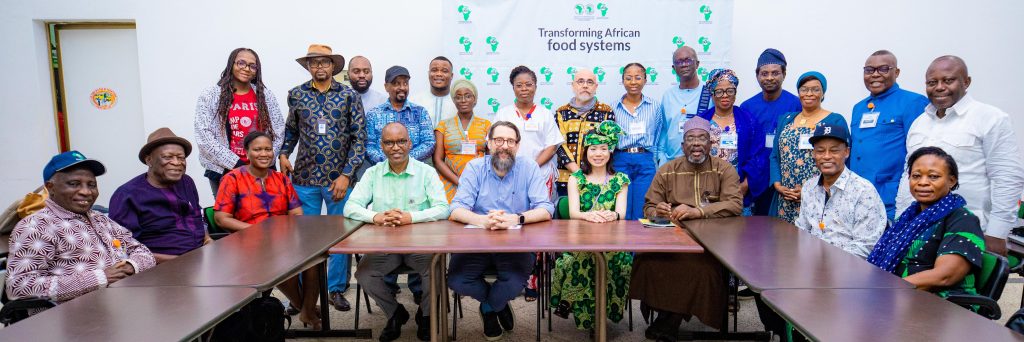
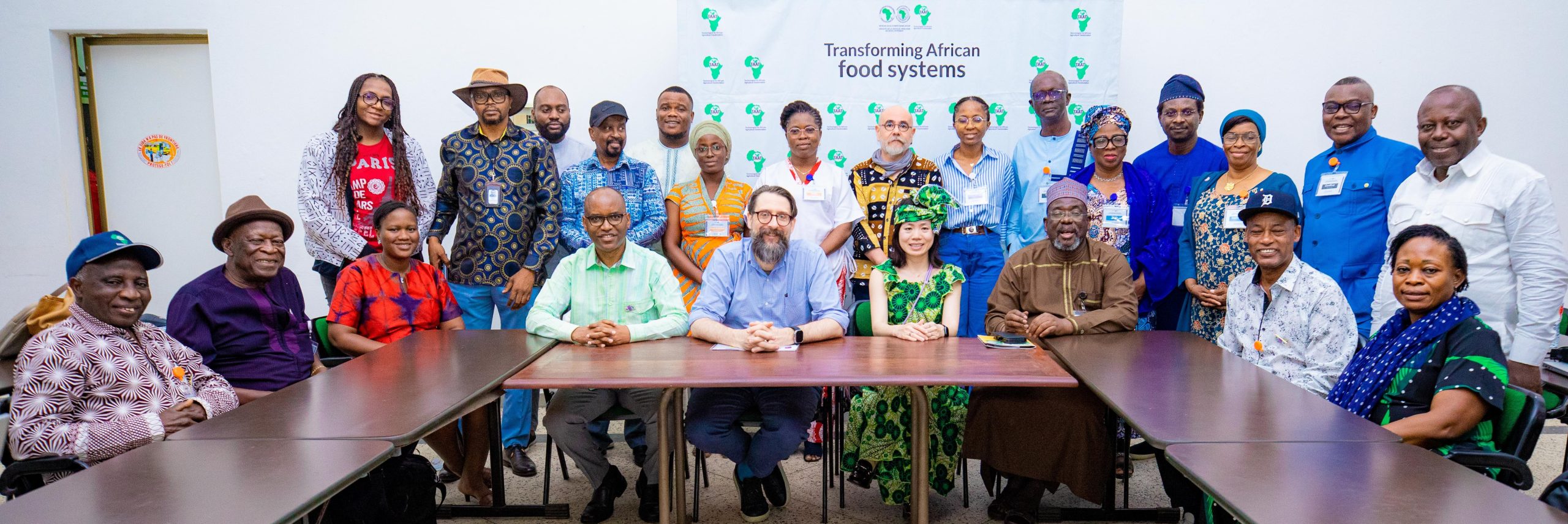
With sights set on accelerating the scaling of proven agricultural innovations across Africa through the strategic reinforcement of its technology brokerage arm, the Technologies for African Agricultural Transformation (TAAT) from December 4 to 6, 2025, in Benin, held a Transition Phase and Work Planning Workshop for its Clearinghouse.
The workshop, which brought together key stakeholders in the TAAT ecosystem, sought to integrate the TAAT Clearinghouse into the CGIAR Scaling for Impact Programme while consolidating a shared vision for strengthening the Clearinghouse as a central platform for rendering technical assistance to African countries, knowledge sharing andcoordination, private sector engagement, and innovation scaling in support of farmers, women and youth..
The participants included Dr Abdoulaye Tahirou, the acting Deputy Director General, Partnerships for Delivery and Scaling (P4D&S) at the International Institute of Tropical Agriculture (IITA), Dr Timothy Krupnik, Director of CGIAR’s Scaling for Impact Programme, Mr Innocent Musabyimana, Chief Agricultural Technologies officer at theAfrican Development Bank, Dr Lawrence Kent, Senior Programme Officer at the Gates Foundation, and Ms Cathy Xao, Head of the Asian Development Bank’s Clearinghouse.
Others are Dr Alfred Dixon, Director of Development and Delivery Office at IITA P4D&S, Dr Chrys Akem, Immediate Past TAAT Programme Coordinator, and Ms Rachel Zozo, acting Coordinator of the TAAT Programme’s Management Unit.
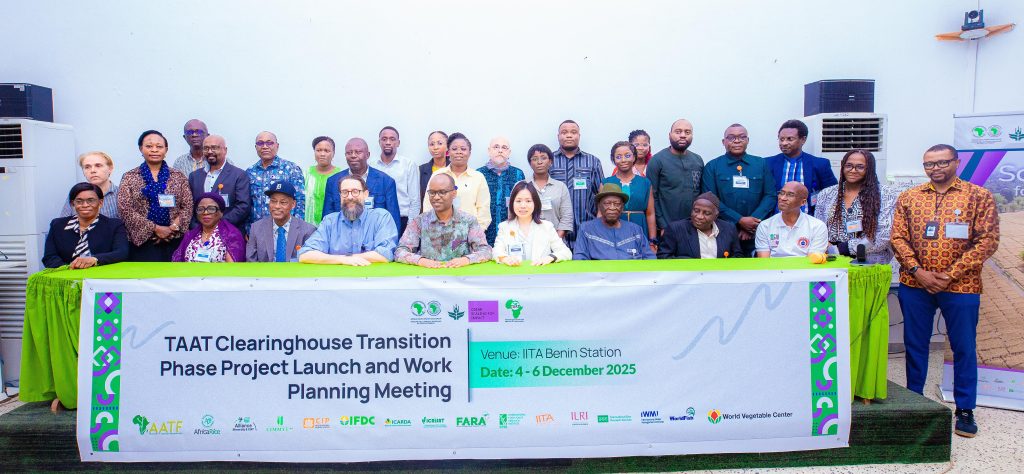
In his opening remarks, Dr Timothy Krupnik lauded TAAT’s pathway for scaling CGIAR innovations through large-scale agricultural investments by international financial institutions and the private sector. Dr Krupnik expressed optimism that the work plan for the transition phase will further deepen the TAAT footprint, opening new vistas for innovative partnerships and impact at scale.
Dr Solomon Gizaw, Head of the TAAT Clearinghouse, in his welcome remarks, took participants on a historical journey through the formation and establishment of the TAAT Clearinghouse in 2018, as well as key achievements and milestones that have shaped the Unit’s developmental trajectory.
The TAAT Clearinghouse, according to Dr Gizaw, has recorded significant successes in the ongoing second phase of the TAAT Programme. These include the integration of 71 cases of technologies into 14 large-scale projects and technical assistance into 21 projects across 24 countries, thereby influencing $857 million, and the integration of 136 cases of technologies into 18 large-scale projects across 21 countries, influencing $1.7 billion under the African Development Fund (ADF) concessional loans and grants window of the African Development Bank.
“We equally mobilised $4.1 million as funding for TAAT Compacts to provide effective implementation support to African Emergency Food Production Facility (AEFPF)- financed projects, and mobilised $12.5 million as funding for TAAT Compacts to provide implementation support to AfDB/ADF-financed projects”, Dr Gizaw added.
During the workshop, discussions on the Clearinghouse transition phase helped clarify strategic orientations, identify priority thematic areas, and define future directions.
Participants s exchanged on governance, operational mechanisms, and collaboration frameworks, leading to the development of thematic work plans with clear milestones and monitoring arrangements to ensure an effective, results-oriented, and sustainable transition.
Messages of support from sister institutions further underscored the strategic importance of the TAAT Clearinghouse in enhancing synergies and aligning agricultural innovation efforts at the continental level. The institutions included the Alliance of Bioversity and CIAT, World Vegetable Centre, East West Seed, Rijk Zwaan, The International Centre of Insect Physiology and Ecology (ICIPE), and the Organisation for Women in Science for the Developing World (OWSD)
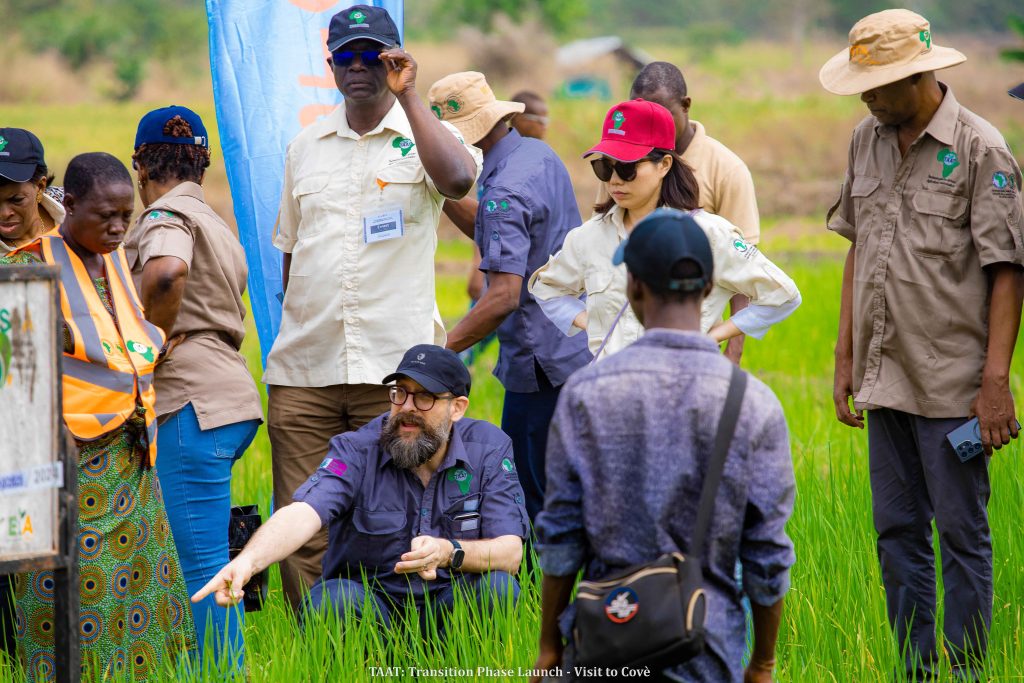
The workshop was complemented by field visits to Covè and Tori, where participants observed regenerative agriculture initiatives and scaling-up activities implemented by farmers and youths.
These interactions highlighted the concrete impact of TAAT-promoted technologies and provided valuable insights into the conditions required for successful large-scale adoption. At the end of the three-day workshop, participants reinforced their commitments to a stronger, more impact-driven TAAT Clearinghouse serving resilient and sustainable agricultural systems in Africa.
Recent Stories
Related Stories
- Guinea-Bissau: How TAAT is Cultivating the Next Generation of Agribusiness Leaders
- TAAT Hosts Training of Trainers Workshop on Aquaculture Technologies in Benin
- Seed System: TAAT rallies Stakeholders for a Seed Roadmap for Benin
- BENIN: TAAT and partners convene stakeholders for a seed roadmap
- SIERRA LEONE: TAAT reiterates support for Rice Value Chain