 IITA – Bénin Campus, 08 BP 0932 Tri Postal, Cotonou – République du Bénin
 @Taat_Africa
 TAAT Africa
 @taatafrica
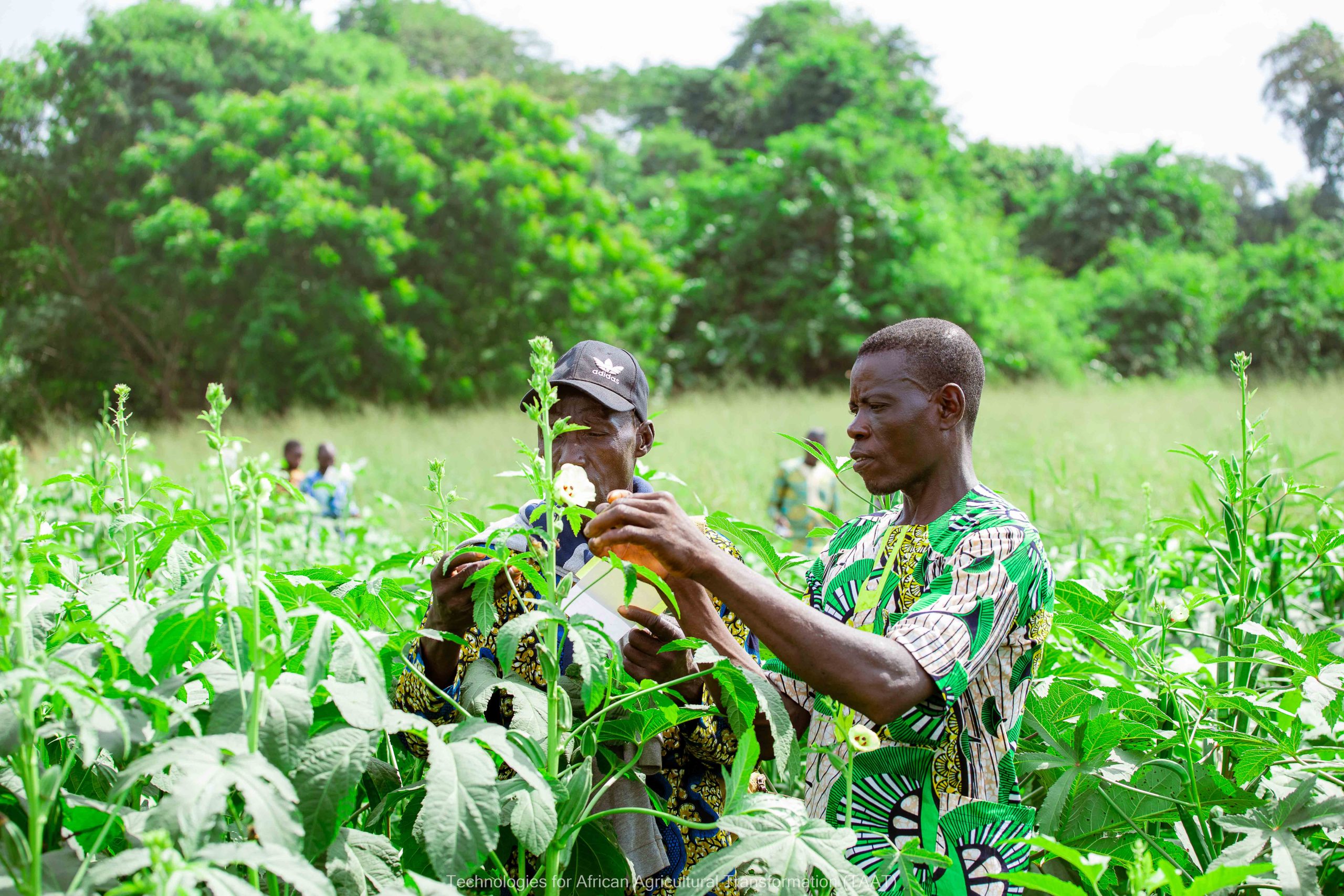
BENIN: TAAT Engages Farmers in the Selection of New Okra Varieties
The development and scaling-up of new agricultural technologies cannot be carried out effectively if their end users (the farmers) are excluded from the process.
It is within this framework that the Vegetable Compact of Technologies for African Agricultural Transformation (TAAT) programme, in collaboration with the Vision for Adapted Crops and Soils (VACS) Okra Breeding Programme coordinated by the International Maize and Wheat Improvement Centre (CIMMYT), through the World Vegetable Centre (WorldVeg), brought together more than 40 major okra producers to select the varieties that will define the next generation of okra varieties in Benin and West Africa agriculture in general.
On 18 December 2025, the International Institute of Tropical Agriculture (IITA) Benin Station became a true living laboratory for this type of innovation.
Participatory Variety Selection (PVS) ensures that breeders do not merely develop plants that perform well under controlled conditions, but varieties that farmers genuinely wish to cultivate and that consumers would value.
Through a structured participatory approach, producers grouped by their municipalities of origin (So-Ava, Zè, Adjohoun, Sèmè and Aguégué) walked through the trial plots, identified high-value okra traits, and evaluated the varieties at their optimal reproductive stage.
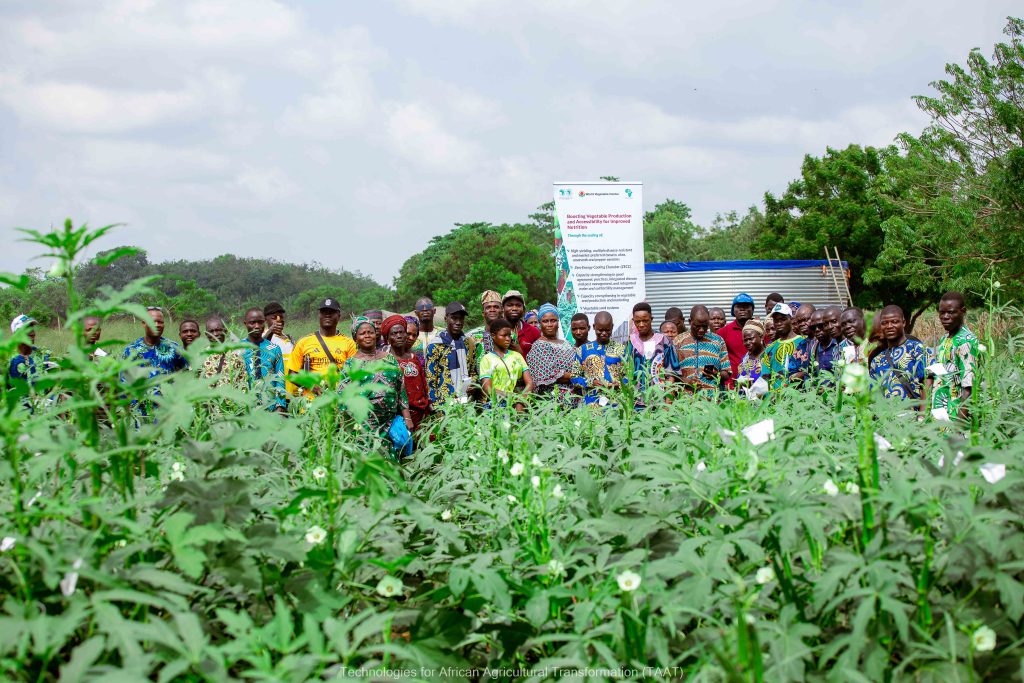
Individually, they also selected their “top five” and “bottom two” varieties and identified elite breeding lines from among the 54 okra varieties presented.
Drawing on their production experience and market requirements, this sequence of activities ensured that their choices were aligned with local agro-ecological realities and market demand.
Through group discussions and a plenary session, a clear profile of the ideal okra variety emerged.
This profile included: aesthetic appeal and market value (dark green colour and long pod length were considered essential for strong commercial value), the “ouch” factor (farmers and consumers clearly favoured spineless varieties), disease resistance (given the threat posed by okra leaf curl virus, resistance to biotic stresses was a major priority), and operational efficiency (early maturity, high branching capacity, and a high number of fruits per plant were preferred for their contribution to increased yields and ease of harvesting).
Following analysis of data from the five municipalities, the team identified 16 top-performing varieties. These varieties did not merely pass the trials; they thrived under the careful scrutiny of those whose livelihoods depend upon them.
According to ATCHEDEDJI Théodore, one of the farmers, “we are strongly interested in accessing seeds of the selected varieties to cultivate and evaluate them under our own production conditions.”
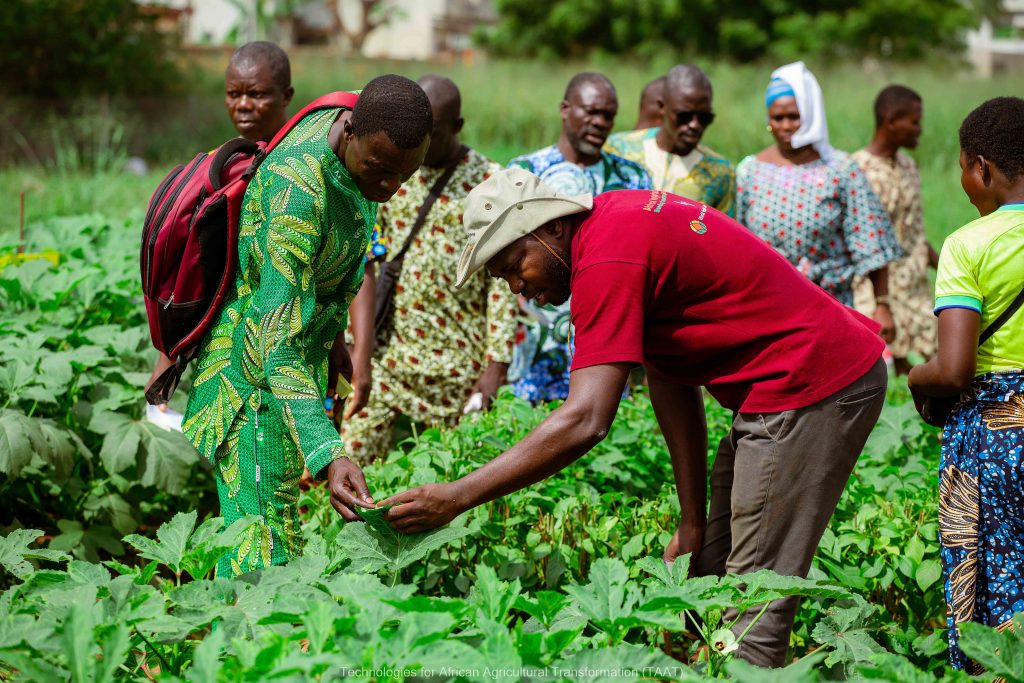
The project does not end at the research station. The next phase includes direct seed distribution to several farmers per municipality for on-farm trials, strengthened support for improved crop management practices, and the development of collective marketing strategies to enhance their bargaining power for fresh okra pods.
Throughout and at the conclusion of the activity, producers’ enthusiasm continued to grow, both because of the innovative nature of the initiative and their discovery of promising new varieties, a guarantee of improved yields.
According to Dr. Mathieu Ayena, TAAT Vegetable Compact Coordinator, “by considering farmers as genuine partners in the varietal improvement process, we ensure that the future of okra in Benin is not only scientifically robust, but also commercially dynamic and validated by producers.”
Confident in the promising results of this approach, TAAT, through its Vegetable Compact, will continue its efforts to disseminate high-yielding and resilient okra varieties needed to strengthen our food systems.
Recent Stories
Related Stories
- Benin: TAAT Showcases Improved Okra Varieties
- From Training to Transformation: How TAAT is Driving Aquaculture Innovation in the DRC
- Uganda: TAAT showcases improved and resilient soybean varieties
- Ghana: TAAT and partners showcase improved maize varieties to farmers
- Ghana: How TAAT is Growing Nutrition and Opportunities through Improved Vegetables