 IITA – Bénin Campus, 08 BP 0932 Tri Postal, Cotonou – République du Bénin
 @Taat_Africa
 TAAT Africa
 @taatafrica
Sierra Leone: TAAT targets Food Security via Wheat Production
Africa remains heavily dependent on wheat imports to meet its food needs.
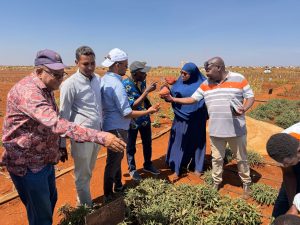
In a drive to strengthen food sovereignty and reduce this dependence, the Technologies for African Agricultural Transformation (TAAT) conducted a technical mission in Sierra Leone from 16 to 21 December 2025 to support the introduction and rapid expansion of wheat cultivation in suitable agro-ecological zones.
The mission pursued several strategic objectives, notably the promotion of national wheat production, strengthening farmers’ technical capacities with particular attention to youth and women, the creation of sustainable agricultural employment, the improvement of food security, and the consolidation of resilient farming systems.
It also aimed to establish a structured community-based production model built on the cluster approach for grain and seed production and distribution, while facilitating the organisation of farmers into cooperatives recognised by national agricultural authorities.
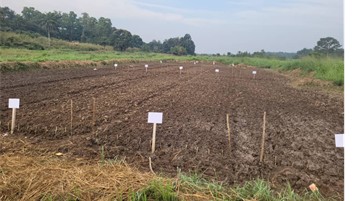
Field activities were carried out at the Rokupr Agricultural Research Center, located in Rokupr, a historic agricultural research site that hosted the first regional centre of AfricaRice in West Africa.
The site presents favourable agroecological characteristics, with predominantly clay soil and a functional irrigation system that ensures effective water management for crops.
The mission mobilised a regional scientific partnership involving researchers from the Lake Chad Research Institute, based in Maiduguri, Borno State, Nigeria; local scientific teams from the Rokupr centre; and the TAAT Clearinghouse, represented by Dr Razack Adeoti.
This institutional synergy enabled rapid, well-coordinated deployment of technical activities in the field.
Two heat-tolerant wheat varieties, Borlaug 100 and Imam Atilla 7, were introduced for agronomic trials and real-world production demonstrations.
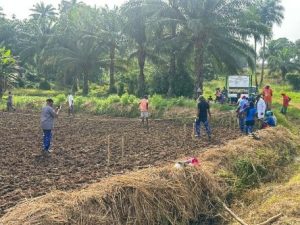
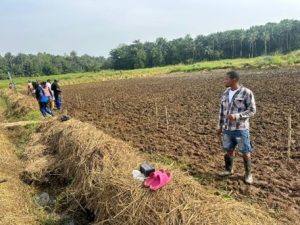
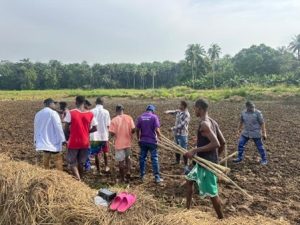
Technical achievements included establishing demonstration plots covering 0.12 hectares using line sowing to enhance crop management, installing comparative varietal trial plots incorporating 10 wheat varieties to assess agronomic performance, and developing two seed multiplication plots using broadcast sowing.
All required inputs were mobilised to ensure successful establishment, including NPK 15-15-15 fertiliser, urea, herbicides, and appropriate insecticides.
According to Dr Razack Adeoti, “the initial germination observed before the end of this mission already indicates a satisfactory agronomic start that could lead to wheat self-sufficiency in Sierra Leone.”
The mission benefited from strong institutional support marked by a visit from Board Members of the Sierra Leone Agricultural Research Institute (SLARI). The delegation notably included the Country Representative of the International Institute of Tropical Agriculture (IITA), Dr Alfred Dixon; the Director General of SLARI, Dr Abdul Rahman Conteh; the Director of the Rokupr Research Centre, Mr Adam Kanu; and several scientists.
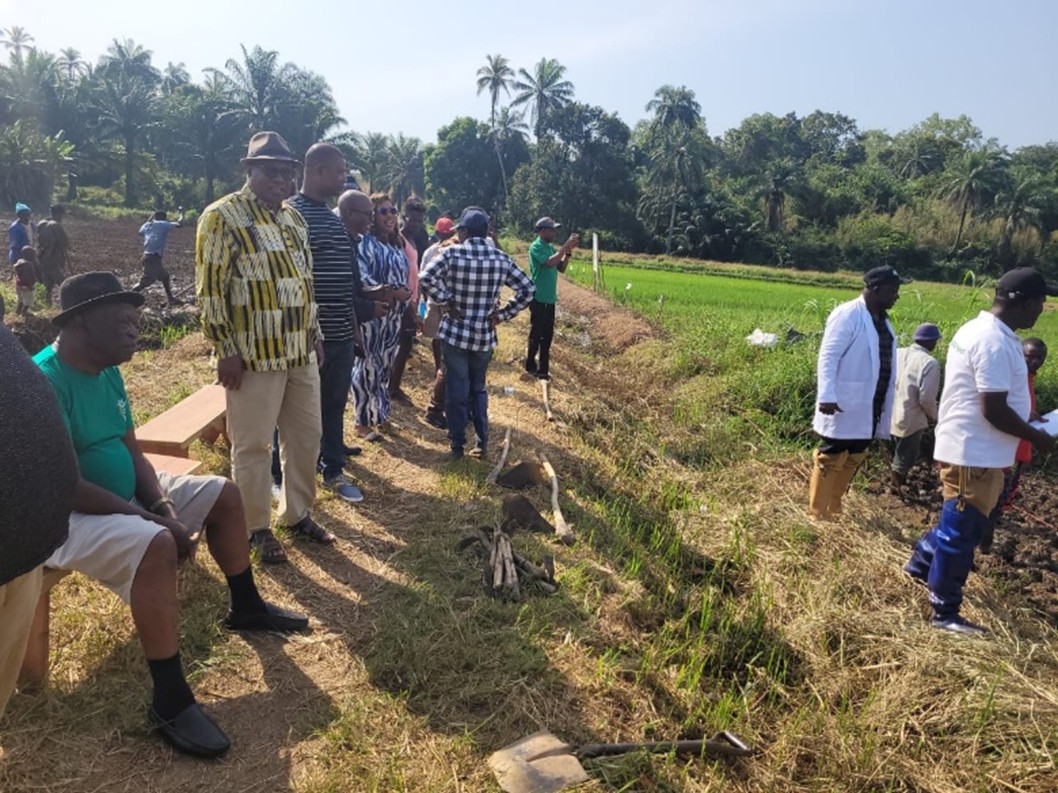
On this occasion, Dr Conteh committed to personally monitoring the trials, demonstrating strong institutional ownership and national appropriation of the initiative.
To consolidate the gains, the mission issued technical recommendations focusing on rigorous irrigation monitoring according to crop water requirements, replanting where necessary, and extending the experimental set-up to a second site.
Monitoring of crop development and water management will be ensured by the designated technical teams, with an operational deadline set for March 2026.
Recent Stories
Related Stories
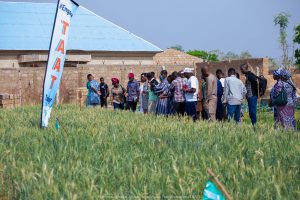
- Benin: TAAT hosts Green Field Day, Showcases Wheat Potential
- South Sudan: TAAT holds High-level Consultative Workshop on Food Systems Transformation
- TAAT holds regional workshop for Seed Actors in fragile states
- SEPAREF: How TAAT and Partners are strengthening Seed System and Early Warning Tools in East Africa
- TAAT and Partners Target Bumper Rice Harvest in Benin