 IITA – Bénin Campus, 08 BP 0932 Tri Postal, Cotonou – République du Bénin
 @Taat_Africa
 TAAT Africa
 @taatafrica
How TAAT is Anchoring Kenya’s push for Self-Sufficiency in Maize
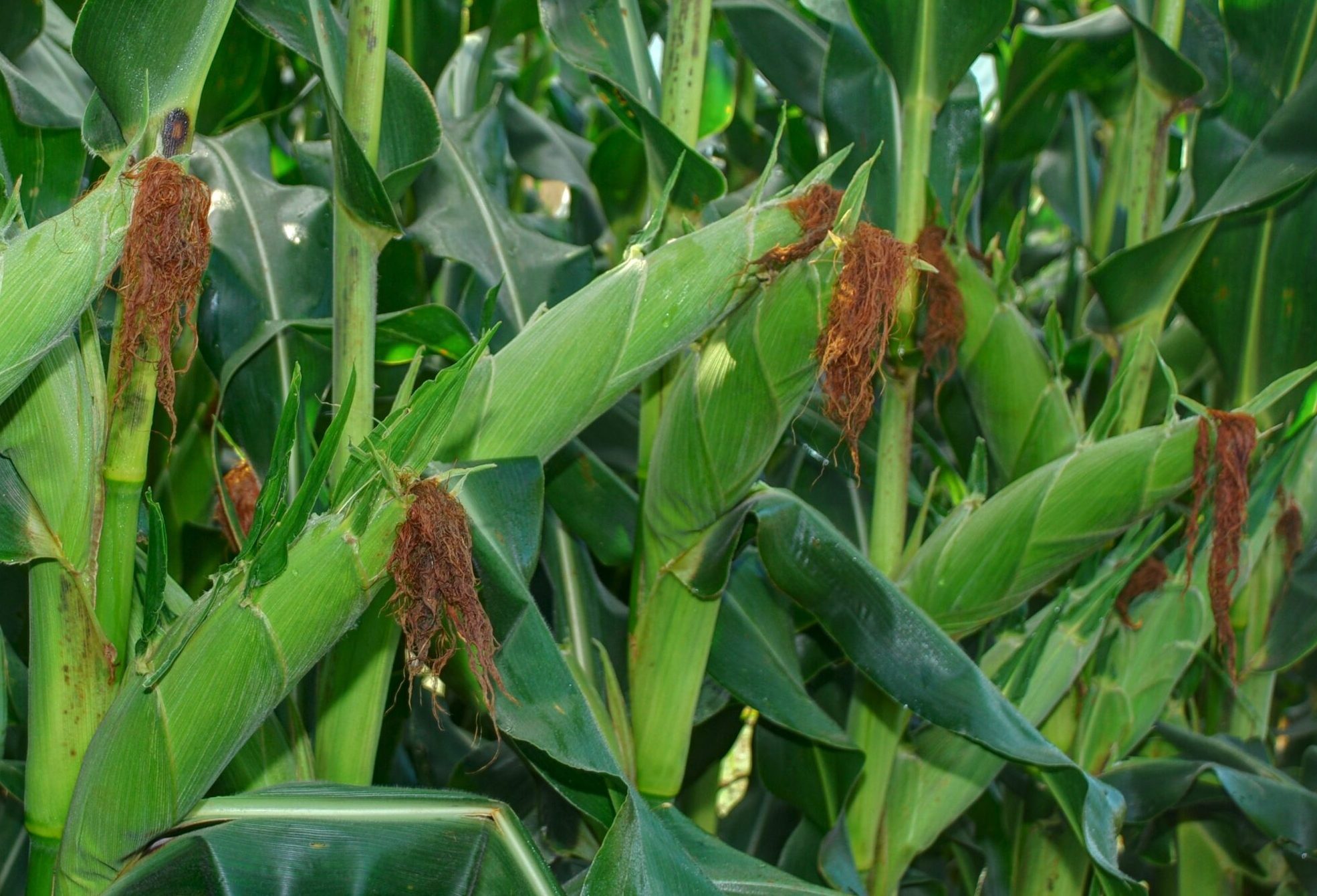
While maize has been a staple in Kenya since its expansion in the 20th century, national production has consistently fallen short of meeting consumption demands.
This deficit (exacerbated by drought, high fertiliser costs, and limited access to improved seed) has kept smallholder farmers trapped in a cycle of low productivity.
To break this cycle by scaling up high-yielding, climate-resilient technologies, the African Development Bank, through its Technologies for African Agricultural Transformation (TAAT) programme, conducted an intensive 10-day field mission in western Kenya from 15 to 25 July 2025. This marked a significant step towards strengthening national food security.
The mission, organised by the TAAT Maize Compact, led by the African Agricultural Technology Foundation (AATF), engaged 1,232 smallholder farmers, creating a critical link between advanced hybrid research and practical on-farm adoption.
In Kenya, the TAAT Maize Compact collaborated with the Kenya Agricultural and Livestock Research Organisation (KALRO) and the TAAT Policy Enabler Compact to address challenges faced by farmers and seed companies. This was achieved through a dual-pronged approach targeting both production systems and policy/regulatory frameworks.
The Compact also partnered with commodity associations and community-based organisations to promote technology adoption and strengthen farmer aggregation for improved market access.
Specifically, the TAAT Maize Compact introduced climate-smart WEMA (Water-Efficient Maize for Africa) varieties, complemented by Good Agricultural Practices (GAPs).
These included tailored fertiliser blends, effective weed control, optimal planting density, pest and disease management (notably Fall Armyworm control), mechanisation, and improved post-harvest handling techniques.
To enhance access to these improved varieties, TAAT facilitated the production and distribution of 8,185 metric tonnes of certified climate-smart maize seed.
This covered approximately 327,400 hectares and reached an estimated 818,500 beneficiaries.
This achievement was made possible through partnerships with 11 seed and agrochemical companies, including Dryland Seeds Ltd, Kenya Highland Seed Company Ltd, Agripack Seeds Ltd, Agribase Bioscience International Ltd, Advanta, Kenya Seed Company, FAIDA Seeds, EASEED, Ultravetis, Gicheha (TSAVO) Seeds, Seed Co Kenya, Corteva, Bayer East Africa, and Syngenta East Africa.
These partners played a central role in scaling climate-smart maize varieties through demonstration plots and seed distribution initiatives.
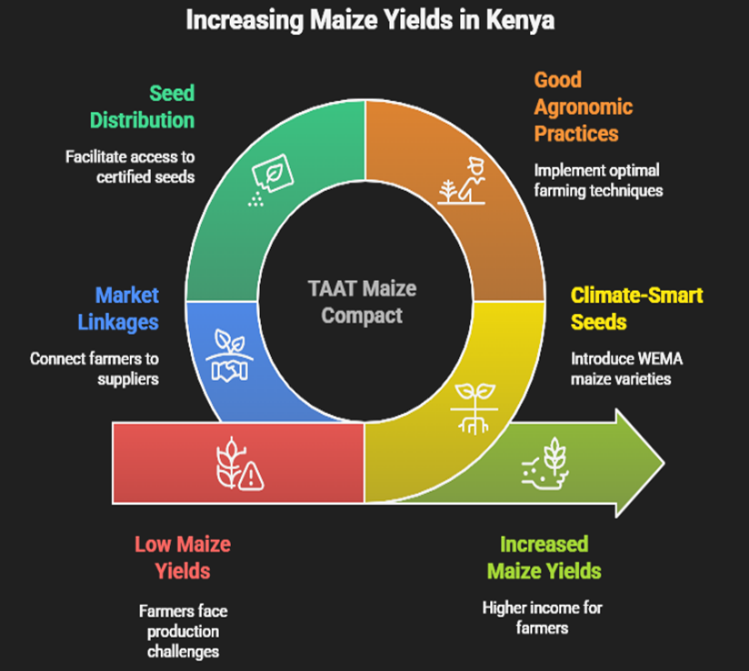
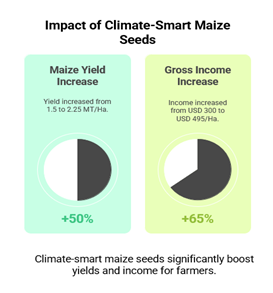
As a result, farmers adopting these climate-smart seeds recorded a 50% increase in maize yields (from 1.5 MT/ha to 2.25 MT/ha), alongside a 65% rise in gross income (from USD 300/ha to USD 495/ha), surpassing the initial income target of USD 360/ha.
With increased production, the compact also strengthened both input and output market systems by linking farmers to suppliers of fertilisers and crop protection products, as well as to grain off-takers, agro-processors, and millers such as Food Chain Millers of Kenya.
According to Dr Jonga Munyaradzi, the TAAT Maize Compact Leader, “these linkages continue to ensure access to inputs and reliable markets, improve farmers’ incomes, and create employment by adding value to products such as maize flour and livestock feed.”
“The engagement of the private sector, alongside the effective use of national and county government structures, remains a key driver of sustainability for the Compact’s outcomes in productivity, income growth, job creation, and inclusivity,” Dr Munyaradzi added.
Over a 10-day period across six counties in western Kenya, the Compact conducted a series of field visits that proved instrumental in bridging the gap between research and real-world application.
These visits served as dynamic learning platforms, enabling farmers, seed companies, and government officials to directly observe and interact with proven TAAT technologies under actual field conditions.
By demonstrating tangible results, these field days strengthened farmer confidence, encouraged peer-to-peer knowledge exchange, and reinforced linkages across the maize value chain.
The Compact promoted a comprehensive package of climate-smart technologies and agronomic practices to close the productivity gap and enhance farmer resilience.
These included DroughtTEGO® hybrids (WEMA varieties), integrated crop management, post-harvest handling and aflatoxin mitigation, and nutrition-sensitive agriculture.
Ultimately, these ten days in the field reaffirmed a critical reality: Kenya’s journey towards maize self-sufficiency is no longer a distant aspiration.
It is becoming a measurable outcome—driven by DroughtTEGO® hybrids, safeguarded through aflatoxin control, and anchored in strong collaboration between research, policy, and the private sector.
As TAAT continues to scale these science-driven solutions, it is not only transforming maize production systems but also strengthening the nation’s economic backbone and building a resilient, food-secure future for all Kenyans.
Recent Stories


Related Stories
- TAAT Demonstrates that Food Systems Transformation and Sustainability Can Go Hand in Hand
- Zimbabwe Hosts National Seed Summit to Accelerate Food Systems Transformation
- Liberia Hosts Seed Sector Investment Roundtable to Unlock Agricultural Transformation
- SEPAREF: How TAAT and Partners are strengthening Seed System and Early Warning Tools in East Africa
- TAAT Expands Toothpick Technology for Striga Biocontrol to Uganda and Beyond