 IITA – Bénin Campus, 08 BP 0932 Tri Postal, Cotonou – République du Bénin

 @Taat_Africa
 TAAT Africa
 @taatafrica

Seeds of a Self-Reliant Sierra Leone: Inside the Four-Day Push to Fix the Country’s Seed System
TAAT and partners bring seed producers, regulators, researchers and agro-dealers together in Bo to turn Feed Salone’s ambitions into planting reality
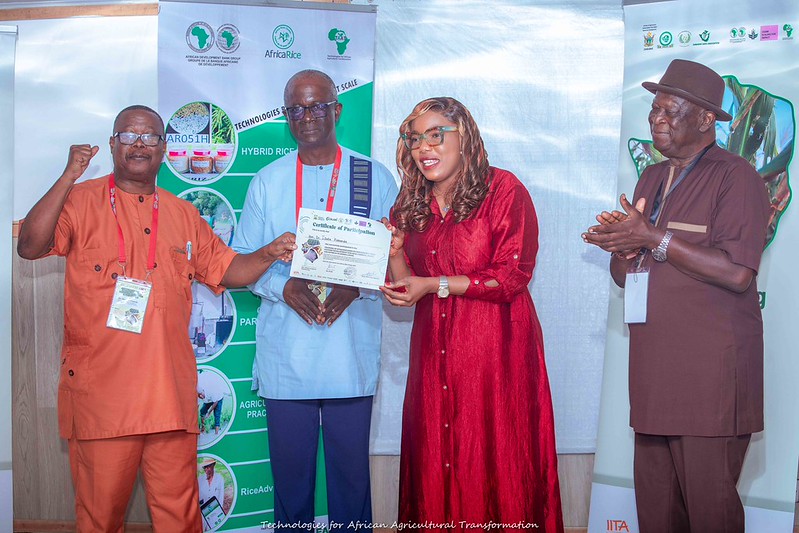
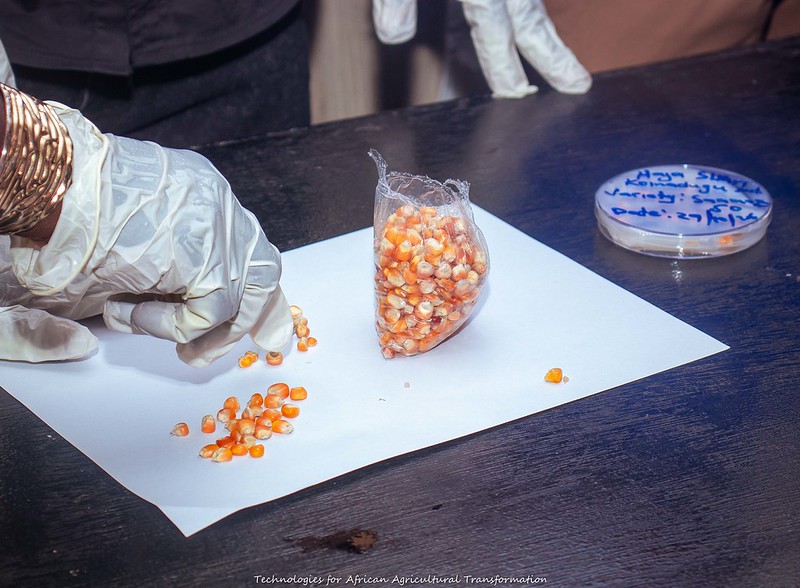
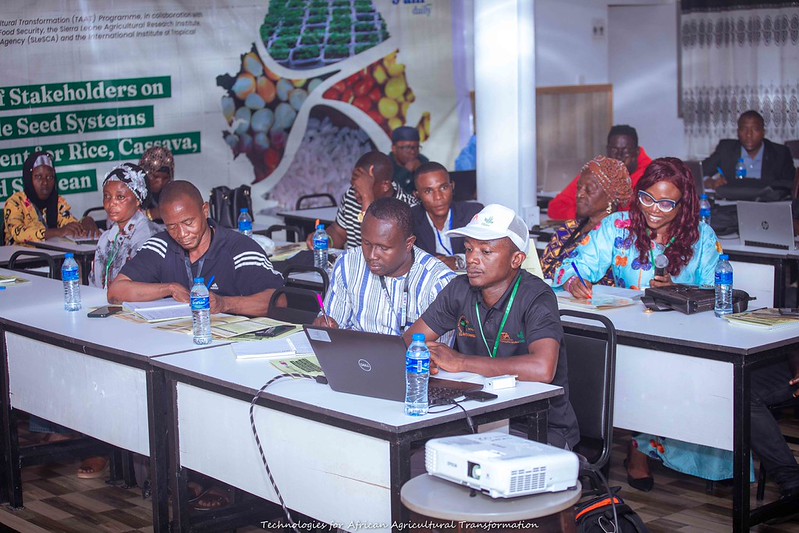
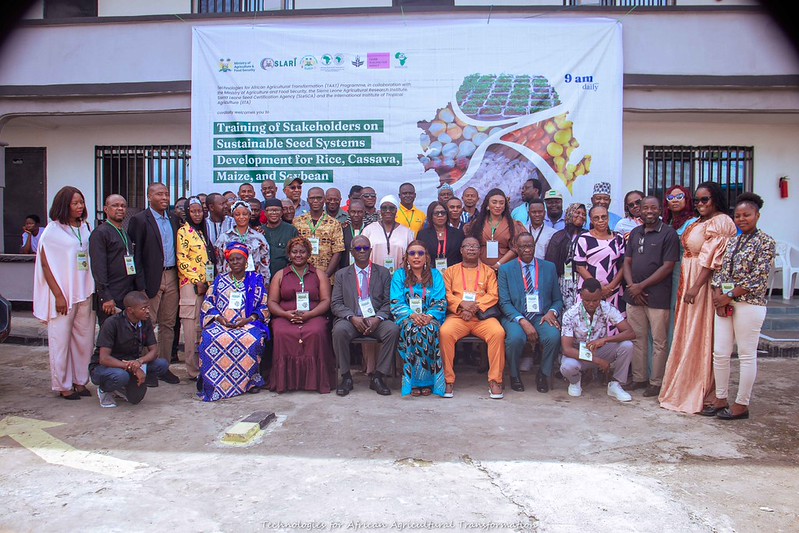
Before a single grain is harvested in Sierra Leone, the outcome is already shaped by the seed in the farmer’s hand. That idea ran through a four-day training in Bo, where seed producers, scientists, regulators and agro-dealers spent 26 to 29 October 2026 working on a question central to the country’s food future: how do you get quality seed to the farmers who need it?
The training on sustainable seed systems for rice, cassava, maize and soybean was organised by the Technologies for African Agricultural Transformation (TAAT), in collaboration with the Ministry of Agriculture and Food Security (MAFS), the Sierra Leone Agricultural Research Institute (SLARI) and the Sierra Leone Seed Certification Agency (SLeSCA). It was held at Bo Inn Hotel under the theme of building a market-oriented seed system that improves the availability, accessibility and use of quality seed.
Why seed, why now
The timing mattered. Sierra Leone’s Feed Salone Agenda aims to increase domestic food production, reduce food imports, and improve nutrition. Seeds and input systems are among its six pillars.
Deputy Minister Dr Isata Kamanda told participants that the agenda’s success largely depends on providing farmers with quality planting material. She pointed to new investment in seed cleaning, processing and quality assurance, including private-sector money. She also noted that licensing costs have been reduced for small-scale seed producers to widen participation. The real test of the training, she said, would be practical improvements in seed production and quality, not the presentations delivered.
From Argentina to Njala: a cassava breakthrough
One of the most striking sessions covered cassava, Sierra Leone’s second staple. A single stem yields only a few cuttings, and the crop takes a long time to grow. That makes healthy planting material hard to multiply.
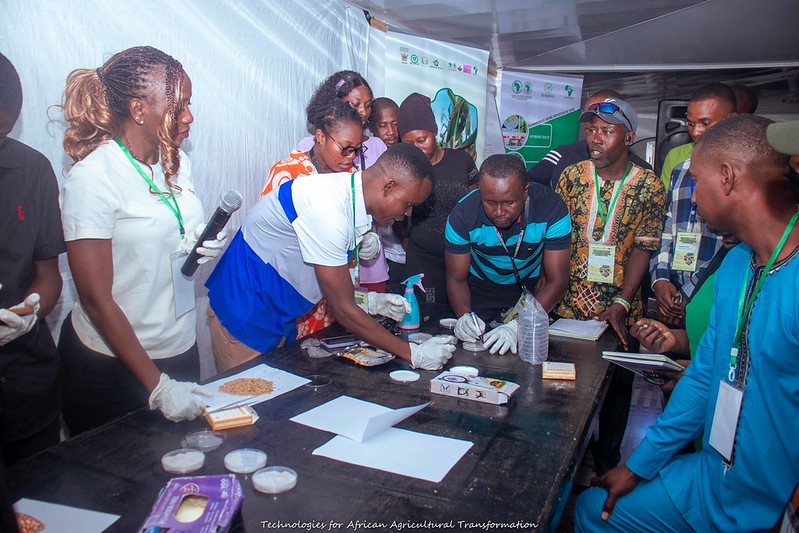
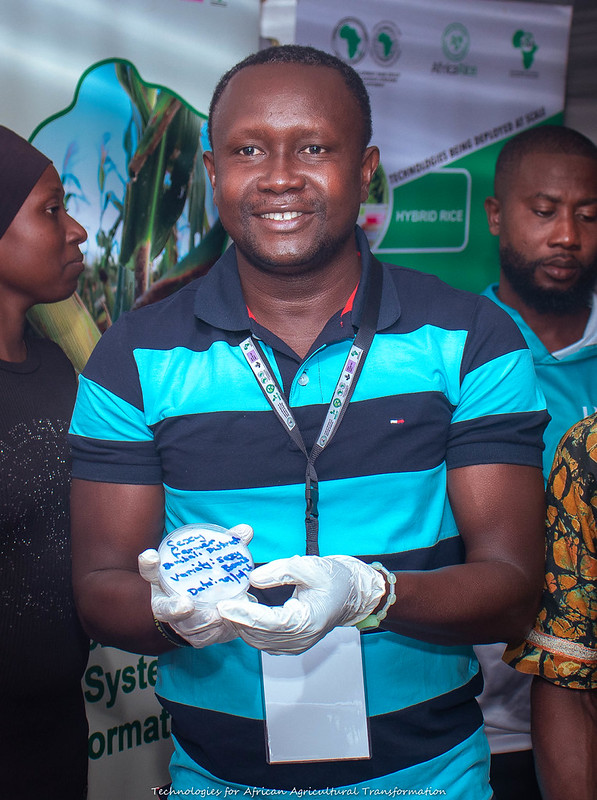
Facilitator Ernest Kamara introduced participants to the SAH screen-house technology, which enables rapid, efficient multiplication. It travelled from Argentina to Nigeria and now to Sierra Leone. SLARI Director General Dr Abdul Conteh credited TAAT with supporting Njala Agricultural Research Centre, including solar electrification at the SAH laboratory.
Kamara also offered farmers a simple guide to the newly released varieties:
- Game Changer for industrial use
- Maada for eating
- BABA 70 for gari
Feed Salone targets 50,000 hectares of cassava within five years.
Targets, tools and a factory floor
Participants also covered:
- Maize and rice targets. Maize is meant to reach 45,000 hectares by 2028/29. The rice roadmap aims for rice sufficiency by 2030.
- Practical technical skills. These included soybean seed production, fertiliser management, safe storage moisture levels (12% for rice, 13% for maize and soybean), seed inspection and certification, and business planning for seed enterprises.
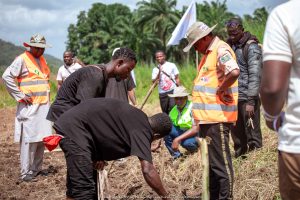
- A visit to a working seed business. Participants toured TIVAMYA (SL) Limited’s processing factory and demonstration site at Blama. They saw how research, certification and private investment connect in practice.
The obstacles on the road
Participants did not shy away from the problems. They named limited breeder and foundation seed, weak agro-dealer coverage, inadequate processing and storage, high production and transport costs, limited finance and weak links between seed producers and farmers.
What happens next
Participants left with a 14-point follow-up agenda. It includes:
- establishing a National Seed Trade Association and a breeders’ association
- supporting a functioning National Seed Council
- registering seed producers with NaFRA
- forming public-private partnerships between SLARI and seed actors through MoUs
- running short seed science courses with Njala University
- developing an intellectual property framework for new varieties
- cascading the training to farmers and seed producers across their districts
The message from Bo was clear: no single institution can build a seed system alone. Success depends on government, researchers, regulators, private companies, agro-dealers, financiers and farmers working together.
Recent Stories
Related Stories
- Seeing Is Believing: Nigeria’s Seed Industry Heads to the Field to Test Africa’s Next Generation of Crops
- From Research to Farmers’ Fields: TAAT and AFSTA Mobilise Africa’s Seed Industry to Scale Improved Crop Varieties
- Zimbabwe Hosts National Seed Summit to Accelerate Food Systems Transformation
- Liberia Hosts Seed Sector Investment Roundtable to Unlock Agricultural Transformation
- South Sudan: TAAT holds High-level Consultative Workshop on Food Systems Transformation