 IITA – Bénin Campus, 08 BP 0932 Tri Postal, Cotonou – République du Bénin

 @Taat_Africa
 TAAT Africa
 @taatafrica

“They Are Just Joking”: How Ugandan Women Turned Mockery Into a Sweetpotato Enterprise
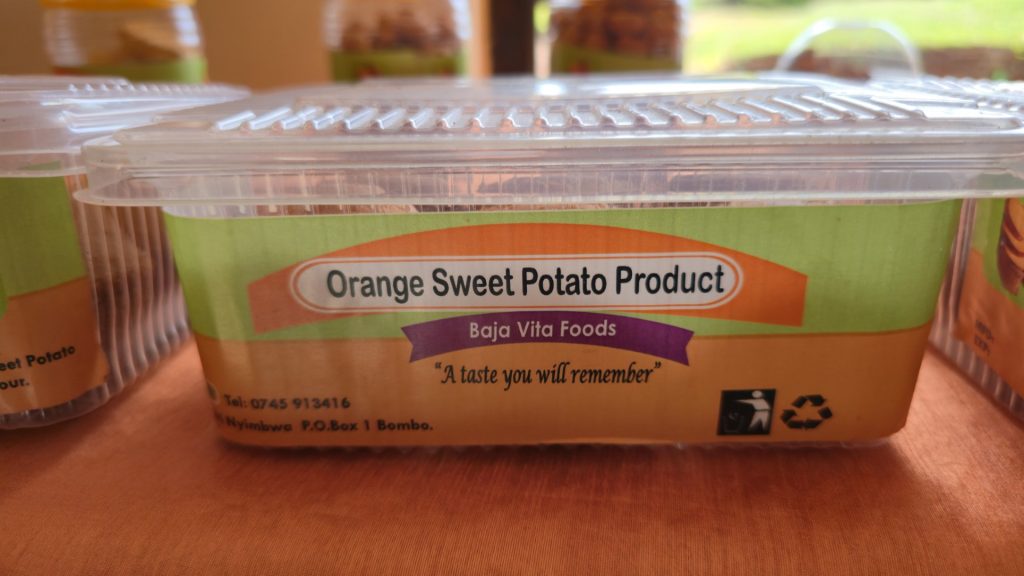
What began as a collective of rural women laughed at by neighbours is now a 100-member association producing, processing and selling orange-fleshed sweetpotato products, with help from TAAT
In 2003, a small group of rural women decided to farm together, add value to what they grew and build more secure livelihoods for their families. Their neighbours laughed. Friends doubted them. Some relatives thought they were wasting their time.
So the women took the mockery and made it their name. They called themselves Bajja Basagga, a Luganda expression meaning “they are just joking.”
More than two decades later, nobody is laughing.
The Bajja Basagga Orange-Fleshed Sweet Potato (OFSP) Processors and Producers Association has more than 100 active members, most of them women. They grow OFSP vines and roots and turn the crop into nutritious, marketable products. Some of the people who once doubted them now visit to learn how they did it.
“We wanted to create something of our own”
For the founders, farming was about more than growing food. It was about control over their own livelihoods.
“As rural women, we depended almost entirely on our husbands for money,” one member recalls. “We wanted to create something that would bring us together, provide us with an income and enable us to support our families with dignity.”
The early years were hard, and some members left. Those who stayed kept faith in the power of working together.
The turning point: quality planting material
A major breakthrough came through the Orange-Fleshed Sweet Potato Compact of the Technologies for African Agricultural Transformation (TAAT) programme. The compact is led by the International Potato Center (CIP), in collaboration with Uganda’s National Agricultural Research Organisation (NARO).
Through TAAT, members received:
- training in rapid vine multiplication, good agronomic practices, nutrition and value addition
- quality planting material for OFSP varieties including NASPOT 13, Ejumula, NASPOT 8 and NAROSPOT 7
“When we received the quality planting material, everything changed,” one member says. “That was the beginning of our real journey.”
Nothing wasted: from small roots to a value chain
Higher production brought a new problem. Buyers tended to prefer large roots, which left the smaller ones without a market.
The women saw an opportunity instead of waste. Today the association:
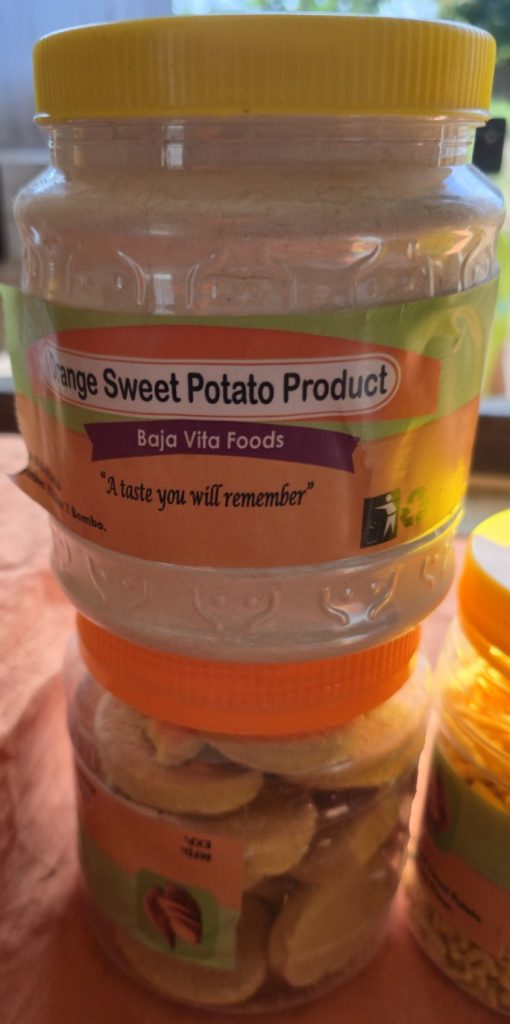
- processes roots into flour and dried chips
- uses leaves and vines as vegetables
- bakes bread, biscuits, cakes and pancakes
Sweetpotato is no longer just a crop sold fresh. It has become the base of a growing rural enterprise.
What the income has built
Earnings from vines, roots, and processed products have helped the association purchase a milling machine, an oven,and a root chipper. It has also registered with the Uganda Small Scale Industries Association, which strengthens its standing as a developing rural business.
The most important changes, though, are personal. Income from sweetpotato has helped some women pay their children’s school fees, improve nutrition at home and take a bigger part in family decisions.
“Today I have confidence,” one member says. “I can contribute to my family’s income and make decisions because I have something of my own.”
Beyond technology transfer
Dr Norman Kwikiriza, TAAT OFSP Compact Leader, says the group’s story shows what scaling really means.
“The Bajja Basagga experience shows that scaling agricultural technologies is about more than making improved technologies available,” he said. “It is about giving farmers the knowledge, skills and means to turn those technologies into practical solutions.”
The pathway is clear. Production supplied the raw material. Processing created new products. Those products brought in extra income, which strengthened households and gave the women greater economic independence.
The next chapter
The road ahead still has obstacles. Access to healthy planting material remains a concern, especially as vines age and become vulnerable to Sweet Potato Virus Disease (SPVD).
The association wants to keep working with TAAT and other partners to:
- secure disease-free planting material
- strengthen training
- improve production and processing capacity
- expand its equipment
- introduce technologies that reduce labour demands
These are signs of growth rather than failure. The group has reached a stage where sustaining and expanding its gains is the priority.
From doubt to determination
The name Bajja Basagga was born from doubt. Today it stands for determination. The women did not just prove they were serious. They showed what becomes possible when agricultural innovation reaches women who are determined to turn opportunity into results.
Recent Stories
Related Stories
- TAAT Demonstrates that Food Systems Transformation and Sustainability Can Go Hand in Hand
- Uganda: TAAT Empowers Youth Agripreneurs to Boost Soybean Productivity
- eProd: How TAAT is Digitising Rice Seed Systems in Africa
- How TAAT is Leveraging Innovation Platforms and the Private Sector to Boost Wheat Production in Sudan
- From Training to Transformation: How TAAT is Driving Aquaculture Innovation in the DRC