 IITA – Bénin Campus, 08 BP 0932 Tri Postal, Cotonou – République du Bénin
 @Taat_Africa
 TAAT Africa
 @taatafrica
How TAAT is Leveraging Innovation Platforms and the Private Sector to Boost Wheat Production in Sudan
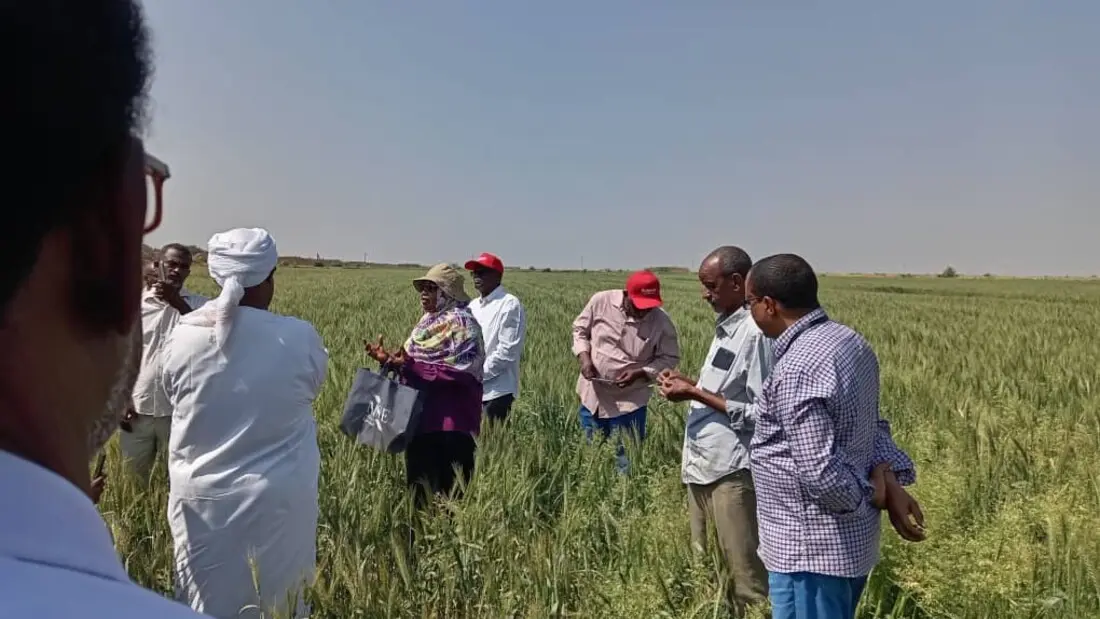
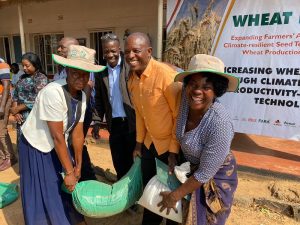
The field day event of TAAT II Wheat Compact at Elmangael IP site in Gezira Scheme, Sudan.
The Technologies for African Agricultural Transformation is accelerating wheat production in Sudan by harnessing the power of Innovation Platforms (IPs) and strengthening collaboration with the private sector.
On 16 February 2026, TAAT and its partners convened a field day at the Elmangel Innovation Platform in the Alhuda subsection of the renowned Gezira Scheme (one of Africa’s largest irrigated agricultural systems).
The event, organised in collaboration with the International Centre for Agricultural Research in the Dry Areas (ICARDA), Mahgoub Sons Company, the Gezira Scheme, and farmer organisations, brought together 69 stakeholders, including farmers, researchers, seed producers, extension agents, and private sector actors.
Revitalising Sudan’s Wheat Sector
Sudan’s wheat sector has undergone a significant transformation over the past decade.
In the early 2010s, the country relied heavily on imported wheat seed to boost production. However, these varieties were often poorly adapted to local conditions, with inconsistent quality and delayed delivery disrupting planting cycles.
A turning point came in 2016, when ICARDA supported a comprehensive assessment of the wheat seed sector and the development of a national roadmap to strengthen domestic production.
A key outcome of this process was the integration of private sector actors into the seed value chain. Since then, Sudan has recorded remarkable progress (growing domestic wheat seed production from less than 5,000 metric tonnes to over 50,000 metric tonnes), with surplus production now available for export.
Despite ongoing challenges, including conflict, TAAT’s Wheat Compact continues to build on these gains by partnering with over 20 private seed companies and key national stakeholders.
Showcasing Innovation: The Ashri Wheat Variety
A major highlight of the field day was the introduction of Ashri, a newly developed wheat variety by Mahgoub Sons Company.
The variety offers several advantages:
- Heat tolerance, making it suitable for Sudan’s climate
- Early maturity, allowing flexible planting schedules
- Strong spike structure, reducing losses from bird damage
- Resistance to lodging, ensuring crop stability
- High yield potential and preferred grain quality
Farmers and stakeholders observed firsthand how Ashri can complement widely grown varieties such as Imam, providing a reliable alternative and strengthening resilience within the wheat production system.
The Power of Innovation Platforms
Beyond showcasing new technologies, the field day underscored the importance of the Innovation Platform (IP) approach in driving agricultural transformation.
IPs bring together farmers, researchers, private companies, policymakers, and service providers to share knowledge and innovations, address production and market challenges, and build trust and collaboration across the value chain
Discussions during the event highlighted the need to strengthen farmer organisations as a foundation for scaling impact.
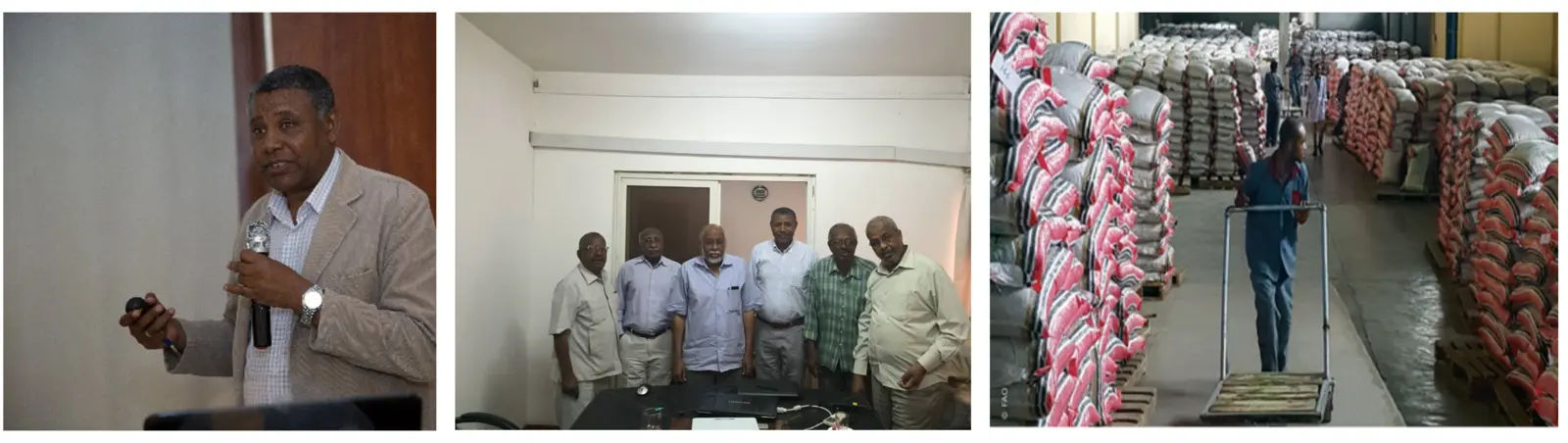
Dr Amani Idris of Sudan’s Agricultural Research Corporation emphasised that organised farmer groups improve access to finance, technologies, and private sector partnerships.
Similarly, private sector representatives reaffirmed their commitment to supporting farmers with integrated services, while calling for structured agreements to ensure sustainability.
Strengthening Partnerships for Sustainable Growth
Farmers at the event highlighted the benefits of collective action, including Improved access to credit and inputs, better coordination of production activities, and enhanced capacity to meet market demands.
Discussions also addressed risk management, with insurance providers outlining available coverage options and compensation mechanisms to support farmers in uncertain conditions. The engagement demonstrated that sustainable agricultural transformation depends on the following coordinated actions:
- Farmers organise and adopt innovations
- Private companies invest and deliver services
- Research institutions provide technical guidance
- Policymakers create enabling environments
Driving Africa’s Wheat Self-Sufficiency Agenda
The TAAT Wheat Compact, led by ICARDA and supported by the African Development Bank, is working across the continent to scale climate-smart wheat technologies and strengthen seed systems.
Through strategic partnerships and innovative delivery models, TAAT is contributing to increased wheat productivity, improved seed systems and value chains, enhanced market access and value addition, and greater resilience for farmers, including women and youth
Towards Wheat Self-sufficiency
The Elmangel field day highlights how innovation, partnerships, and farmer-led collaboration can transform agricultural systems (even in challenging environments).
By leveraging the IP approach and engaging the private sector, TAAT is helping Sudan move closer to wheat self-sufficiency, while building a more resilient and inclusive agricultural future.
As momentum continues to grow, TAAT’s message remains clear: when farmers, science, and business work together, transformation happens.
Recent Stories
Related Stories
- TAAT Demonstrates that Food Systems Transformation and Sustainability Can Go Hand in Hand
- Zimbabwe Hosts National Seed Summit to Accelerate Food Systems Transformation
- Benin: TAAT hosts Green Field Day, Showcases Wheat Potential
- eProd: How TAAT is Digitising Rice Seed Systems in Africa
- From Training to Transformation: How TAAT is Driving Aquaculture Innovation in the DRC