 IITA – Bénin Campus, 08 BP 0932 Tri Postal, Cotonou – République du Bénin
 @Taat_Africa
 TAAT Africa
 @taatafrica
TAAT targets resilient agropastoral systems through sustainable forage production in Senegal
The Technologies for African Agricultural Transformation (TAAT) programme continues to strengthen the resilience of agropastoral systems in West Africa through innovative, sustainable forage production initiatives.
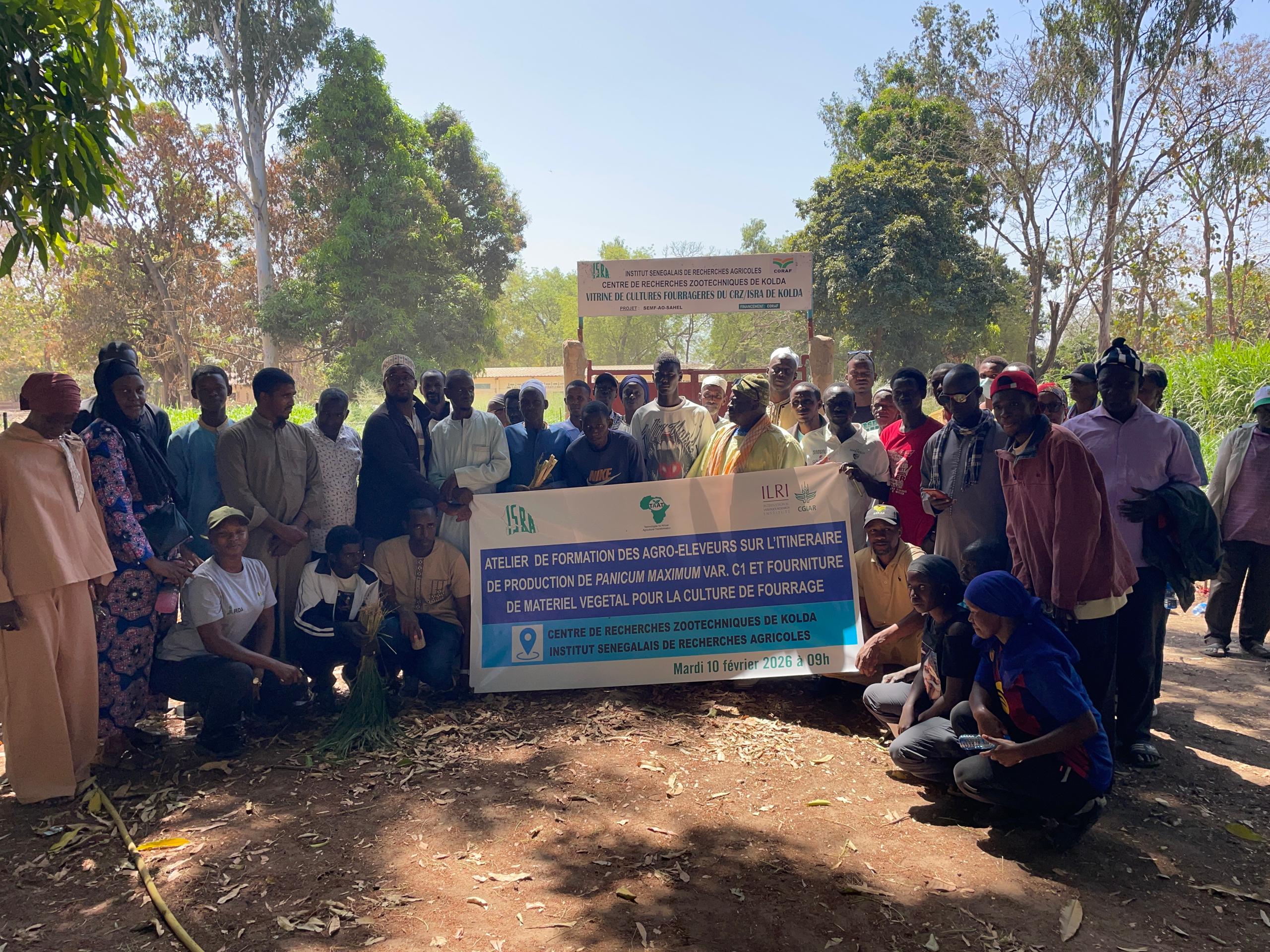
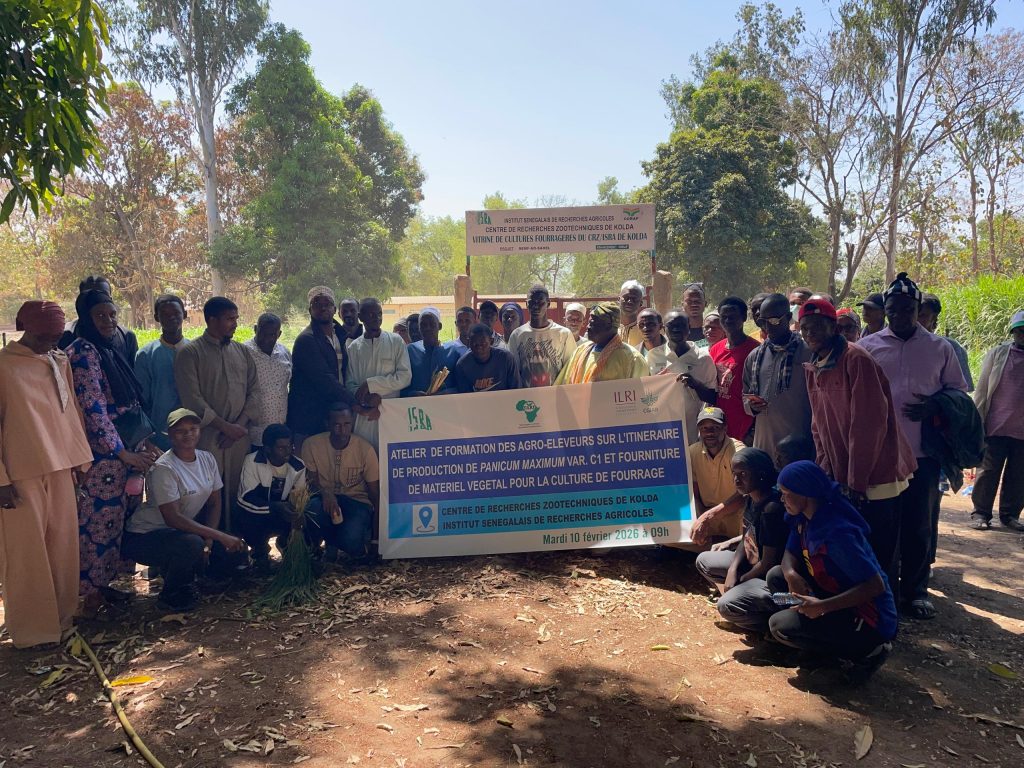
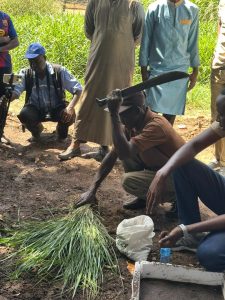
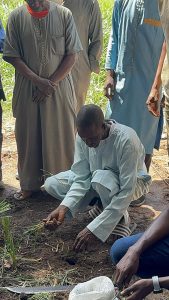
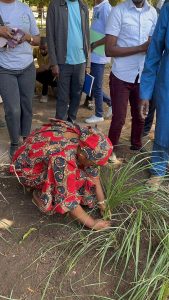
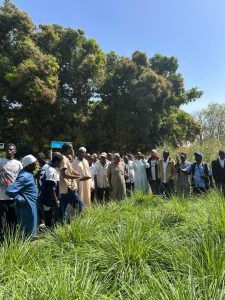
In Senegal, a training workshop held on February 11, 2026, at the Kolda Zootechnical Research Centre (CRZ/ISRA) trained more than 60 farmers, technicians, researchers, and trainees in modern forage production and conservation techniques, particularly those using Panicum maximum variety C1.
Faced with the progressive degradation of natural pastures caused by recurring droughts, overgrazing, the expansion of agricultural land, and the proliferation of invasive species, traditional livestock farming systems are under increasing pressure. In the Kolda and Sédhiou regions, where livestock farming is a vital source of income and food security, fodder availability is becoming a strategic issue for the sustainability of agro-pastoral farms.
It is in this context that TAAT, through its Livestock Compact led by the International Livestock Research Institute (ILRI), in collaboration with the Senegalese Institute for Agricultural Research (ISRA), organised a practical capacity-building session focused on fodder crops adapted to Sahelian conditions.
The main objective was to sustainably improve the production and availability of cultivated fodder while supporting agro-pastoralists in adopting new, resilient agricultural practices.
At the heart of this initiative is Panicum maximum var. C1, a species recognised for its high nutritional value, resistance to bushfires, and ability to withstand up to eight months of drought. This variety can produce 10 to 15 tons of forage, making it a promising solution for improving livestock feed in areas affected by dwindling pastoral resources.
Beyond technical presentations, participants benefited from practical demonstrations on sowing techniques, propagation by root division, and forage plot management.
Kits of plant material were also distributed to promote local seed multiplication and to establish pilot plots within the various communities represented.
According to Dr Samba Laha KA, Representative of the TAAT Livestock Compact, “the exchanges between researchers, technical organisations, and farmers also highlighted several priorities: developing local training programs, encouraging entrepreneurship in forage crops, facilitating access to financing, and strengthening women’s involvement in the dissemination of agricultural innovations.”
Through this initiative, TAAT confirms its commitment to promoting agricultural technologies adapted to African realities that strengthen climate resilience, improve livestock productivity, and sustainably support the livelihoods of rural communities.
Recent Stories
Related Stories
- Comoros: TAAT targets Food Systems Resilience through Innovations and Entrepreneurship
- AALI, CORAF rally stakeholders on TAAT’s pathway for robust African seed systems
- TAAT fosters Regional Approach to Innovative Wheat Seed Enterprise Development
- Unlocking Growth in Ghana’s Maize Sector: TAAT Strengthens Market Linkages and Agribusiness Skills for Value Chain Actors
- TAAT and Partners target Sustainable Sorghum Seed System in Senegal