 IITA – Bénin Campus, 08 BP 0932 Tri Postal, Cotonou – République du Bénin
 @Taat_Africa
 TAAT Africa
 @taatafrica

Unlocking Growth in Ghana’s Maize Sector: TAAT Strengthens Market Linkages and Agribusiness Skills for Value Chain Actors
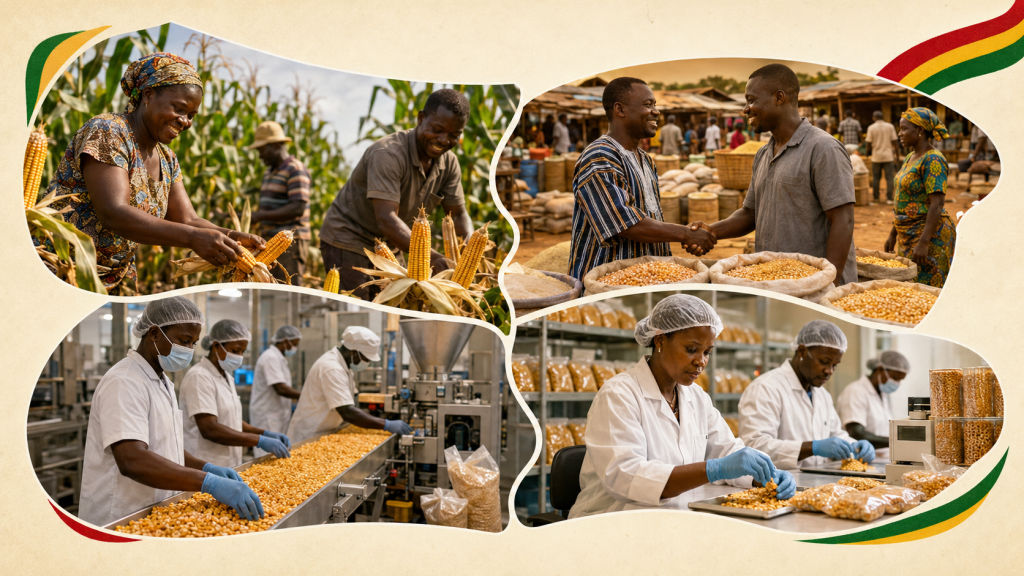
Despite increased maize production in Ghana, many smallholder farmers continue to face significant challenges in accessing reliable and profitable markets.
Weak connections with grain buyers, limited value addition, inadequate post-harvest handling, and low awareness of market quality standards continue to reduce farmers’ incomes and limit the commercial potential of improved maize varieties.
These constraints are particularly critical for biofortified maize, whose nutritional benefits can only translate into improved livelihoods if strong market systems support its production, processing and distribution.
To address these challenges, the Technologies for African Agricultural Transformation (TAAT), through its Maize Compact led by the African Agricultural Technology Foundation (AATF) in collaboration with the Council for Scientific and Industrial Research – Savanna Agricultural Research Institute (CSIR-SARI), is hosting a two-day agribusiness and market linkage training for agro-dealers, agroprocessors and grain off-takers in Ghana.
The activity is part of the TAAT Maize Project’s efforts to strengthen the country’s biofortified maize value chain and create sustainable market opportunities for farmers.
Scheduled for 22–23 July 2026 at the CSIR-SARI Conference Hall, the training will bring together more than 50 participants, including agro-dealers supplying agricultural inputs, maize processors, grain aggregators, grain off-takers, farmer organisations, extension officers and Innovation Platform members.
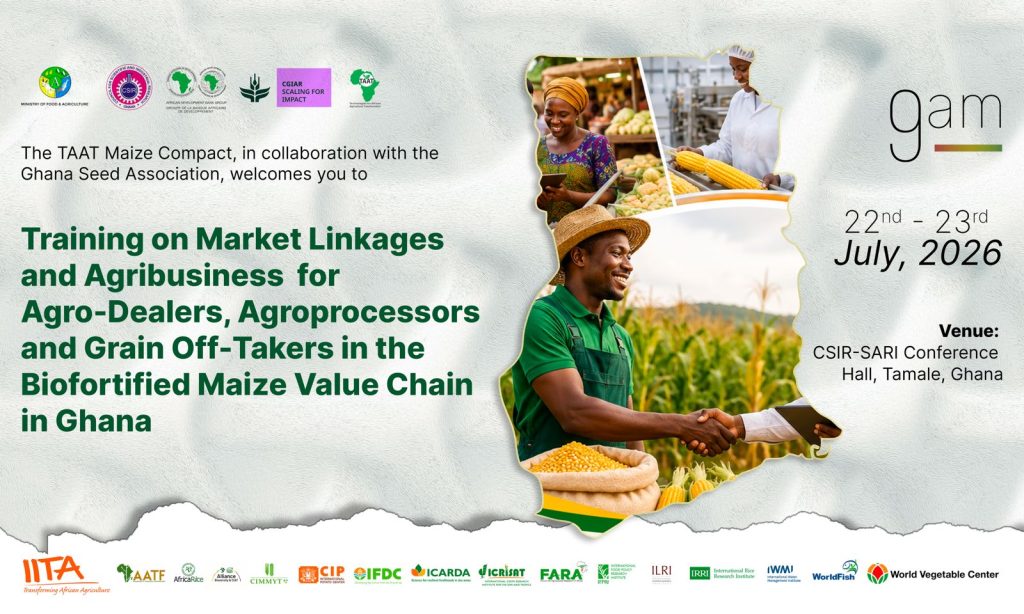
Particular emphasis will be placed on encouraging the participation of women- and youth-led small and medium-sized enterprises (SMEs), recognising their growing role in transforming agricultural value chains.
The initiative seeks to strengthen the capacity of private sector actors to improve market access, promote value addition and enhance agribusiness development around biofortified maize varieties rich in iron and zinc.
Participants will gain practical knowledge in business planning, enterprise management, financial record-keeping, pricing strategies, grain quality standards, post-harvest handling, storage, contract arrangements, and market negotiation.
They will also explore opportunities to process biofortified maize into higher-value products, including fortified maize flour, maize grits, packaged maize meal, and composite flour, while learning effective branding, packaging, and marketing strategies to increase consumer demand.
A major highlight of the programme will be dedicated business-to-business (B2B) networking sessions designed to connect maize producers with agroprocessors, grain buyers and aggregators.
According to Dr Jonga Munyaradzi, TAAT Maize compact leader, “These engagements will provide a platform for participants to discuss supply arrangements, quality requirements, pricing expectations and potential commercial agreements, thereby strengthening relationships across the entire value chain.”
“At the conclusion of this training, each participant will develop an action plan outlining how they intend to apply the knowledge gained to expand their businesses, source biofortified maize, strengthen market linkages and improve services to farmers.” Dr Jonga added
Through this intervention, TAAT expects to improve the business and technical capacities of SMEs, increase awareness of the nutritional and commercial value of iron- and zinc-rich biofortified maize, create stronger market connections between producers and buyers, and stimulate greater demand for biofortified maize products.
This activity is also expected to improve grain quality management, encourage greater private sector investment in maize processing and marketing, and ultimately increase income opportunities for farmers and other actors throughout the value chain.
By strengthening agribusiness skills and fostering sustainable commercial partnerships, TAAT continues to demonstrate that improving agricultural productivity must go hand in hand with developing efficient markets.
Through stronger collaboration among farmers, SMEs, processors and grain buyers, the initiative is helping build a more competitive, nutrition-sensitive and resilient maize value chain capable of delivering lasting economic and food security benefits in Ghana.
Recent Stories
Related Stories
- Ghana: TAAT and partners showcase improved maize varieties to farmers
- Seeing Is Believing: Nigeria’s Seed Industry Heads to the Field to Test Africa’s Next Generation of Crops
- From Breeders to Farmers: TAAT Brings Seed Technologies Closer to the Market in Nigeria
- From Research to Farmers’ Fields: TAAT and AFSTA Mobilise Africa’s Seed Industry to Scale Improved Crop Varieties
- Zimbabwe Hosts National Seed Summit to Accelerate Food Systems Transformation