 IITA – Bénin Campus, 08 BP 0932 Tri Postal, Cotonou – République du Bénin
 @Taat_Africa
 TAAT Africa
 @taatafrica
From Research Fields to Farmers’ Fields: TAAT and AFSTA Mobilise Africa’s Seed Industry to Scale Improved Crop Varieties
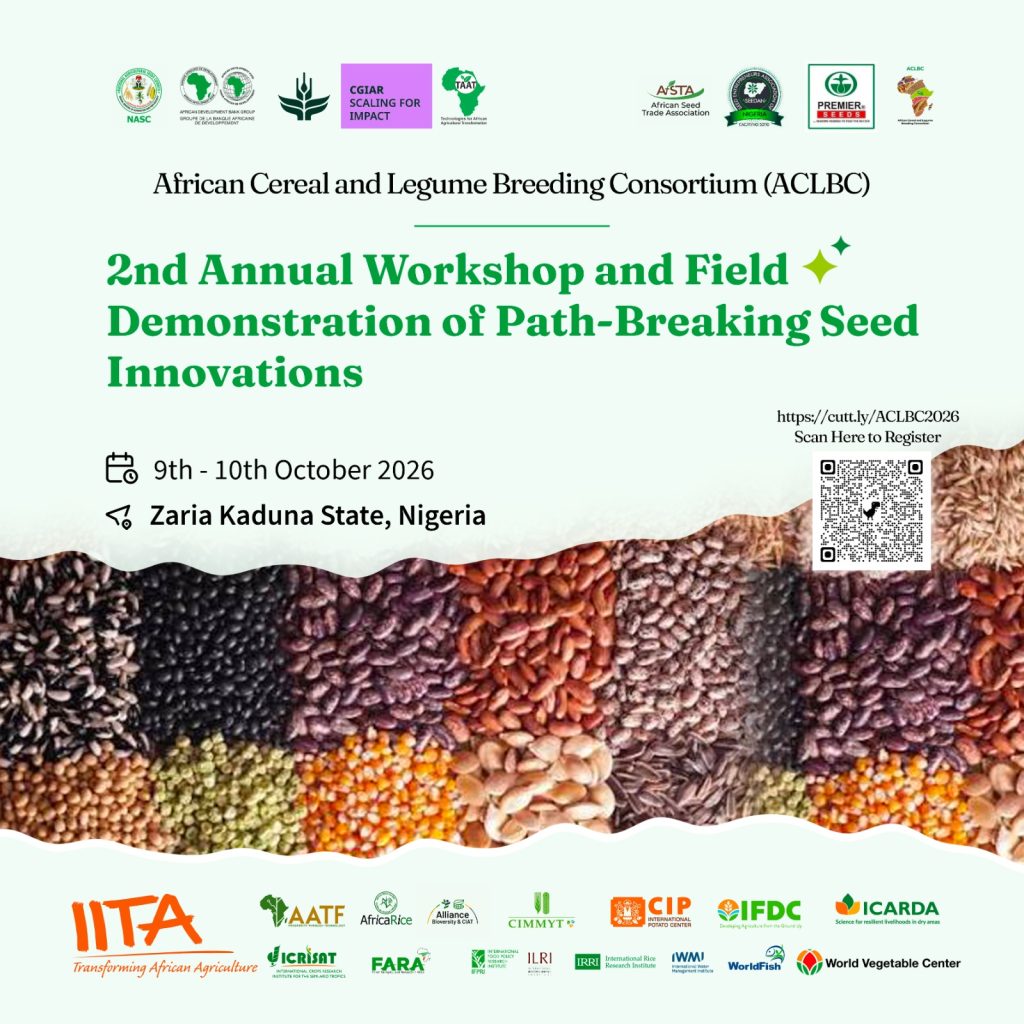
A two-day African Cereal and Legume Breeding Consortium workshop in Nigeria will bring seed companies, breeders and technology developers together to evaluate high-potential crop varieties and accelerate their commercial adoption across Africa.
As Africa seeks to increase agricultural productivity, strengthen food security and build resilience to climate change, the quality and availability of seed remain critical to the continent’s transformation. Yet developing an improved crop variety is only one part of the challenge. For that innovation to make a measurable difference, seed companies must be willing and able to multiply it, bring it to market and ensure farmers can access and use it.
Bridging this gap between agricultural research and commercial seed delivery is the central ambition of the African Cereal and Legume Breeding Consortium (ACLBC), an initiative established by the Technologies for African Agricultural Transformation (TAAT) and the African Seed Trade Association (AFSTA).
In October 2026, the consortium will take this ambition to Nigeria, bringing together seed companies, crop breeders, technology developers, regulators and other agricultural stakeholders for a two-day programme designed to turn field evidence into business decisions and improved access to quality seed.
The programme will feature a Green Field Day on 9 October, followed by plenary sessions, technical presentations, panel discussions and networking on 10 October. At its centre will be a one-hectare demonstration plot in Zaria, Nigeria’s Northwest state of Kaduna, developed with Premier Seeds, the consortium’s Nigerian Champion Partner, alongside the Seed Entrepreneurs Association of Nigeria (SEEDAN), the National Agricultural Seeds Council (NASC) and participating TAAT Compacts.
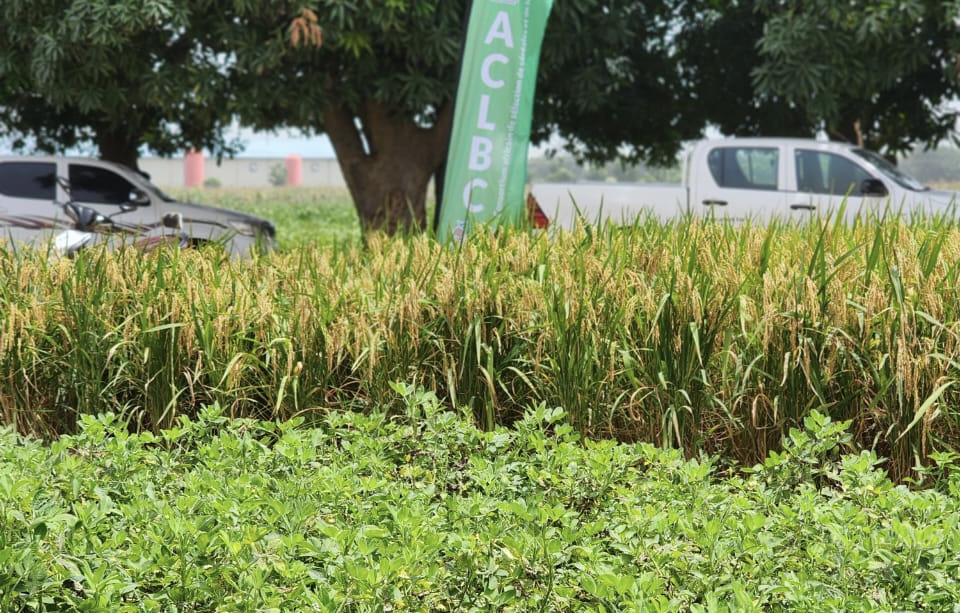
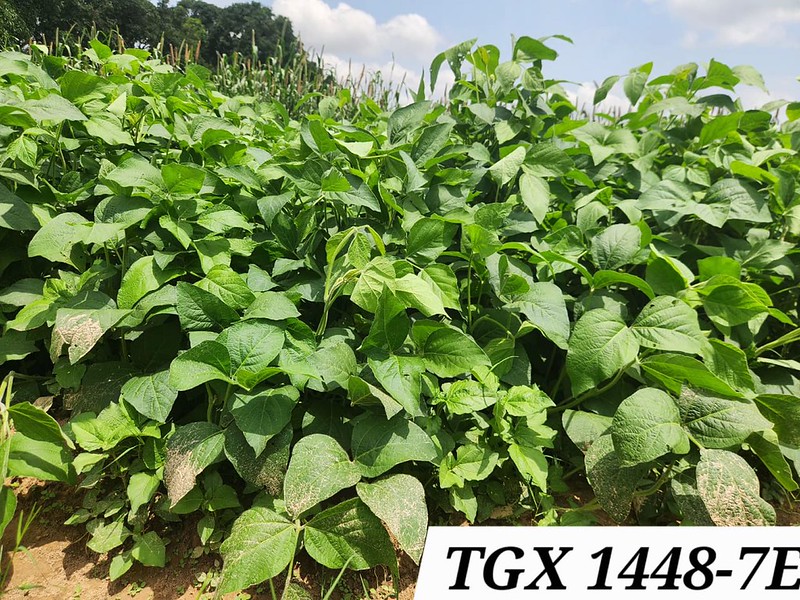
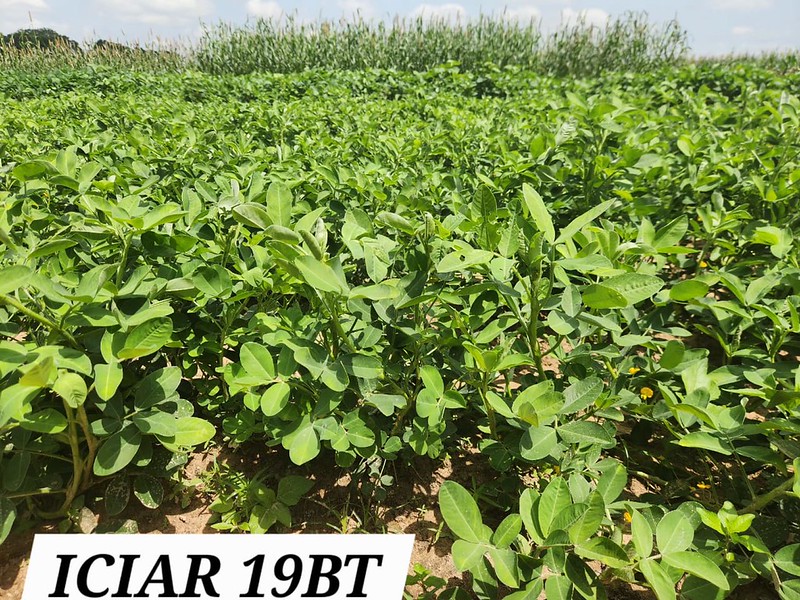
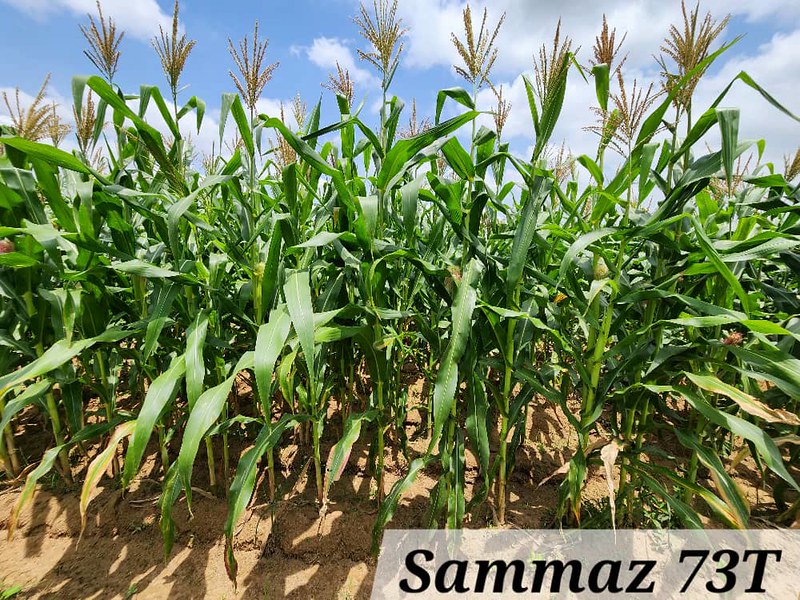
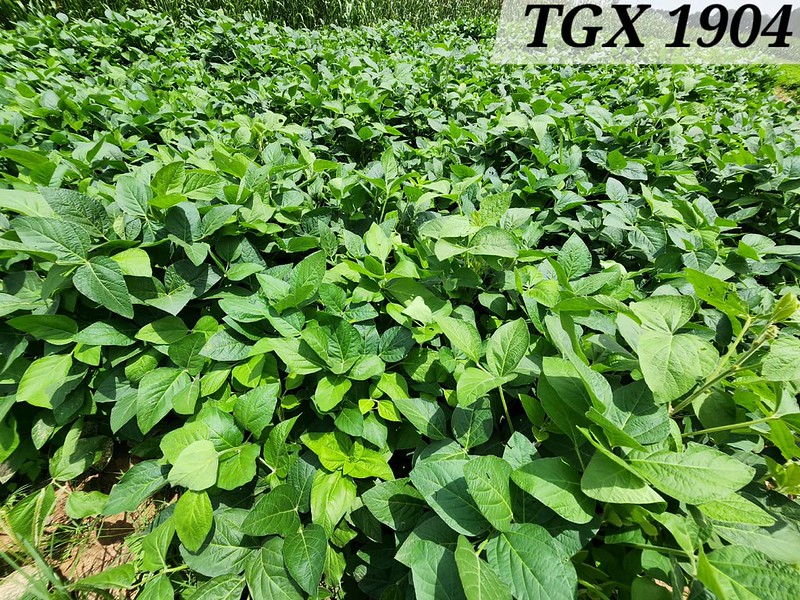
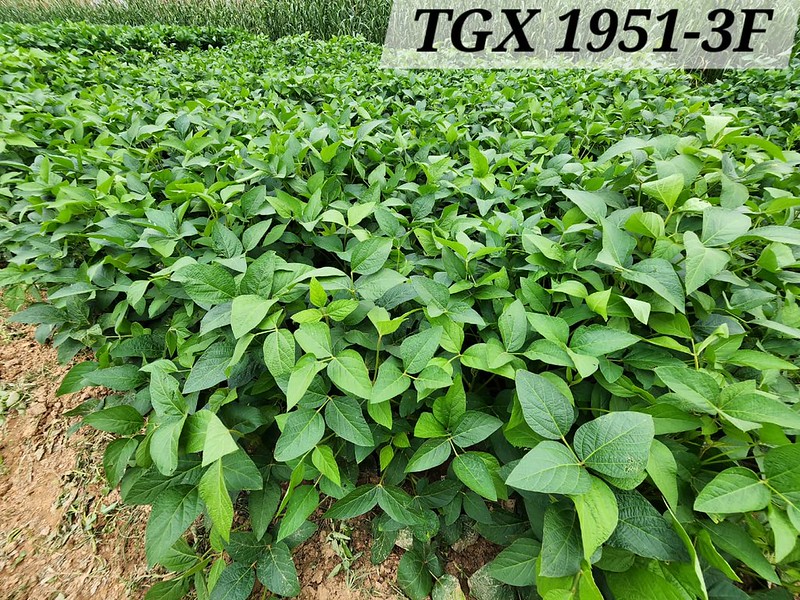
The demonstration plot will serve as a living catalogue of promising TAAT-vetted cereal and legume varieties, enabling seed companies to assess crop performance under field conditions and explore opportunities to incorporate suitable varieties into their commercial portfolios.
Turning agricultural innovation into a commercial opportunity
Africa’s agricultural research institutions have developed improved crop varieties and hybrids with the potential to raise productivity, strengthen resilience and improve food and nutrition security. However, the journey from breeding programmes to farmers’ fields depends on more than scientific achievement.
It requires functioning seed markets, reliable multiplication systems, regulatory alignment, private investment and sustained collaboration between technology developers and seed enterprises.
ACLBC was established to help connect these elements. Its ambition is to attract more than 200 seed companies to adopt and scale TAAT-vetted seed technologies, while encouraging closer collaboration among breeders, research institutions, and private-sector operators.
Through the consortium, participating companies can engage directly with technology owners, assess promising varieties and explore licensing, seed multiplication, branding and distribution opportunities. The approach also creates space for seed companies to communicate their market needs and work with breeders to develop products suited to their customers and operating environments.
This demand-driven model is important because the commercial success of an improved variety depends not only on its agronomic potential, but also on whether it meets farmers’ preferences, responds to local production conditions and offers a viable business opportunity for seed companies.
The consortium, therefore, seeks to make agricultural research more responsive to market demand while giving private enterprises a stronger role in determining which innovations are taken forward and scaled.
Nigeria’s seed industry takes centre stage
Nigeria provides a strategic setting for the 2026 ACLBC programme. With an estimated 600 seed companies, the country has a substantial base of enterprises that can help move improved varieties from research and demonstration into commercial production and distribution.
Mobilising this industry around proven technologies could create new opportunities for seed businesses while expanding farmers’ access to improved planting materials.
The workshop’s location in the Kaduna–Jigawa–Kano agricultural zone will allow participants to observe mature crops in a real field setting rather than relying exclusively on presentations, research reports or promotional materials.
The one-hectare plot has been established through the TAAT Clearinghouse, with technical contributions from participating TAAT Compacts. It will bring together selected varieties and hybrids for direct assessment, creating a common platform for breeders, seed companies and regulators to examine their characteristics and discuss potential adoption.
Crops scheduled for the field tour include rice, groundnut, cowpea, soybean, sorghum, millet and maize. Participants will examine comparative crop performance, yield potential, grain quality and relevant post-harvest and processing characteristics. Selected plots will also be harvested to demonstrate crop performance and provide opportunities for practical discussions on seed quality and production practices.
For participating companies, the field day offers an opportunity to ask commercially important questions: Which varieties are suited to their target markets? What evidence supports their performance? What are their seed production requirements? What licensing or regulatory steps may be necessary before commercialisation?
By bringing these questions directly to breeders and technical specialists, ACLBC aims to help companies make more informed decisions about the varieties they may adopt, multiply and distribute.
From field performance to seed-market adoption
The programme’s two-day structure is designed to connect practical evidence with the partnerships and decisions needed to scale technologies.
The Green Field Day on 9 October will focus on the evaluation of mature crops. Participants will tour the demonstration plot, observe selected varieties, engage with technicians and take part in harvest demonstrations. The emphasis will be on assessing visible field performance and discussing the agronomic and quality characteristics relevant to seed production and commercial use.
On 10 October, the workshop will shift to plenary discussions and technical engagement under the theme “Scaling TAAT Seed Technologies – Partnerships for Impact.” The programme will include keynote addresses, goodwill messages, presentations by technology owners, an industry panel, an open question-and-answer session and strategic networking.
The second day is intended to help translate field observations into concrete pathways for collaboration. Technology owners will have the opportunity to explain the attributes and requirements of their varieties, while seed companies can raise questions about access, licensing, multiplication and commercial deployment.
The discussions will also strengthen alignment with national seed-sector priorities, particularly through the involvement of SEEDAN and NASC. This connection is essential to ensuring that the adoption of improved varieties is supported by appropriate seed-quality assurance and relevant national regulatory frameworks.
IITA will provide technical backstopping and representation from breeding programmes, reinforcing the link between research expertise and the needs of companies preparing to take improved technologies to market.
A partnership built around the seed value chain
ACLBC’s approach rests on collaboration among institutions with complementary responsibilities.
AFSTA, as co-creator of the consortium, provides overall coordination and engagement with its member companies. The TAAT Clearinghouse leads technical oversight and programme design, helping connect validated agricultural technologies with organisations capable of scaling them.
Premier Seeds, the host and Champion Partner in Nigeria, is responsible for managing the demonstration plot and supporting local coordination and logistics. SEEDAN will mobilise seed companies and help align the workshop with national seed-sector priorities, while NASC will contribute its regulatory and quality-assurance perspective, including attention to registered varieties.
Participating TAAT Compacts will support seed sourcing, technical presentations and engagement with technology owners. IITA will provide technical support and connect the programme with relevant breeding expertise.
Together, these partners aim to create a practical interface between research, regulation and commercial seed delivery. Their collaboration builds on existing engagements to advance seed-system development in Nigeria and provides a platform to strengthen the relationships needed to expand access to improved planting materials.
For seed companies, the value lies in having direct access to technologies and the expertise needed to assess them. For breeders and research institutions, the consortium offers a route to understand market demand and establish relationships with potential commercial partners. For regulators and national seed-sector organisations, it creates an opportunity to support adoption within established quality and registration frameworks.
Building on experience in Kenya
The Nigerian workshop builds on ACLBC’s earlier field demonstration and engagement activities, including a programme held on 19 August 2025 at the Kenya Agricultural and Livestock Research Organisation (KALRO) research station in Njoro, Kenya.
Organised by AFSTA in collaboration with TAAT under the theme “Catalysing Seed Technology Adoption through Partnership, Performance & Field Experience,” the Kenyan event brought together seed companies, breeding institutions, seed inspectors, farmers and other public- and private-sector stakeholders.
Participants visited a two-acre demonstration plot featuring newly released, high-performing varieties of maize, soybean, rice, wheat, high-iron beans, sorghum and millet. The programme demonstrated the value of evaluating improved varieties under field conditions while bringing technology developers and prospective adopters into direct conversation.
Geoffrey Nsofon, ACLBC Lead, explained that the consortium seeks to stimulate interest among seed companies and accelerate the adoption, branding and scaling of elite varieties and hybrids developed by CGIAR Centres and Advanced Agricultural Research Institutions.
He also emphasised that the initiative goes beyond the uptake of finished varieties. It aims to strengthen seed companies’ capacity to produce their own parental lines and establish licensing arrangements that support multiplication and distribution in their respective markets.
Under this demand-driven approach, companies can articulate their priorities and collaborate with breeders to develop or access varieties that meet specific market needs.
AFSTA Secretary General Dr Yacouba Diallo described the field demonstration as an important step towards strengthening food systems resilience through seed innovation and private-sector engagement. He highlighted the role of seed companies in incorporating improved varieties into their portfolios, multiplying seed and making it available to farmers.
Dr Solomon Gizaw, Head of the TAAT Clearinghouse, likewise urged seed companies to take advantage of the consortium’s opportunities to access breeding technologies, develop partnerships and expand the availability of improved seed.
The Kenyan experience reinforced a key principle underpinning ACLBC: agricultural innovations are more likely to reach farmers when seed companies can assess their performance, understand their commercial potential and engage directly with the institutions responsible for developing them.
Why the private sector matters
Seed companies occupy a pivotal position between agricultural research and farmers’ access to improved varieties. They invest in seed production, multiplication, processing, quality management, branding and distribution—the activities that make it possible for research outcomes to become products farmers can purchase and plant.
Their participation is therefore central to the sustainability of technology adoption.
Through ACLBC, TAAT, and AFSTA seek to encourage companies to invest in promising varieties, strengthen their relationships with breeders and explore opportunities to expand their product portfolios. The consortium also provides a forum for companies to communicate their needs, identify suitable technologies, and establish partnerships to support future breeding and seed production.
The approach recognises that adoption cannot be secured through demonstrations alone. Field evidence must be complemented by access to suitable seed, reliable production systems, appropriate quality assurance, viable commercial arrangements and effective distribution channels.
This is especially important as African farming systems face pressure from climate variability, pests and diseases, soil degradation and growing demand for food. Improved varieties can contribute to resilience and productivity, but their potential depends on farmers’ access to high-quality seed appropriate to their conditions and preferences.
By connecting technology developers with companies capable of investing in multiplication and distribution, ACLBC seeks to strengthen this essential link.
From demonstration plots to continent-wide impact
The expected outcomes of the 2026 workshop extend beyond the two-day programme. By providing direct comparative evidence, the demonstration plot is intended to help seed companies make informed portfolio decisions and identify varieties with potential for adoption.
The technical presentations and discussions will create opportunities for prospective adopters to engage with technology owners, clarify requirements and explore possible licensing and commercial partnerships. The involvement of SEEDAN and NASC will further support collaboration with national seed-sector institutions, while Premier Seeds’ participation provides a practical foundation for local coordination and demonstration management.
The longer-term ambition is to expand the adoption of TAAT-vetted seed technologies through private investment and stronger links between breeding programmes and commercial seed markets.
For TAAT, the programme reflects the Clearinghouse’s broader role in connecting proven agricultural innovations with institutions and partners capable of scaling them. AFSTA offers a mechanism to engage seed companies around new technologies and commercial opportunities. For the wider seed industry, it creates a platform to strengthen relationships with breeders and research organisations while responding to the evolving needs of African farmers.
The success of this model will ultimately be measured not simply by the number of varieties displayed or participants attending, but by the partnerships established, technologies adopted, seed produced and made available, and farmers reached through stronger delivery systems.
A practical pathway to stronger seed systems
Africa’s agricultural transformation requires sustained investment in research, but it also requires the systems that carry research outcomes into production and markets. Improved varieties must be matched with capable seed enterprises, appropriate regulatory frameworks, technical support and distribution networks that reach farmers.
The ACLBC 2026 workshop in Nigeria seeks to bring these elements together in a practical setting: a field demonstration where performance can be examined, followed by structured discussions where evidence can inform partnerships and business decisions.
By bringing seed companies, breeders, technology owners, and national seed-sector institutions to the same table—and into the same field—the consortium is working to shorten the distance between agricultural innovation and commercial adoption.
The central message is clear: developing a better seed is only the beginning. Making that seed available, accessible, and commercially sustainable enables its benefits to reach farmers and contribute to Africa’s food security.
Through its collaboration with AFSTA, TAAT, Premier Seeds, SEEDAN, NASC, IITA, and participating TAAT Compacts, ACLBC is seeking to turn promising crop technologies into practical opportunities for seed businesses and to build a stronger foundation for resilient African agriculture.
Recent Stories
Related Stories
- Zimbabwe Hosts National Seed Summit to Accelerate Food Systems Transformation
- Africa targets high yields amidst climate resilience as new cereal and legume breeding consortium takes off
- Inspired by Nature for Climate and for the Future: How TAAT is Scaling Nature-Based Agricultural Solutions Across Africa
- Liberia Hosts Seed Sector Investment Roundtable to Unlock Agricultural Transformation
- KENYA: TAAT and Partners convene stakeholders for a seed roadmap