 IITA – Bénin Campus, 08 BP 0932 Tri Postal, Cotonou – République du Bénin
 @Taat_Africa
 TAAT Africa
 @taatafrica
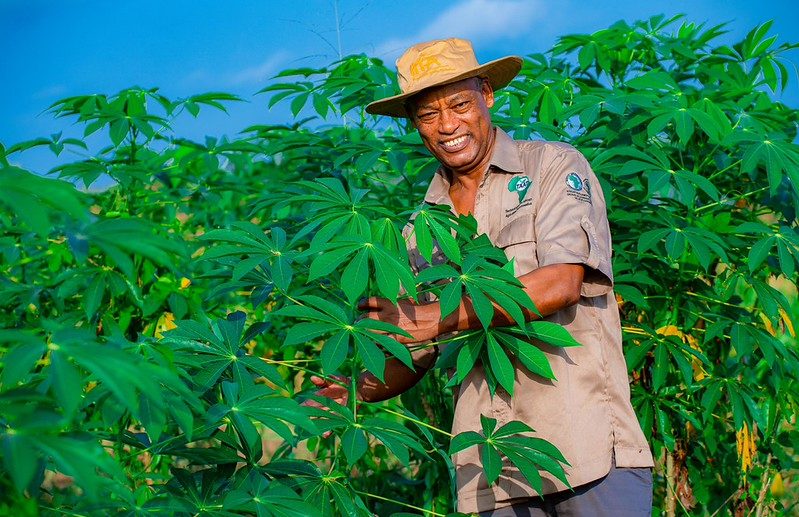
Inspired by Nature for Climate and for the Future: How TAAT is Scaling Nature-Based Agricultural Solutions Across Africa
As the world marks World Environment Day 2026 under the theme “Inspired by Nature. For Climate. For Our Future,” the Technologies for African Agricultural Transformation (TAAT) programme is demonstrating that nature-based solutions hold the key to building resilient food systems, combating climate change, and securing Africa’s agricultural future.
Across the continent, farmers are facing increasing climate-related challenges, including droughts, floods, land degradation, declining soil fertility, biodiversity loss, and unpredictable weather patterns. These challenges threaten food security, livelihoods, and economic growth.
To address these realities, TAAT, established by the African Development Bank (AfDB) and implemented by a consortium of agricultural research and specialised institutions led by the CGIAR, has placed environmental sustainability at the centre of African food systems transformation. Through its Environmental, Social, Health and Safety (ESHS) framework, TAAT promotes agricultural innovations that work with nature rather than against it.
According to Engr Maina Githinji, TAAT’s Environmental, Social, Health and Safety (ESHS) Expert, “2026 World Environment Day provides an opportunity to showcase how TAAT is delivering agricultural transformation that is nature-positive, climate-smart, and people-centred. Through our Environmental, Social, Health and Safety (ESHS) approach, we are helping farmers increase productivity while protecting ecosystems, strengthening climate resilience, and improving livelihoods across Africa.”
Harnessing Nature to Build Climate Resilience
Healthy soils, resilient crops, efficient water use, and biodiversity conservation are fundamental to sustainable food production. TAAT is helping millions of farmers adopt Good Agricultural Practices that restore soil health, conserve water resources, reduce environmental degradation, and improve productivity.
By promoting integrated soil fertility management, sustainable land management, responsible agrochemical use, and climate-smart farming practices, the programme is enabling farmers to increase yields while protecting natural ecosystems. The result is stronger resilience to climate shocks and more sustainable agricultural landscapes.
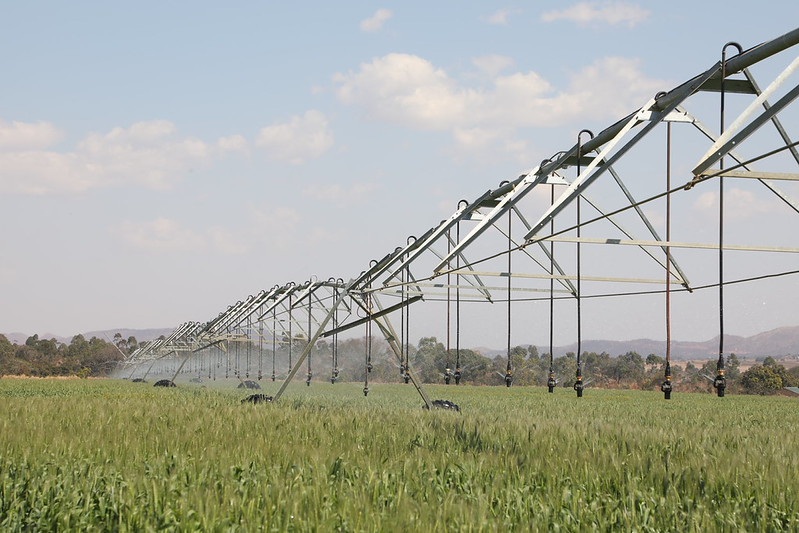
Climate-Smart Technologies for a Changing World
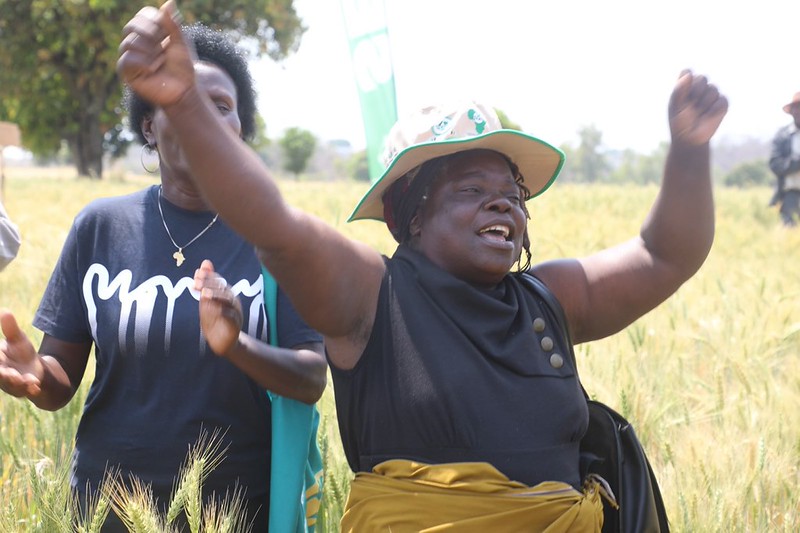
Climate adaptation is no longer optional (it is essential). TAAT has accelerated the deployment of climate-resilient agricultural technologies, including drought-tolerant maize, heat-tolerant wheat, improved legumes, and stress-resistant traditional grains.
These innovations help farmers adapt to changing climatic conditions while reducing the risks associated with droughts, heat stress, and erratic rainfall. Across participating countries, farmers are experiencing improved productivity and greater resilience while contributing to more sustainable food systems.
Empowering Communities to Protect the Environment
Environmental sustainability cannot be achieved without people. TAAT ensures that women, youth, smallholder farmers, and vulnerable groups actively participate in agricultural transformation.
The programme has strengthened local capacity through farmer training, extension services, environmental awareness campaigns, and climate adaptation initiatives.
Thousands of farmers have been trained on sustainable agricultural practices, environmental stewardship, occupational health and safety, and responsible natural resource management.
These efforts are helping communities become active custodians of their environments while improving livelihoods.
Reducing Waste and Maximising Natural Resources
One of the most effective ways to protect the environment is to reduce food loss and waste.
Through technologies such as hermetic storage systems, improved threshers, and modern processing equipment, TAAT is helping farmers preserve more of what they produce.
Reducing post-harvest losses lowers pressure on natural resources, improves food availability, and increases incomes for farming households.
This approach contributes directly to climate resilience while supporting sustainable economic growth.
Building Africa’s Green Agricultural Future
TAAT’s experience demonstrates that agricultural productivity, environmental protection, climate resilience, and social inclusion are mutually reinforcing goals.
By drawing inspiration from nature and investing in climate-smart solutions, Africa can build agricultural systems that nourish people, protect ecosystems, and create opportunities for future generations.
“On this World Environment Day, TAAT reaffirms its commitment to supporting farmers, strengthening food systems, conserving natural resources, and advancing sustainable agricultural transformation across Africa. Because Africa’s future depends on agriculture that works with nature (or climate), for communities, and for generations to come,” Dr Solomon Gizaw, Head, TAAT Clearinghouse, added.
Established in 2018 as a flagship of the AfDB’s Feed Africa Strategy, TAAT facilitates food systems transformation in Africa by providing access to path-breaking ag innovations, policy harmonisation, and robust seed systems. The TAAT Programme is a transformative initiative aimed at reversing the decline in food productivity in Africa.
The programme is partnership-driven, representing a collaboration between international financial institutions, the CGIAR Scaling for Impact Programme and Advanced Agricultural Research Institutes. TAAT operates through a Regional Technology Delivery Infrastructure comprising international, national, and regional research institutions, Farmer cooperatives, seed companies, extension service providers, and development partners.
So far, TAAT has integrated 71 cases of technologies into 14 large-scale projects and technical assistance into 21 projects across 24 countries, thereby influencing $857 million, and the integration of 136 cases of technologies into 18 large-scale projects across 21 countries, influencing $1.7 billion under the African Development Fund (ADF) concessional loans and grants window of the African Development Bank.
TAAT has reached 25 million farmers (62% of its 40 million target), produced 62 million MT of food, and generated $4.09 billion in agricultural value, integrating 238 technology use cases into projects across 31 countries, influencing $3.18 billion in investments to date.
Recent Stories
Related Stories
- African Development Bank approves phase II of TAAT programme
- TAAT Demonstrates that Food Systems Transformation and Sustainability Can Go Hand in Hand
- TAAT wins National Association of Black Journalists Salute to Excellence Award
- TAAT records transformational breakthroughs in African agriculture as Phase I ends
- KENYA: TAAT and Partners convene stakeholders for a seed roadmap