 IITA – Bénin Campus, 08 BP 0932 Tri Postal, Cotonou – République du Bénin
 @Taat_Africa
 TAAT Africa
 @taatafrica
Jigawa State Positions Itself as a Strategic Implementation Partner for TAAT III
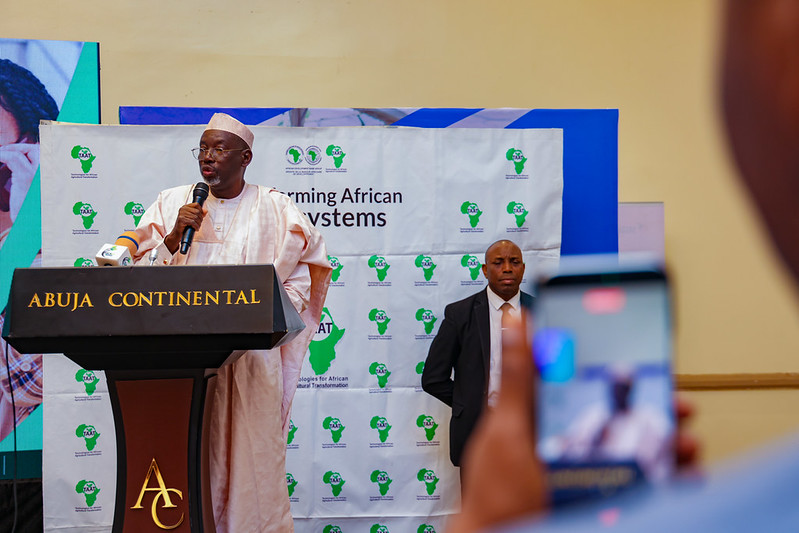
The Executive Governor of Jigawa State, North West Nigeria, His Excellency Malam Umar Namadi, FCA, has called for stronger Agricultural Innovation Systems and sustainable technology delivery mechanisms to accelerate agricultural transformation, improve food security and create jobs across Africa.
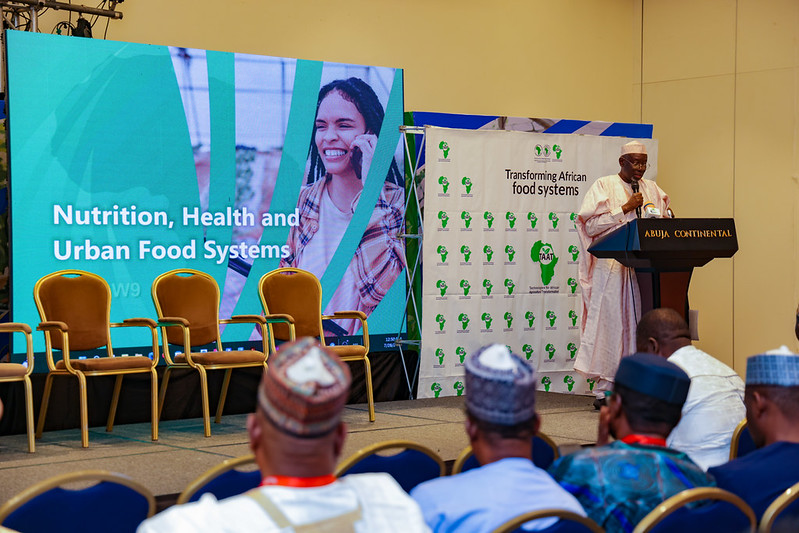
Delivering the keynote address at the High-Level TAAT Parallel Session during the 9th Africa Agriculture Science Week (AASW-9) in Abuja, the Governor said Africa’s greatest agricultural opportunity lies not in generating more scientific discoveries alone, but in building effective systems that move proven technologies from research institutions into the hands of millions of farmers.
Speaking before representatives of the African Development Bank (AfDB), CGIAR Scaling for Impact Programme, the Technologies for African Agricultural Transformation (TAAT) Programme, research institutions, governments, development partners, private-sector organisations, and farmer groups, Governor Namadi described the conference as an important platform for translating agricultural science into higher productivity, improved food security and better livelihoods across the continent.
“Africa’s agricultural opportunity lies in turning proven science into broad-based productivity, jobs, food security and shared prosperity,” the Governor said, noting that the challenge is to move validated innovations beyond research stations and pilot projects into widespread adoption by farmers.
TAAT: A Continental Model for Scaling Innovation
Governor Namadi commended the African Development Bank’s Technologies for African Agricultural Transformation (TAAT) Programme for demonstrating that agricultural transformation depends on much more than technology itself.
He described TAAT as one of Africa’s most effective responses to bridging the gap between research and development by connecting proven technologies with strategic value chains and delivery systems that can reach farmers at scale.
According to the Governor, the programme’s greatest lesson is that successful agricultural transformation requires coordinated investments in enabling policies, extension services, finance, mechanisation, private-sector participation, markets, and accountable institutions that work together to support technology adoption.
Agriculture at the Centre of Jigawa’s Development Strategy
Highlighting Jigawa State’s own transformation agenda, Governor Namadi noted that agriculture remains the foundation of the state’s economy, accounting for more than 80 per cent of its projected Gross Domestic Product while providing livelihoods for millions of residents.
He explained that the state’s long-term vision is to transform this strong agricultural base into a driver of food security, economic diversification, investment, employment and shared prosperity through a combination of policy reforms, institutional strengthening and strategic partnerships.
Central to this vision is the establishment of the Jigawa Agricultural Transformation Agency (JATA), created to coordinate agricultural programmes, attract private investment, promote evidence-based planning and connect farmers with finance, irrigation, mechanisation, markets and modern technologies.
Governor Namadi noted that JATA’s objectives closely align with TAAT’s focus on productivity, strategic commodity value chains, climate resilience and inclusive agricultural development.
Investing in Science, Research and Human Capital
The Governor outlined several initiatives aimed at strengthening science-driven agricultural transformation in the state.
These include the launch of a Wheat Value Chain Research Programme that supports postgraduate research on seed development, irrigation efficiency, and value chain improvement, in partnership with universities and research institutions. The programme seeks to generate locally relevant technologies while ensuring that research findings are translated into practical recommendations for farmers.
He also highlighted the state’s investment in human capital through postgraduate scholarships for more than 80 academics specialising in agriculture and related disciplines to strengthen research, technology adaptation and extension services.
In addition, the Jigawa State Agricultural Research Institute has been repositioned with improved funding, modern facilities and stronger partnerships to support farmer-focused research, improved seed systems, soil fertility management, irrigation, climate-smart agriculture and agro-processing.
Mechanisation and Irrigation Driving Productivity
Governor Namadi emphasised that mechanisation is central to Jigawa’s agricultural modernisation strategy.
He said the establishment of the Jigawa Farm Mechanisation Service Company has enabled the deployment of one of Nigeria’s strongest state-led mechanisation fleets, providing farmers with tractors, harvesters, planters and other equipment through decentralised commercial service centres.
The initiative, he explained, has reduced labour constraints, expanded cultivated land, created rural enterprises and attracted greater youth participation in agriculture.
The Governor also highlighted ongoing investments in dam rehabilitation, irrigation infrastructure and renewable-energy-powered irrigation systems that are enabling year-round production while improving resilience to climate change through climate-smart farming practices and sustainable soil management.
Expanding Access to Inputs, Extension and Livestock Development
To improve agricultural productivity, the state has launched a comprehensive wet-season support programme targeting 90,000 farmers with certified seeds, subsidised fertiliser, and herbicides, and strengthened extension services, supported by digital farmer registries and electronic verification systems.
Governor Namadi also underscored the growing importance of livestock development, noting that the creation of a dedicated Ministry for Livestock is supporting improved feed production, veterinary services, and animal health, as well as stronger partnerships with international organisations to expand dairy and livestock value chains.
Looking Ahead to TAAT III
Looking to the future, Governor Namadi expressed strong support for the next phase of the Technologies for African Agricultural Transformation Programme.
He said Jigawa State looks forward to a results-oriented partnership under TAAT III that works directly with implementation-ready states to strengthen Agricultural Innovation Systems, mobilise private-sector investment, expand digital agriculture, promote climate resilience and accelerate the scaling of proven agricultural technologies.
The Governor further announced that Jigawa State is ready to serve as an implementation platform for TAAT III by leveraging its extensive arable land, irrigation infrastructure, mechanisation systems, farmer networks and institutional capacity to support farmer-centred agricultural transformation initiatives.
Building Systems That Deliver Results
Concluding his address, Governor Namadi stressed that Africa’s agricultural future depends on building systems capable of translating scientific innovation into measurable improvements in productivity, employment, food security and rural prosperity.
“Our transformation must be driven by science, delivered through strong institutions and partnerships, and measured by sustainable growth and better lives for our people,” he said.
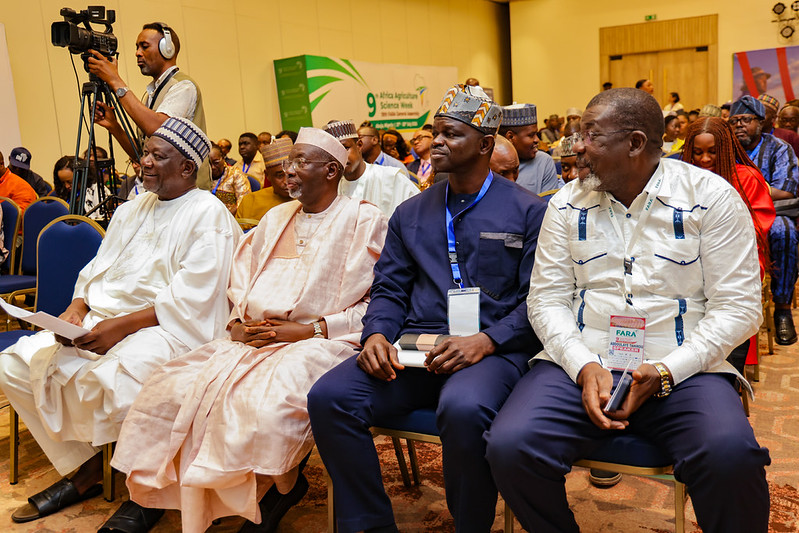
The High-Level TAAT Parallel Session formed part of the TAAT Ecosystem Engagement at the 9th Africa Agriculture Science Week and brought together leaders from government, research, development finance institutions, the private sector, and farmer organisations to examine strategies to strengthen technology delivery systems and advance resilient, inclusive, and sustainable agrifood systems across Africa.
Since its establishment in 2018 under the African Development Bank’s Feed Africa Strategy, TAAT has demonstrated that agricultural transformation is possible when proven technologies are delivered at scale. To date, the programme has reached more than 25 million smallholder farmers across the continent, increased productivity by up to 69 per cent, influenced US$3.18 billion in agricultural investments, supported the distribution of 488,000 tonnes of improved climate-resilient seed, facilitated the delivery of 3.1 million tonnes of fertiliser under the African Emergency Food Production Facility, produced over 4,333 metric tonnes of breeder seed, enabled production of 309,073 metric tonnes of certified seed, validated more than 180 proven agricultural technologies, and developed national Seed Roadmaps in eight African countries.
Through commodity compacts, policy reforms, digital innovation, and strategic partnerships, TAAT has helped governments accelerate access to improved seed, climate-smart technologies, mechanisation, digital extension services, and resilient farming systems.
Recent Stories


Related Stories
- Gov Namadi Hails TAAT as a Continental Model for Scaling Innovation, Positions Jigawa as a Launchpad for TAAT Phase III
- TAAT harps on Ag-Innovation Systems to Accelerate Africa’s Food System Transformation as Agriculture Science Week Ends
- Jigawa State Delegation explores scale-up Opportunities with TAAT
- TAAT Rallies Seed Actors at #SeedConnectAfrica
- From Lab to Land: TAAT Arms 100 Extension Experts to Fast-Track Farm Innovation in Nigeria