 IITA – Bénin Campus, 08 BP 0932 Tri Postal, Cotonou – République du Bénin
 @Taat_Africa
 TAAT Africa
 @taatafrica
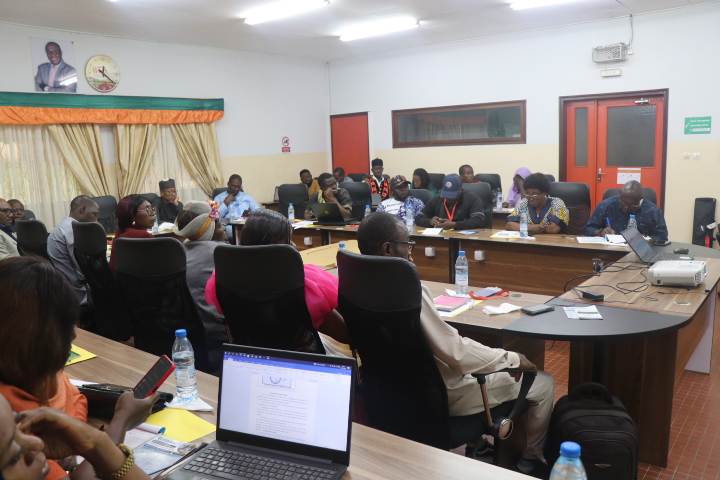
TAAT targets climate-resilient and market-oriented soybean value chain in Cameroon
Strengthening soybean production, processing and market participation requires more than access to inputs. Producer cooperatives also need practical knowledge of good agricultural practices, post-harvest management, value addition, business management and organisational governance.
In Cameroon, strengthening these capacities is essential to help cooperative groups improve productivity, reduce post-harvest losses, develop viable soybean-based enterprises and participate more effectively in a competitive and inclusive value chain.
These efforts can also help create economic opportunities for women and young people while supporting food and nutrition security.
To respond to these needs, the Technologies for African Agricultural Transformation (TAAT) Programme, through its Capacity Development and Technology Outreach (CDTO) Compact led by Forum for Agricultural Research in Africa (FARA) and the TAAT Soybean Compact led by the International Institute of Tropical Agriculture (IITA), is working with the the Institute of Agricultural Research for Development (IRAD), and the Cameroon Agricultural Cooperative (CAC) to officially launch and operationalise the Cameroon Soybean Innovation Platform in Yaoundé from 24 to 28 August 2026.
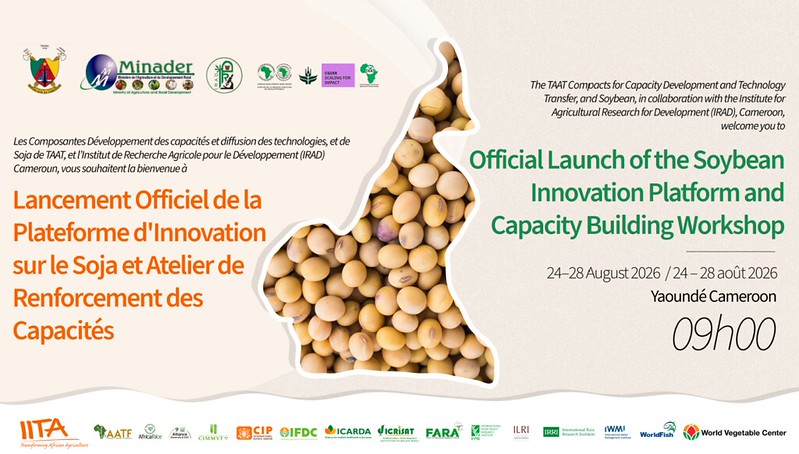
The five-day engagement combines an official launch with four days of intensive capacity building. The first day will formally launch the Soybean Innovation Platform and bring together key partners to align on their respective roles, implementation priorities, coordination mechanisms and reporting arrangements. The following four days will focus on strengthening the capacities of cooperative members, platform leaders, and other value chain actors.
Participants will receive practical training on soybean Good Agricultural Practices (GAPs), covering soil health; land preparation and site selection; seed selection and treatment; planting techniques; nutrient management; weed management; pest and disease control; harvesting; and post-harvest handling and storage.
The programme will also address climate-smart agriculture and soybean resilience, quality standards and grading, and practical post-harvest quality assessment.
The training will further explore opportunities beyond primary production, with sessions on soybean oil processing, by-product development, nutrition and food products, market linkages and access to finance.
Participants will also strengthen their knowledge of cooperative governance, financial management, monitoring, evaluation and reporting, providing them with a broader understanding of how to manage and develop soybean enterprises and organisations.
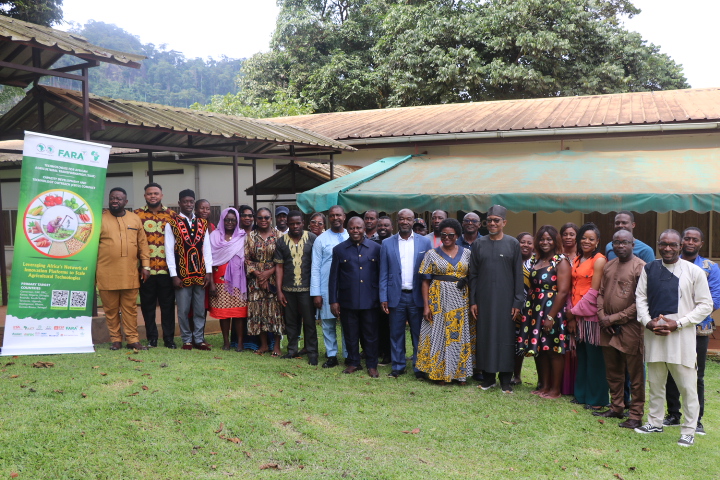
According to Dr Abdulrazak Ibrahim, the TAAT CDTO Leader, “beyond the training, the initiative is designed to facilitate the wider dissemination of knowledge and technologies through the participating cooperatives and the Cameroon Soybean Innovation Platform.”
“Participants will develop 90-day action plans to guide follow-up activities, promote peer learning, and support the adoption of improved practices among other soybean producers and value chain actors,” Dr Ibrahim added.
The workshop is expected to strengthen the ability of cooperative groups to apply improved soybean production and processing practices, enhance the quality of their produce and manage their organisations more effectively. It will also support the development of a shared work plan, implementation timelines and a reporting framework for the activities of the Soybean Innovation Platform.
Through this engagement, TAAT and its partners aim to strengthen a more productive, climate-resilient and market-oriented soybean value chain in Cameroon, contributing to agricultural transformation, improved livelihoods and sustainable food and nutrition security.
Recent Stories
Related Stories
- Zimbabwe Hosts National Seed Summit to Accelerate Food Systems Transformation
- Malawi Hosts Soybean Brown Field Day to Showcase TAAT Technologies and Boost Value Addition
- Liberia Hosts Seed Sector Investment Roundtable to Unlock Agricultural Transformation
- Cameroon: TAAT holds ToT on Soybean Production
- Seeing Is Believing: Nigeria’s Seed Industry Heads to the Field to Test Africa’s Next Generation of Crops