 IITA – Bénin Campus, 08 BP 0932 Tri Postal, Cotonou – République du Bénin
 @Taat_Africa
 TAAT Africa
 @taatafrica
Uganda: TAAT showcases improved and resilient soybean varieties

In Uganda, soybean is a strategic crop for food security, income generation, and agro-industrial development. To support this, the Technologies for African Agricultural Transformation (TAAT) is deploying innovative production solutions to improve yields and livelihoods.
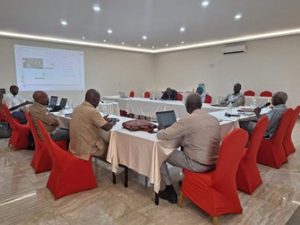
It was within this context that the TAAT Soybean Compact, led by the International Institute of Tropical Agriculture (IITA), organised the Soybean Green Field Day on December 1, 2025, at the IITA Namulonge campus in Kampala.
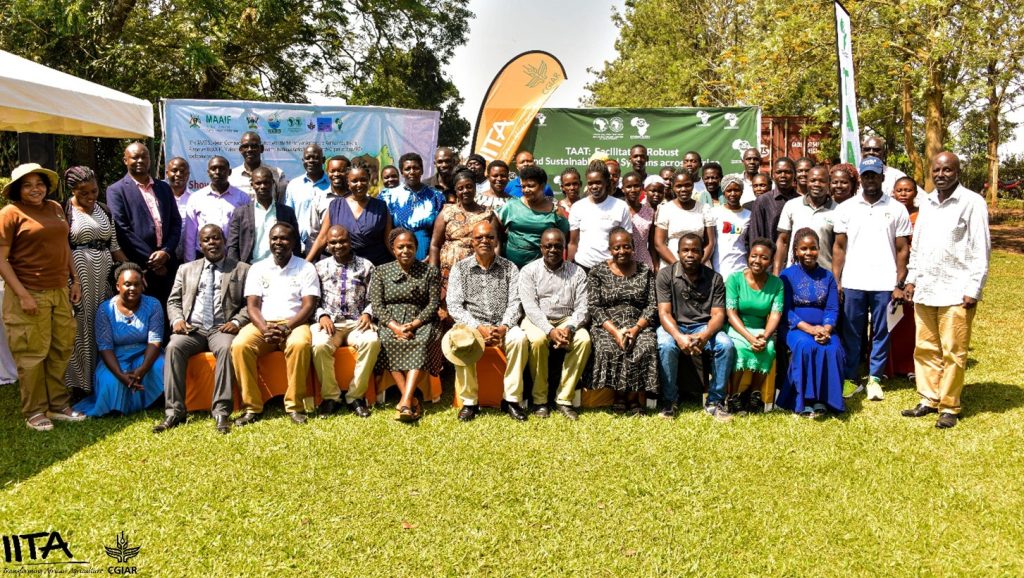
The field day brought together 122 stakeholders, including researchers, policymakers, private sector actors, farmer organisations and youth agripreneurs, to showcase TAAT-promoted soybean technologies and demonstrate their performance under field conditions.
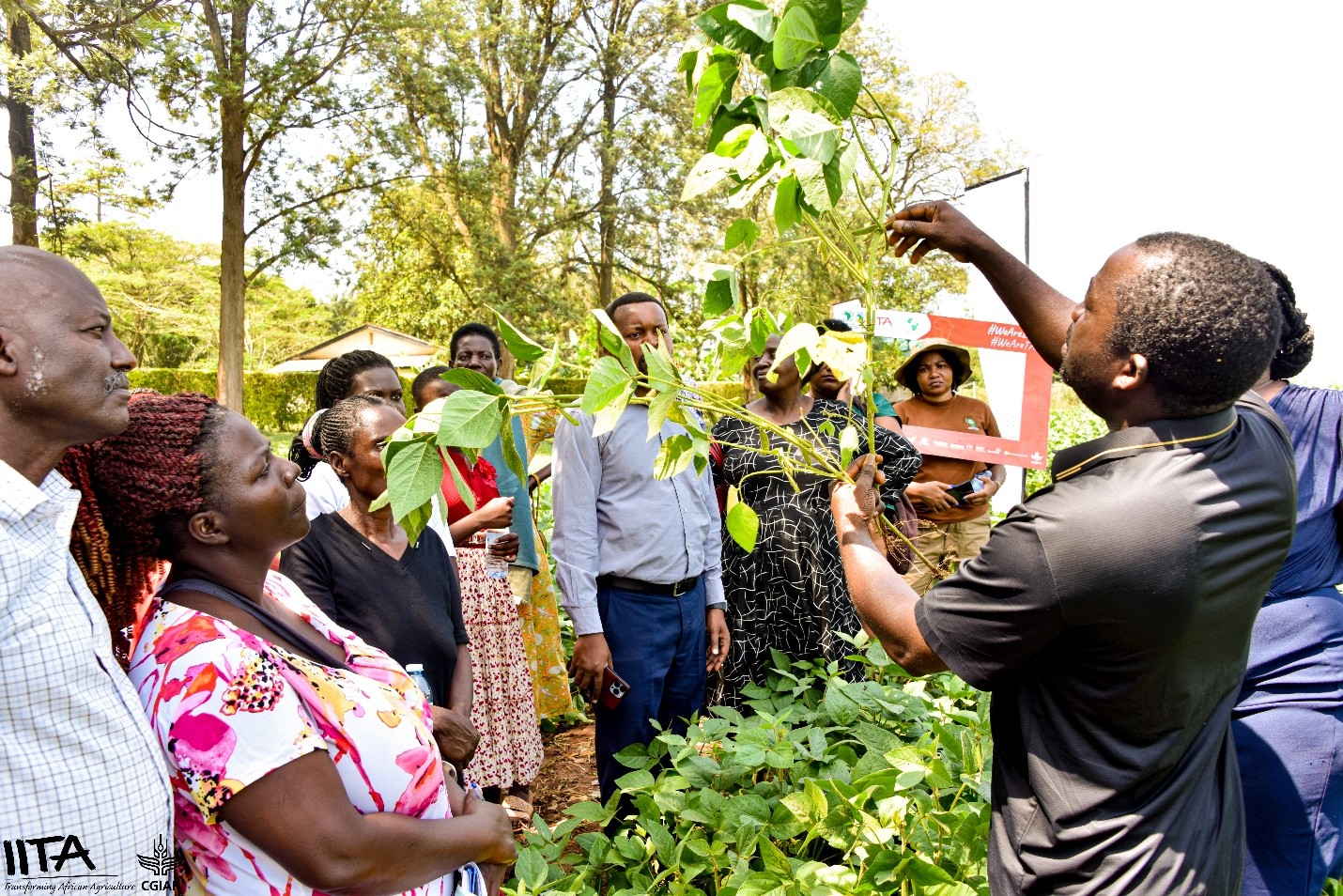
The event focused on facilitating the adoption of improved technologies by comparing Nodumax, an inoculant developed and promoted by IITA under TAAT, Rhizobia inoculants and foundation seed from Makerere University’s Soybean Breeding Programme, as well as prevailing farmer practices, while also providing a platform for knowledge exchange, stakeholder networking and technology exhibitions along the soybean value chain.
In an opening address at the event, the IITA Country Representative in Uganda, Dr George Mahuku, underscored the importance of youth inclusion as a core element of TAAT’s approach to agricultural transformation.
He noted that TAAT and IITA have invested in youth-focused initiatives such as the ENABLE TAAT Youth Programme, recognising that with more than 60 per cent of Uganda’s population being youth, their meaningful participation is critical to building a resilient and competitive agricultural sector.
In Uganda, TAAT’s soybean interventions are aligned with national priorities to boost productivity, strengthen value chains, and improve market opportunities.
During the technical demonstrations, Dr. Oluwaseun Omikunle, Technical Expert with the TAAT Soybean Compact, highlighted the key technologies promoted by TAAT to improve soybean productivity, improved and resilient seed varieties, effective inoculants, good agronomic practices and timely planting.
He explained that the TAAT Soybean Compact targets an increase in yields from an average of 800 kg per hectare to about 2.5 metric tons per hectare, provided that farmers adhere to recommended practices, including proper spacing of 5 cm by 50 cm.
He also emphasized the advantages of Nodumax, a TAAT-promoted inoculant that can be stored at room temperature for up to one year, noting that its adoption significantly enhances nodulation, yields and farmer incomes.
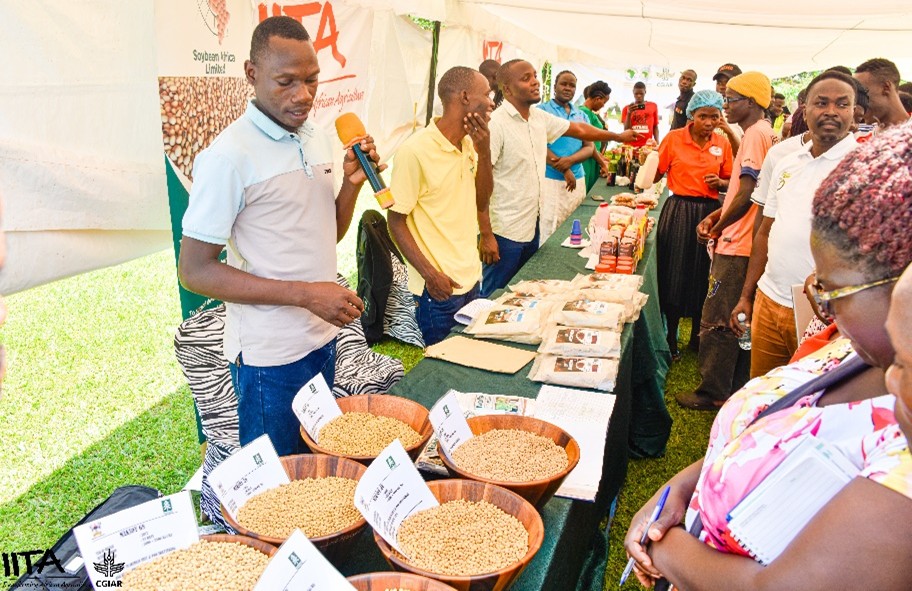
The event further showcased TAAT-enabled innovations and entrepreneurship, with exhibitions featuring improved soybean varieties such as Maksoy 1 to 6, production inputs including Nodumax and Rhizobia inoculants, herbicides and fertilizers, as well as a wide range of soybean-based processed and value-added products.
These included composite flour, fortified beverages, yogurt, ice cream, bread and locally processed fortified products, illustrating the income and employment opportunities supported by TAAT along the soybean value chain.
Research and seed system development, key pillars of TAAT’s delivery model, were highlighted by Professor Phineas Tukamuhabwe from Makerere University, who noted that Maksoy varieties released through collaborative research now account for over 90 percent of soybean grown in Uganda.
He emphasized ongoing partnerships between universities, research institutions, the private sector, and development partners, supported by TAAT, to ensure farmers access to quality seed.
Private sector engagement, another critical element of TAAT’s scaling strategy, was reflected in remarks by Mr. Joel Mbabazi from Soybean Africa, who expressed strong interest in collaborating with IITA to support the commercialisation of Nodumax after observing its performance during the field demonstrations.
Farmers also shared firsthand experiences on the impact of TAAT-promoted technologies. Ms. Jioweria Namutebi, a soybean farmer from Bombo, highlighted soybean as a low-input, high-return crop that contributes to improved nutrition and household income, reinforcing TAAT’s objective of linking productivity gains to livelihood improvement.
From the policy and regulatory perspective, Dr. Martin Chemonges, Senior Agricultural Inspector for Seed Inspection at the Ministry of Agriculture, Animal Industry and Fisheries, emphasized the importance of certified seed, noting that quality seed contributes between 50 and 60 percent of total productivity.
He encouraged farmers to use certified seed with green labels and to seek guidance from extension services, aligning with TAAT’s emphasis on quality assurance and good agronomic practices.
In the closing session, Dr. Eunice Kansiime of the National Agricultural Research Organization highlighted national research efforts that complement TAAT’s interventions and encouraged farmers to adopt improved varieties such as Maksoy 3N and Maksoy 6N, known for high yields and tolerance to soybean rust.
She further reinforced TAAT’s messages on the use of inoculants such as Rhizobium and Nodumax and adherence to recommended practices to respond to growing market demand.
The TAAT Soybean Green Field Day reaffirmed TAAT’s role as a key driver of soybean transformation in Uganda by linking research, technology delivery, private sector engagement and farmer adoption.
The event demonstrated how TAAT-enabled innovations can enhance productivity, create market opportunities and contribute to sustainable agricultural transformation.
Recent Stories

Related Stories
- How TAAT is Unlocking Uganda’s Soybean Potential through Youth-driven Value Addition
- Kenya: TAAT holds ToT Workshop on Soybean Agronomy, Seed Production and Entrepreneurship
- Zimbabwe: TAAT eyes Impact at scale with Wheat Value Chain Workshop
- Cameroon: TAAT holds ToT on Soybean Production
- Ghana: TAAT and partners showcase improved maize varieties to farmers