 IITA – Bénin Campus, 08 BP 0932 Tri Postal, Cotonou – République du Bénin
 @Taat_Africa
 TAAT Africa
 @taatafrica
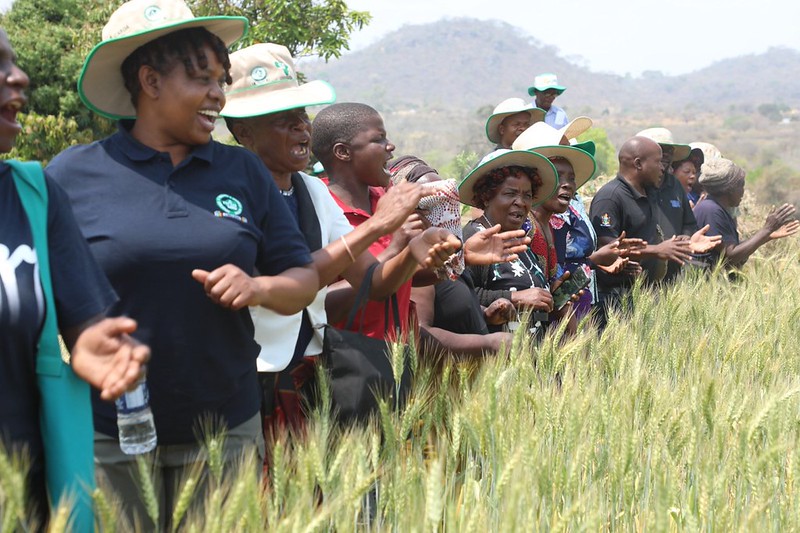
From Emergency Response to Food Systems Resilience: How TAAT is Connecting Science, Investment and Country Priorities
Africa’s food systems are being tested by a succession of shocks—from the COVID-19 pandemic and climate change to conflict, disrupted global trade and rising food, fuel and fertiliser prices. The lesson is clear: Africa needs agricultural systems that can respond quickly to crises while also building the resilience needed to withstand the next one.
Two high-level side events at the 2026 African Food Systems Forum in Kigali will explore how the continent can turn that lesson into action—by connecting proven agricultural technologies, stronger partnerships, scientific expertise and development finance to country-led food systems transformation.
Learning from Africa’s Emergency Food Response
On 2 September 2026, the high-level side event, “From Emergency Responses to Food Systems Resilience: Lessons Learned from the African Emergency Food Production Facility (AEFPF) for Africa’s Next Generation of Agricultural Investments,” will examine what Africa can learn from one of the continent’s most ambitious responses to a food security crisis.
The African Development Bank’s USD 1.5 billion AEFPF was launched in response to disruptions in cereal supplies from the Black Sea region caused by the Russia–Ukraine conflict. The Facility supported 35 African countries in rapidly increasing food production through improved seed systems, fertiliser access, technology deployment, policy reforms, digital innovation, and strategic partnerships. At the heart of this response was the recognition that Africa already had proven technologies that could be deployed quickly to increase production while laying foundations for longer-term resilience.
The results were significant. The Facility produced more than 45 million metric tons of food, supported the distribution of over 406,000 metric tons of certified seed and 2.9 million metric tons of fertiliser, and reached almost 15 million farmers, of whom 38.8% were women.
TAAT played a critical role in this effort, helping demonstrate how proven agricultural innovations can be connected to large-scale investment and rapidly translated into production at the country level.
The Kigali discussion will therefore go beyond celebrating the Facility’s achievements. It will ask a more strategic question: How can Africa institutionalise the capacity to respond rapidly to future food-system shocks while ensuring that emergency investments also strengthen long-term resilience?
The dialogue will focus on scaling proven technologies, strengthening national seed systems, improving access to inputs, building competitive value chains, expanding digital solutions, and deepening partnerships among governments, research institutions, development finance institutions, the private sector, and farmers.
From Science to Investment at Scale
The second side event, “CGIAR Scaling in Food Systems: Capital, Science, Partners—Connecting Scientific Innovation to Development Finance at Scale,” on 3 September 2026, takes the conversation one step further. Its central message is straightforward: scientific innovation alone cannot transform Africa’s food systems. Innovation must be connected to finance, national priorities and effective delivery mechanisms.
The session will draw heavily on the experience of TAAT and other emerging models, including the ADB–CGIAR Clearinghouse Facility and the IsDB–CGIAR partnership, to examine how proven CGIAR innovations can be integrated into large-scale agricultural investments.
TAAT provides an important example. Through its Clearinghouse approach, proven technologies can be identified, validated and packaged around specific country and investment needs, helping governments and international financial institutions integrate scientific solutions into agricultural investment programmes. This creates a practical pathway from science to investment, investment to implementation, and implementation to farmer impact.
The discussion will also highlight the role of catalytic partners. Institutions such as the Gates Foundation, IFAD and the Islamic Development Bank can help strengthen the infrastructure required for scaling, reduce the risks associated with adopting innovation and unlock much larger public and private investments in food systems transformation.
Building an Architecture for Scale
Together, the two events reflect a critical evolution in Africa’s agricultural transformation agenda. What did Africa learn from responding to a major food crisis? And how can those lessons—and the continent’s scientific and technological capabilities—be embedded in the investment systems that will shape Africa’s food future?
The answer lies in stronger connections among science, national priorities, finance, and implementation. The challenge is no longer simply to develop more agricultural innovations. Africa needs mechanisms that can identify what works, align it with country priorities, package it for investment, mobilise the right partners, and support implementation at scale.
That is where the experience of TAAT becomes particularly relevant.
TAAT has shown that CGIAR innovation can move beyond individual research projects when there is a structured mechanism to connect scientists and technology developers with governments, IFIs, private-sector actors, and delivery partners. The model provides practical lessons for building a more responsive and investment-oriented scaling architecture across Africa and beyond.
From Lessons to Action
The Kigali dialogues are expected to generate practical recommendations for the next generation of agricultural investments, including stronger country engagement, institutional capacity, policy reform, digital innovation, improved monitoring and evaluation, and more effective collaboration among governments, CGIAR, development finance institutions, the private sector and development partners.
The ultimate objective is not simply to respond better to the next crisis. It is to build food systems that are productive enough to meet rising demand, resilient enough to withstand shocks, competitive enough to create economic opportunities, and innovative enough to continuously adapt to changing conditions.
For Africa, the pathway is increasingly clear: connect the best of science with the power of investment, anchor both in country priorities, and build the partnerships needed to deliver results at scale. The Kigali discussions provide an opportunity to turn that ambition into a practical agenda for Africa’s next generation of food systems investments.
Recent Stories
Related Stories
- TAAT Model Gains Prominence as Africa Explores the Next Phase of Food Systems Pathway
- Growing Blue: TAAT and Partners Seek to Unlock Rwanda’s Aquaculture Potential
- Rwanda: TAAT strengthens aquaculture value chain and boosts sustainable local fish production
- TAAT and Partners present Zambia’s Seed Sector Assessment to Stakeholders
- TAAT Demonstrates that Food Systems Transformation and Sustainability Can Go Hand in Hand