 IITA – Bénin Campus, 08 BP 0932 Tri Postal, Cotonou – République du Bénin

 @Taat_Africa
 TAAT Africa
 @taatafrica

From Independent Farmers to Certified Seed Entrepreneurs: How TAAT Is Taking Ethiopia’s Wheat Revolution to the Next Level
In the highlands of southern Ethiopia, a quiet but significant transformation is taking root. Farmers who once cultivated wheat independently, with limited access to quality seed and formal markets, are becoming organised seed producers, building cooperatives and forging business partnerships that could reshape the future of wheat production across their communities.
At the heart of this transformation is the Technologies for African Agricultural Transformation (TAAT) Programme, whose wheat interventions are helping Ethiopia push beyond the milestones of national wheat self-sufficiency towards a more sustainable, productive and commercially driven agricultural system.
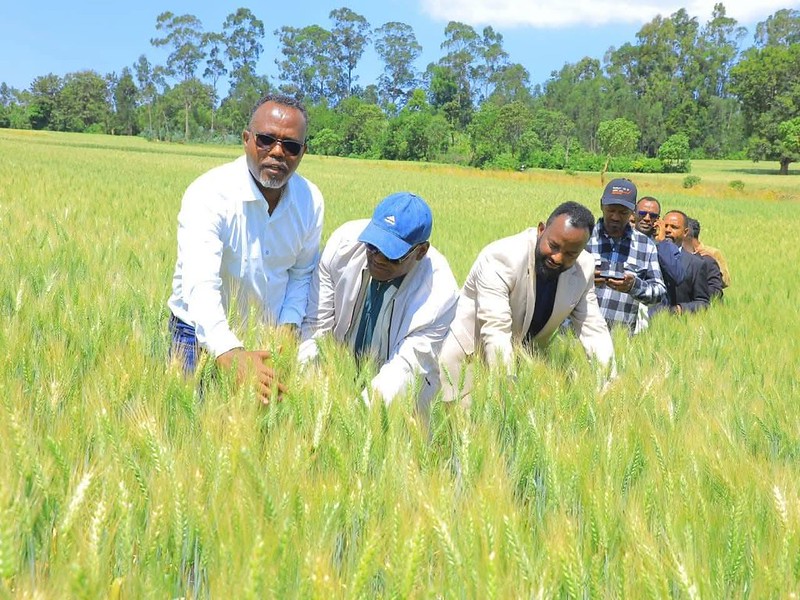
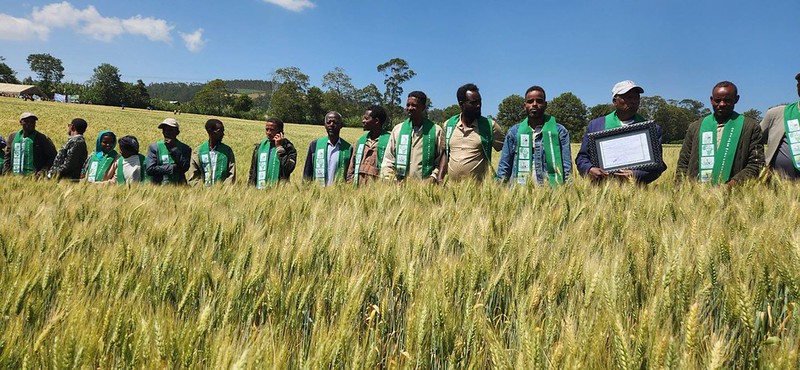
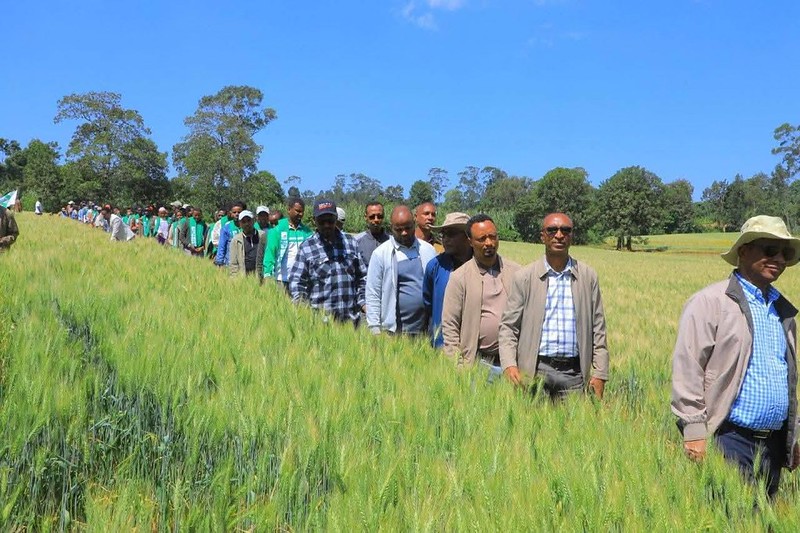
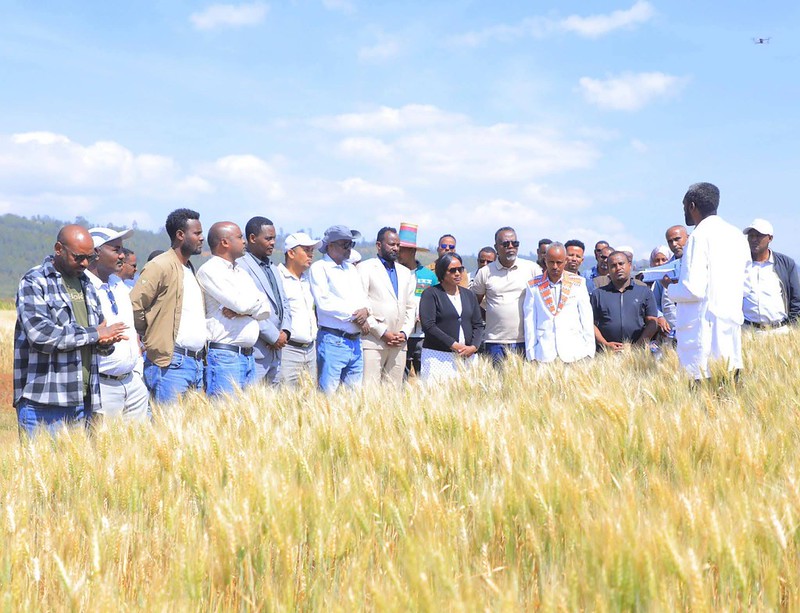
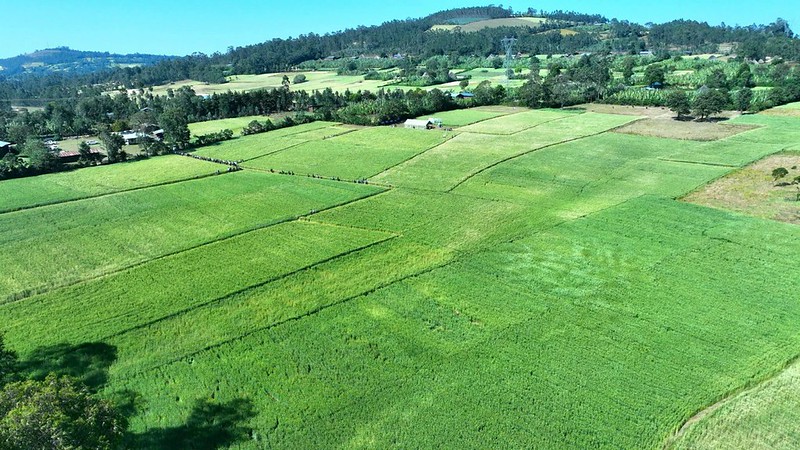
In Buma Kebele, Misha District, Hadiya Zone, Central Ethiopia Region, the progress is becoming increasingly visible. During a field visit, TAAT, the Ethiopian Institute of Agricultural Research (EIAR) and national stakeholders assessed wheat demonstration plots and seed production activities supported by the TAAT-II Wheat Compact, marking the second year of implementation in the district.
What they encountered was more than a demonstration of improved wheat technologies. It was evidence of how targeted agricultural interventions, farmer organisation and strategic partnerships can turn smallholder farmers into active players in the agricultural seed business.
From individual effort to collective enterprise
For many smallholder farmers, access to quality seed remains one of the biggest barriers to improving agricultural productivity. Even where improved varieties are available, weak seed multiplication systems, limited commercial networks and fragmented farmer organisations can prevent these innovations from reaching the fields where they are needed most.
In Misha District, TAAT-II is helping to address this challenge by changing not only what farmers grow, but also how they organise, produce and participate in the agricultural value chain.
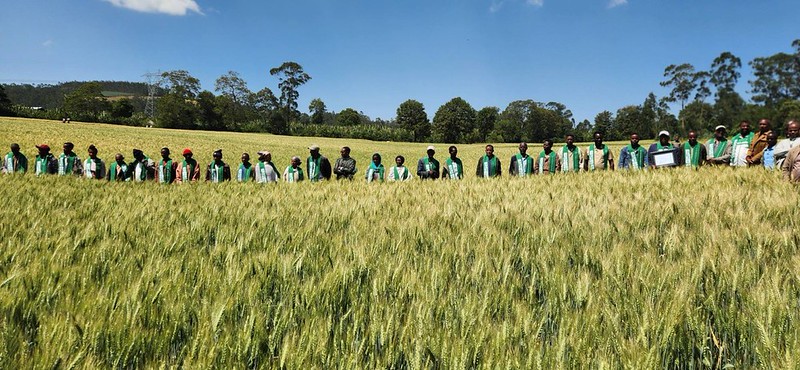
Through the Compact’s support, farmers who previously operated independently have been organised into formal seed-producing farmers’ cooperatives. More significantly, these cooperatives have obtained official certification to engage in seed production, giving them formal recognition and a stronger foundation for participating in Ethiopia’s seed industry.
This development represents an important breakthrough. Rather than remaining individual producers dependent on external seed suppliers, farmers are acquiring the organisational capacity and institutional recognition to become producers and suppliers of quality wheat seed themselves.
The transition also opens new economic opportunities. By producing seed collectively, farmers can strengthen their bargaining power, improve production planning, share resources and establish more reliable connections with seed markets.
Connecting farmers to markets and sustainable seed businesses
The transformation in Buma Kebele does not end with cooperative formation and certification. Recognising that sustainable seed production requires reliable buyers and functioning market relationships, TAAT-II has facilitated formal linkages between the newly established cooperatives and the Central Ethiopia Seed Enterprise.
The emerging partnership is designed to create a mutually beneficial relationship between local seed-producing farmers and an established seed-sector institution.
For the cooperatives, the relationship offers opportunities to strengthen their technical and commercial capacity, improve the quality of seed produced and establish more dependable market outlets. For the Seed Enterprise, it creates opportunities to expand its engagement with organised local producers and strengthen the supply of quality wheat seed.
This connection is particularly important because the sustainability of improved seed production depends on more than farmers’ ability to produce seed. It also requires quality assurance, effective distribution, market demand and commercial arrangements that make seed production economically viable.
By connecting farmers’ cooperatives with an established seed enterprise, TAAT is helping bridge the gap between agricultural research, local seed production and the formal seed market.
“The expected benefits extend beyond wheat. Stronger local seed systems can create opportunities to improve access to quality planting materials for other agricultural commodities, contributing to broader agricultural productivity and economic development across the region,” Dr Wuletaw Tadesse Degu, TAAT Wheat Compact Leader, said.
Building on Ethiopia’s wheat self-sufficiency gains
Ethiopia’s progress in wheat production has become an important demonstration of what sustained investment in agricultural research, improved technologies and strategic partnerships can achieve. Through TAAT’s interventions, the country has accelerated the deployment of improved, heat-tolerant wheat varieties and irrigation-based production technologies, helping expand wheat cultivation and strengthen domestic supply.
The country’s wheat transformation has demonstrated that Africa can challenge longstanding assumptions about its dependence on imported staple cereals when proven technologies are matched with effective delivery systems, government commitment and investment.
But sustaining these gains requires moving beyond production expansion. It demands stronger national seed systems capable of continuously supplying farmers with improved varieties, supporting varietal replacement and ensuring that productivity gains are maintained over successive growing seasons.
This is where the work in Misha District assumes wider significance.
While Ethiopia’s wheat revolution has demonstrated the potential of improved technologies to increase national production, the TAAT-II intervention is helping address the institutional and commercial foundations needed to sustain that progress at the local level. In effect, the focus is shifting from simply helping farmers grow more wheat to enabling them to participate in a functioning seed economy that can support continued productivity improvements.
Partnerships that take agricultural innovation further
The progress in Misha District reflects the importance of collaboration among national agricultural institutions, development partners and international research organisations.
Working with the Government of Ethiopia, EIAR, the African Development Bank, and the CGIAR Scaling for Impact Programme, TAAT is helping to consolidate the country’s wheat transformation achievements by strengthening the systems that connect research innovations with farmers, seed producers, and markets.
The TAAT model recognises that agricultural transformation cannot be achieved through technology development alone. Improved varieties must be supported by functioning seed systems; farmers must have the skills and organisational structures to use and multiply them; and commercial partnerships must create incentives for continued production and investment.
The second year of implementation in Misha District offers a practical illustration of this approach. The formal organisation and certification of seed-producing cooperatives, combined with their linkage to the Central Ethiopia Seed Enterprise, demonstrates how coordinated interventions can strengthen local institutions while creating pathways for sustainable agricultural businesses.
Taking the wheat revolution from national success to local sustainability
As Ethiopia consolidates its achievements in wheat production, initiatives such as the TAAT-II Wheat Compact are helping ensure that the gains are not confined to large production centres or isolated demonstration sites.
According to Dr Degu, by empowering farmers to become certified seed producers, strengthening cooperatives, and connecting them to established seed enterprises, TAAT is helping to build a more decentralised, inclusive, and commercially sustainable wheat seed system.
“The significance goes beyond the fields of Buma Kebele. It demonstrates a pathway through which agricultural innovation can generate lasting benefits: farmers become organised producers, cooperatives become viable seed businesses, research institutions strengthen technology delivery, and private and public seed enterprises gain stronger local production partners,” Dr Degu added.
For Ethiopia, the next frontier of wheat self-sufficiency will depend not only on producing more grain, but also on ensuring that farmers have continuous access to quality seed and the institutional and market support to sustain higher productivity.
And in Misha District, that next chapter is already taking shape – one cooperative, one seed partnership and one farming community at a time. Through TAAT, Ethiopia’s wheat revolution is moving beyond growing more wheat to building the seed systems, farmer enterprises and partnerships that will sustain its success.
Recent Stories
Related Stories
- Africa’s Wheat Revolution Gets a Regional Push as Experts Gather in Addis Ababa
- TAAT Demonstrates that Food Systems Transformation and Sustainability Can Go Hand in Hand
- TAAT holds regional workshop for Seed Actors in fragile states
- Africa’s Wheat Push: Experts Demand Irrigation, Seed Reform and Bigger Government Investment
- TAAT fosters Regional Approach to Innovative Wheat Seed Enterprise Development