 IITA – Bénin Campus, 08 BP 0932 Tri Postal, Cotonou – République du Bénin

 @Taat_Africa
 TAAT Africa
 @taatafrica

A Vaccine That Doesn’t Need a Fridge Steals the Show at MITA 2026
TAAT’s livestock innovations draw crowds, partners and a Top 5 ranking in Freetown
Across much of Africa, a vaccine is only as good as the fridge that keeps it cold.
In remote communities where power is patchy and roads are long, that chain often breaks before the vial reaches the animal. At the Market for Agricultural Innovations and Technologies (MITA) 2026, a vaccine built to survive without that chain became one of the most talked-about technologies in the room.
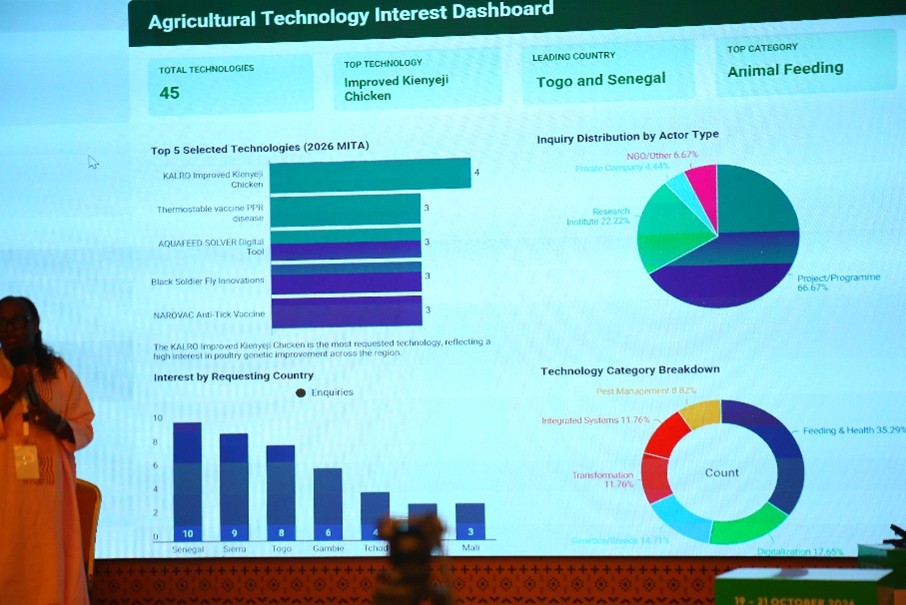
The Thermostable Peste des Petits Ruminants (PPR) Vaccine, supported under Phase II of the Technologies for African Agricultural Transformation (TAAT) programme, ranked among the Top 5 Selected Technologies out of 45 innovations showcased at the event.
The ranking came from the Agricultural Technology Interest Dashboard, presented during the MITA Marketplace Session, which reflected how much attention each technology drew from participants and stakeholders.
Why the vaccine struck a chord
Dependence on continuous cold-chain systems remains a major obstacle to livestock vaccination in many African settings, particularly in remote areas.
By reducing that dependence, the thermostable vaccine opens the door to wider access, higher coverage among small ruminants and stronger regional efforts to control and eradicate PPR.
Interest came from several countries, including Niger and The Gambia, underscoring the vaccine’s relevance across West and Central Africa.
From cassava waste to livestock feed
The vaccine was not the only TAAT innovation to draw a crowd. The High-Quality Cassava Peels (HQCP) technology, supported under TAAT Phase I, caught the attention of stakeholders from both the cassava and livestock value chains.
The idea is simple but powerful: turn cassava processing waste into valuable animal feed. Visitors were keen on its potential to cut feed costs, create business opportunities in feed processing and link the cassava and livestock sectors more closely.
It also fits a circular economy approach, creating value from resources that would otherwise go to waste.
Feeding the future
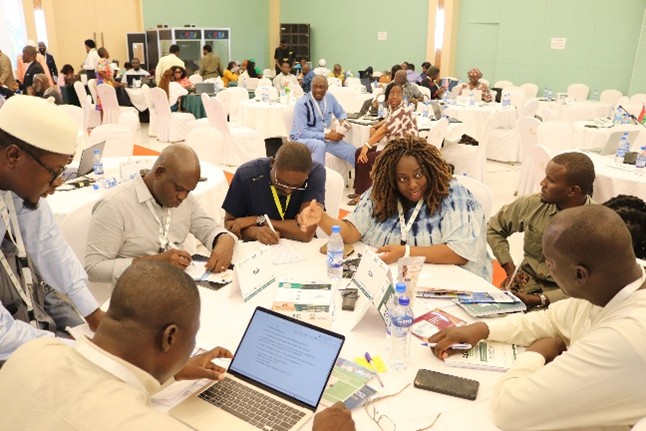
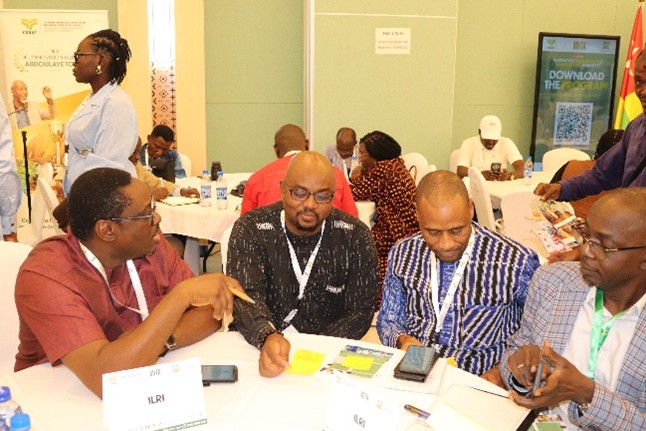
At the ILRI exhibition booth, farmers, government representatives and development organisations also showed strong interest in TAAT Phase II’s improved forage technologies and forage seeds.
Visitors asked about high-yield forage species, improved feed resources, forage seed multiplication and practical ways to raise livestock productivity. The attention underlined a core point: reliable feed is the foundation of more productive, sustainable livestock systems.
Beyond the TAAT booth
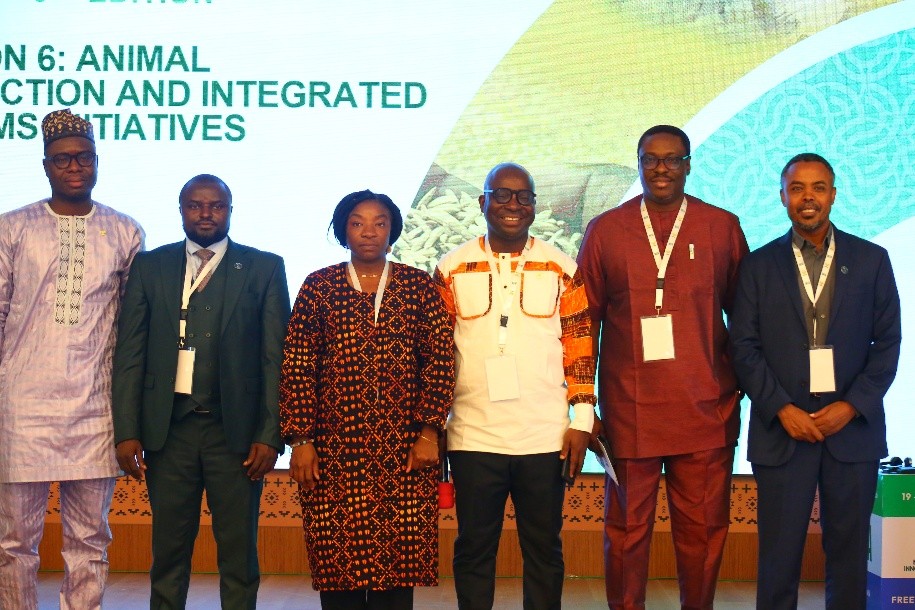
The MITA 2026 conference was held from 19 to 21 October at the Bintumani Hotel in Freetown and organised by the West and Central African Council for Agricultural Research and Development (CORAF).
It brought together researchers, policymakers, development partners, private-sector representatives, farmers and innovators. TAAT took part through its Livestock Compact, led by the International Livestock Research Institute (ILRI).
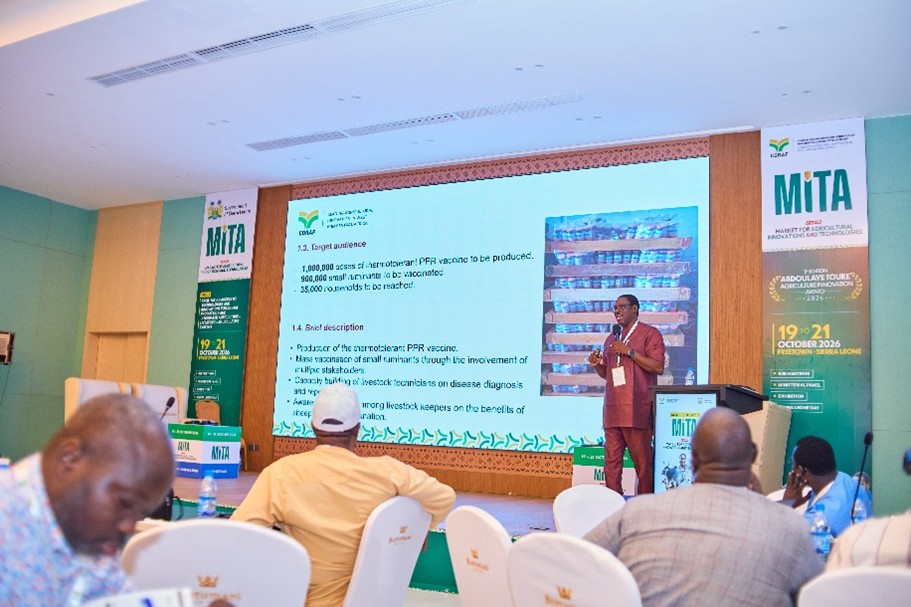
On the second day, Dr Tunde Amole, Leader of the TAAT Livestock Compact, presented ILRI-led innovations and TAAT-supported projects across West and Central Africa. His talk covered livestock feed and forage systems, animal health and disease control, climate resilience, digital advisory and decision-support tools, and sustainable livestock production.
He stressed the role of public-private partnerships in widening access to proven innovations. The discussion that followed focused on practical routes to increase technology uptake across African countries.
Dr Amole said the event offered more than a showcase.
“The interest generated among diverse stakeholders demonstrated the value of platforms that bring proven innovations closer to potential users and partners,” he said.
“The engagement of farmers, government representatives, development organisations and private sector actors creates opportunities for partnerships that can accelerate the adoption and wider deployment of these technologies beyond exhibition spaces.”
The takeaway
MITA 2026 gave TAAT a stage to show what its technologies can do and to find partners who can carry them further.
The message from Freetown was clear: Africa’s agricultural transformation depends not only on developing proven technologies, but also on making them visible, accessible and attractive to the people who can take them forward.
Recent Stories
Related Stories
- TAAT Demonstrates that Food Systems Transformation and Sustainability Can Go Hand in Hand
- Leaders acknowledge TAAT as a bold initiative to achieve a hunger-free world
- Breaking Down the Barriers to Food Security: A Closer Look at TAAT’s role in combating hunger and malnutrition in Sierra Leone
- From Independent Farmers to Certified Seed Entrepreneurs: How TAAT Is Taking Ethiopia’s Wheat Revolution to the Next Level
- Seeds of a Self-Reliant Sierra Leone: Inside the Four-Day Push to Fix the Country’s Seed System