 IITA – Bénin Campus, 08 BP 0932 Tri Postal, Cotonou – République du Bénin
 @Taat_Africa
 TAAT Africa
 @taatafrica
Rwanda: TAAT strengthens aquaculture value chain and boosts sustainable local fish production
Rwanda imports about 70,000 tonnes of frozen fish annually, mainly tilapia, at a cost of more than US$92 million, while domestic aquaculture production remains between 3,000 and 4,000 tonnes per year, insufficient to meet the country’s growing demand.
This persistent gap highlights the need to strengthen local fish production and address the technical and structural constraints affecting Rwanda’s aquaculture value chain.
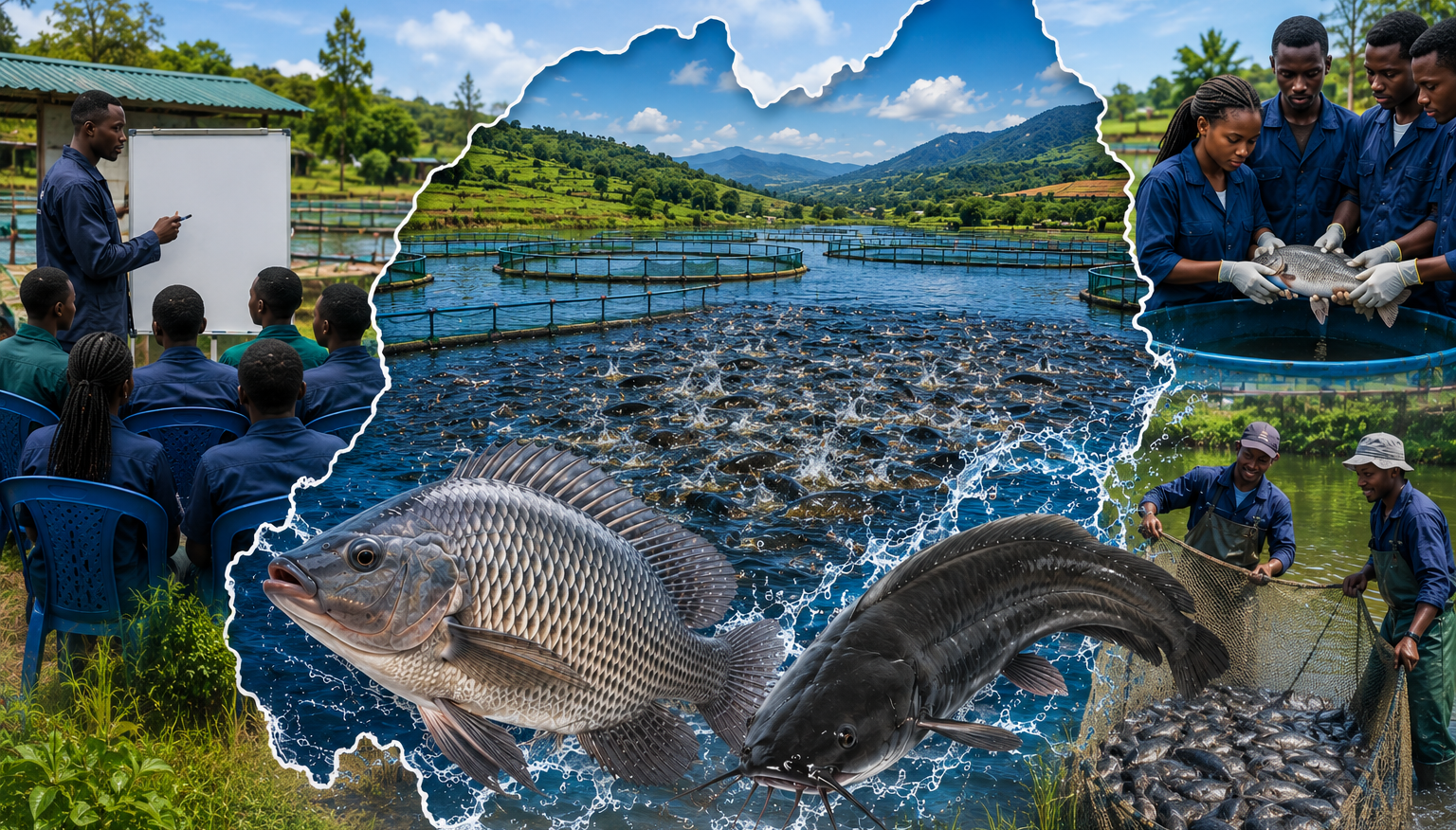
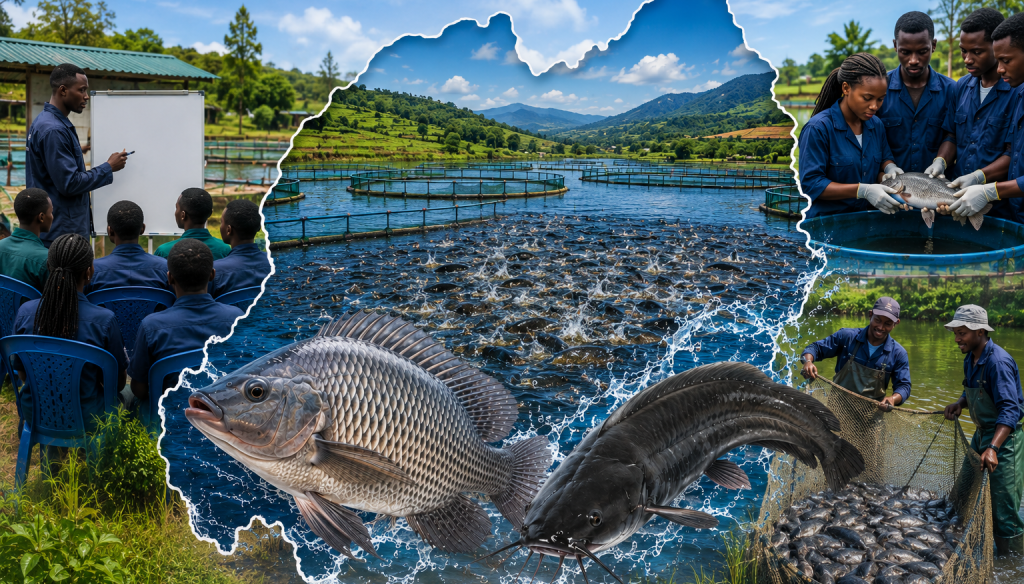
To address these challenges, the Technologies for African Agricultural Transformation (TAAT), through its Fish Compact led by WorldFish, will bring together 52 aquaculture value chain actors for a series of practical Training of Trainers (ToT) workshops from 27 July to 9 August 2026 in Rwanda.
The initiative, organised in collaboration with the Rwanda Agriculture and Animal Resources Development Board (RAB) and Fine Fish Limited, will focus on strengthening capacities in fish seed production, feed formulation and production, fish processing and value addition, as well as aqua-business development.
This ToT comes at a time when Rwanda is seeking to expand aquaculture as an important source of food, nutrition and economic opportunities.
Despite the country’s considerable potential, including its lakes, rivers and reservoirs suitable for aquaculture, the sector continues to face constraints such as inadequate access to quality fingerlings, limited certified hatchery infrastructure, insufficient access to affordable and high-quality fish feed, gaps in technical knowledge and extension services, and post-harvest losses linked to inadequate processing and value addition.
The training programme will address these challenges across several critical stages of the fish value chain.
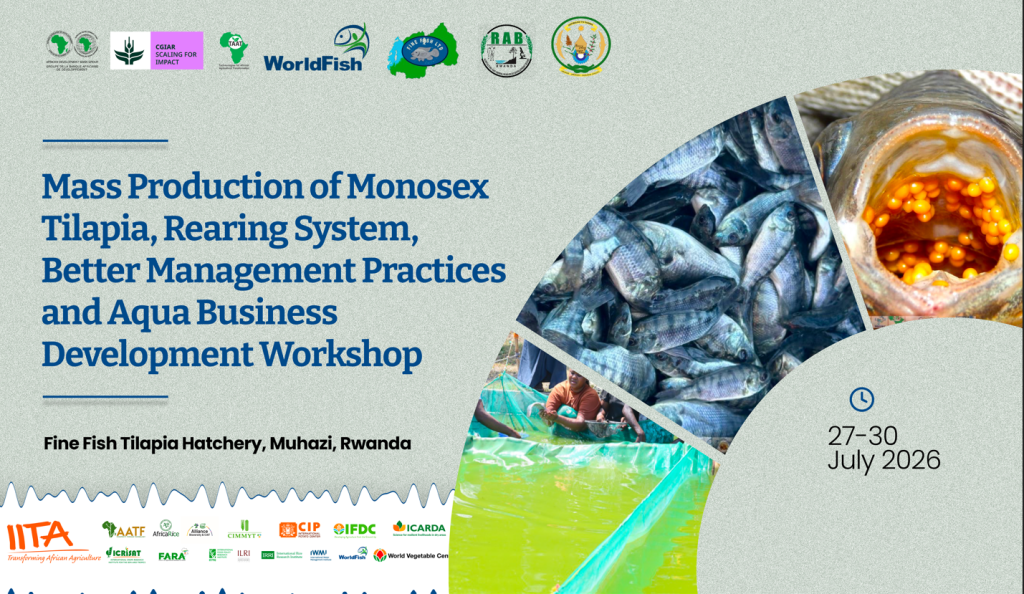
The first Training of Trainers workshop, focused on tilapia seed production, will take place from 27 to 30 July at the Fine Fish Tilapia Hatchery in Muhazi. Participants will learn about tilapia husbandry, carrying capacity, broodstock selection and care, water-quality management, the use of hapas, broodstock sexing, egg collection and incubation, fish health, biosecurity and better management practices.
The programme will also introduce aqua-business development for monosex tilapia fingerling production.
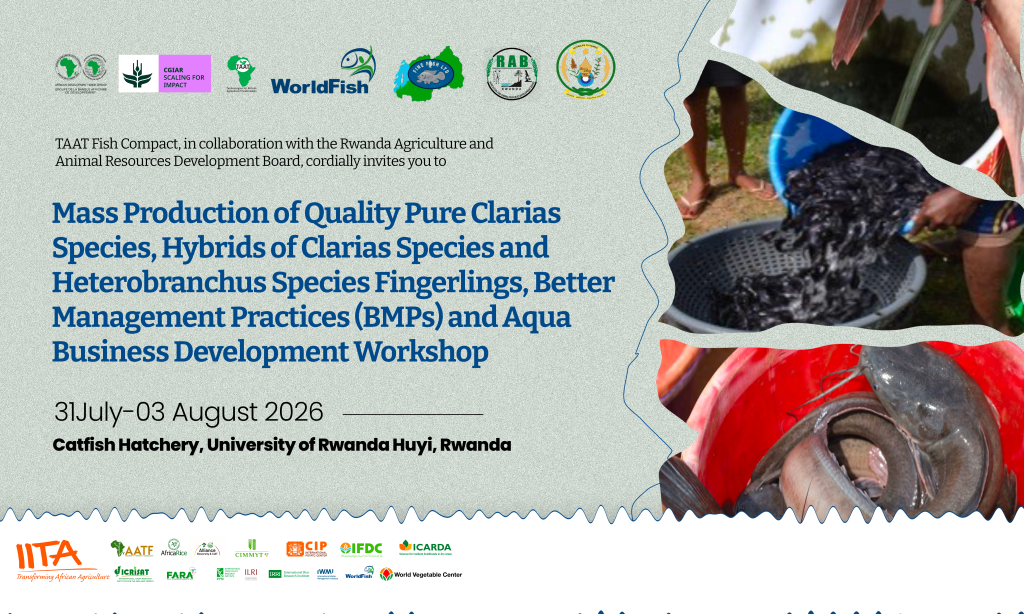
From 31 July to 3 August, the programme will be held at the Catfish Hatchery at the University of Rwanda in Huyi for training in catfish seed production. Participants will explore Clarias gariepinus production, seed management, larval and fingerling nutrition, broodstock management, hypophysation, stripping, fertilisation and incubation, as well as water-quality monitoring and biosecurity. Practical hatchery sessions will allow participants to apply improved techniques in a real production environment.
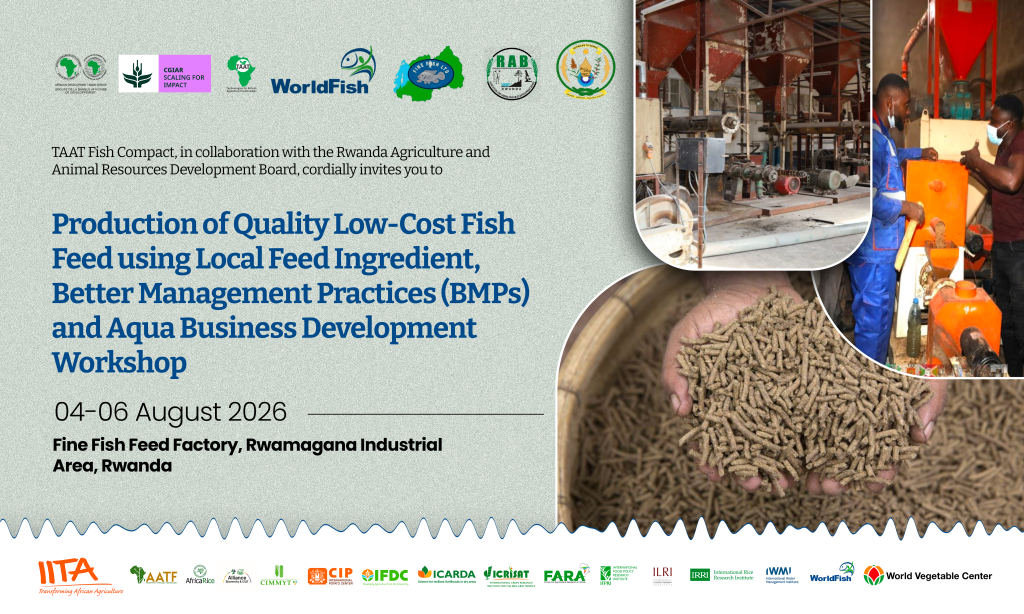
The third workshop, scheduled for 4 to 6 August at the Fine Fish Feed Factory in Rwamagana Industrial Area, will focus on fish feed formulation and production. Participants will receive practical training in feed formulation, production management, safety and biosecurity, while also exploring the business aspects of fish feed production through business planning and group activities.
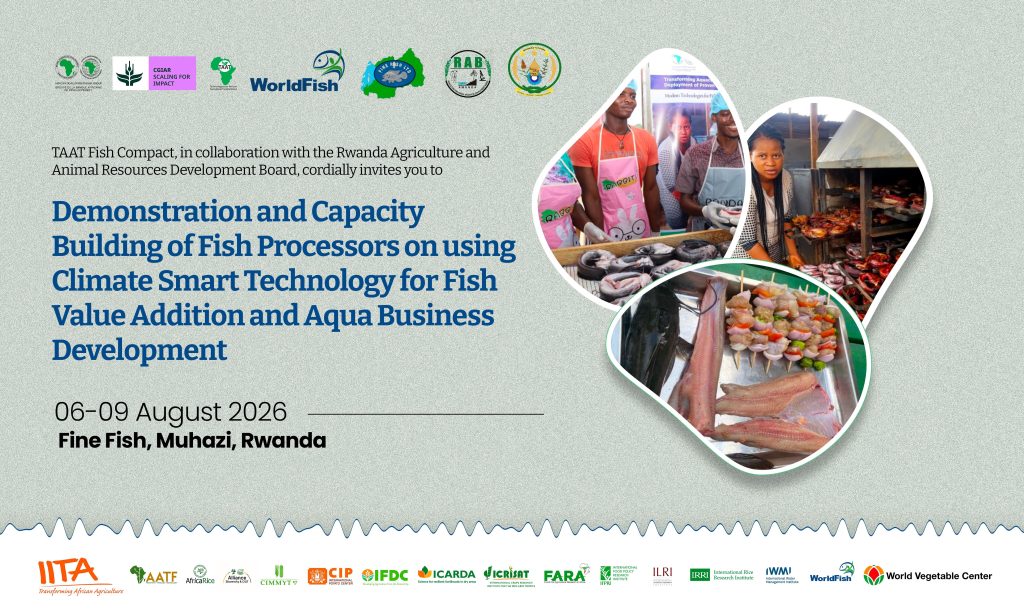
The programme will conclude with a three-day training on fish processing and value addition from 7 to 9 August at Fine Fish in Muhazi. The sessions will cover climate-smart technologies for fish value addition, good processing practices, fish processing techniques, fish by-products, packaging, labelling and marketing. Participants will also engage in practical sessions and explore business planning, value propositions, revenue streams, sales channels, financial forecasting and gross-profit projections.
Through its Training of Trainers approach, TAAT aims to extend the intervention’s reach beyond the 52 direct participants by equipping them with knowledge and practical skills to disseminate to other actors across the aquaculture value chain.
According to Prof. Bernadette Fregene, leader of TAAT Fish Compact, “Our initiative aims to strengthen the capacity of aquaculture stakeholders to sustainably produce high-quality tilapia and catfish fingerlings, independently formulate and produce affordable fish feed using locally available resources, enhance fish processing and value addition, and establish viable, self-sustaining aquaculture enterprises that can contribute to the long-term development of Rwanda’s aquaculture sector.”
By strengthening these critical areas of the aquaculture value chain, TAAT, through its Fish Compact, and its partners seek to contribute to increased productivity and profitability while reducing fish mortality and post-harvest losses. The initiative will also promote collaboration and knowledge exchange among government institutions, research organisations and private-sector actors, supporting Rwanda’s efforts to build a more productive, competitive and sustainable aquaculture sector.
Recent Stories
Related Stories
- TAAT Hosts Training of Trainers Workshop on Aquaculture Technologies in Benin
- From Training to Transformation: How TAAT is Driving Aquaculture Innovation in the DRC
- TAAT fosters Regional Approach to Innovative Wheat Seed Enterprise Development
- Malawi Hosts Soybean Brown Field Day to Showcase TAAT Technologies and Boost Value Addition
- Liberia Hosts Seed Sector Investment Roundtable to Unlock Agricultural Transformation