 IITA – Bénin Campus, 08 BP 0932 Tri Postal, Cotonou – République du Bénin

 @Taat_Africa
 TAAT Africa
 @taatafrica

Africa seeks Coordinated Path to Wheat Self-Sufficiency as TAAT harps on Stronger Seed Systems, Investment and Regional Collaboration
African countries have been urged to accelerate investment in wheat research, irrigation, improved seed systems and regional policy harmonisation to unlock the continent’s wheat production potential and reduce dependence on imports.
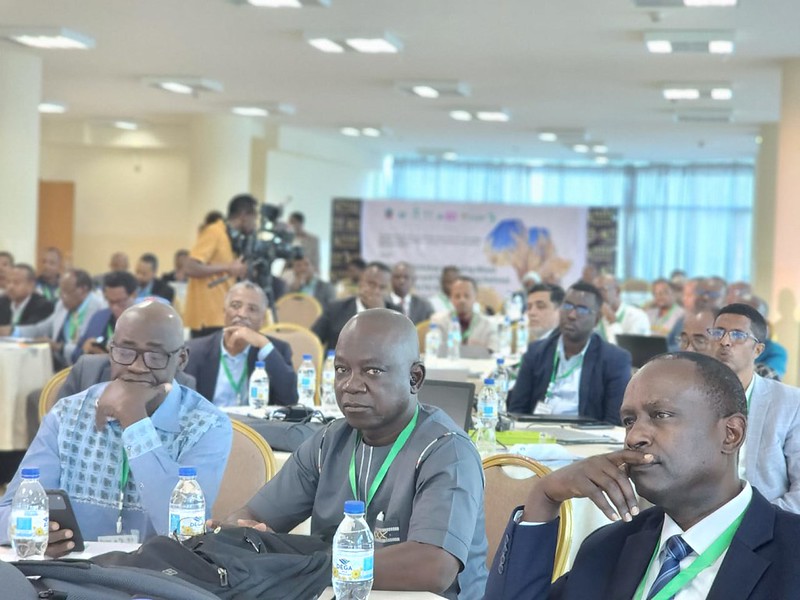
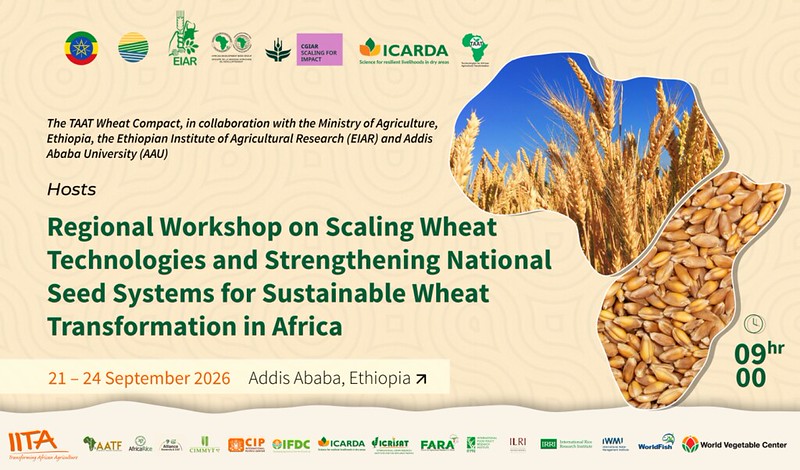
The call was a central outcome of a three-day Regional Workshop on Scaling Wheat Technologies and Strengthening National Seed Systems for Sustainable Wheat Transformation in Africa, held in Addis Ababa, Ethiopia, from 21–23 September 2026. The workshop brought together 69 participants representing governments, agricultural research institutions, extension and regulatory agencies, seed companies, farmer organisations, financial institutions, development partners and other stakeholders from across the continent.
Organised by the Technologies for African Agricultural Transformation (TAAT) Wheat Compact, led by the International Centre for Agricultural Research in the Dry Areas (ICARDA), in collaboration with the Ethiopian Institute of Agricultural Research (EIAR), and funded by the African Development Bank (AfDB), the meeting provided a platform to assess progress, exchange country experiences and identify practical pathways for accelerating wheat technology adoption and strengthening national seed systems.
The workshop comes at a critical time for Africa, as governments seek to strengthen food security, build resilience against global supply disruptions, and reduce exposure to volatile international grain markets.
Participants emphasised that achieving sustainable wheat transformation requires more than developing high-yielding varieties. It demands an integrated agricultural innovation system capable of delivering improved technologies to farmers through functional seed enterprises, effective extension services, supportive policies, reliable markets and sustained public and private investment.
Building on TAAT’s wheat transformation achievements
Participants reviewed achievements under TAAT Phase I and Phase II, recognising the programme’s contribution to demonstrating the potential of improved wheat technologies to expand production, raise productivity and support national food security ambitions.
Experiences from Ethiopia, Kenya, Mali, Nigeria, Sudan, Tanzania and highlighted the opportunities and challenges associated with scaling wheat technologies across diverse agroecological and institutional settings.
Discussions examined how improved and climate-resilient wheat varieties, appropriate agronomic practices, irrigation technologies and stronger seed delivery mechanisms could be deployed more widely to increase productivity and expand wheat cultivation into suitable non-traditional production areas.
The experiences also reinforced an important lesson: technology development alone does not guarantee agricultural transformation. The ability of national institutions and private-sector actors to multiply, certify, distribute and deliver quality seed at the right time and at affordable prices ultimately determines how quickly farmers can benefit from scientific innovations.
The workshop therefore called for a stronger connection between agricultural research, seed production, extension, financing, and market development, ensuring that investments in wheat innovation translate into measurable improvements in farm productivity and national food supplies.
Governments urged to take the lead in wheat transformation
A major recommendation of the workshop was the need for stronger government leadership, national ownership and increased public investment in the wheat sector.
Participants called on African governments to prioritise funding for agricultural research, national breeding programmes, early-generation seed production, certified seed multiplication, irrigation infrastructure, extension services, value addition and market development.
They stressed that wheat transformation must be anchored in clear national strategies and long-term policy commitments, supported by adequate institutional capacity and predictable financing.
Expanding irrigation-based wheat production also emerged as a critical priority. Participants recommended increased investment in irrigation infrastructure and efficient water management systems to improve productivity, strengthen resilience to climate variability and enable wheat production in suitable non-traditional ecologies.
Such investments, they noted, would help countries diversify production environments, reduce overdependence on rain-fed agriculture and create opportunities for year-round wheat cultivation where agroecological conditions permit.
Stronger seed systems at the heart of sustainable wheat production
The workshop identified weaknesses in national seed systems as a major constraint to the widespread adoption of improved wheat varieties.
Participants called for increased production and timely delivery of high-quality early-generation seed (EGS) and certified seed, noting that a reliable seed supply is essential to accelerating varietal replacement and ensuring farmers have access to improved technologies.
They emphasised the need to strengthen collaboration between public research institutions and private-sector seed companies to improve seed multiplication, quality assurance, distribution, and commercial availability.
The recommendations also highlighted the importance of reforming national seed policies and harmonising regulatory frameworks across countries. Greater regional cooperation is needed to facilitate variety release and registration, seed certification, phytosanitary compliance and the efficient cross-border movement of quality seed and agricultural technologies.
Participants observed that regulatory fragmentation and lengthy approval processes can delay the introduction and dissemination of improved varieties, limiting the speed at which farmers access innovations developed through national and regional research programmes.
Stronger coordination among national regulatory agencies was therefore considered essential to create more efficient, predictable, and integrated regional seed markets.
Digital innovation and partnerships to accelerate technology delivery
Recognising the growing importance of digitalisation in modern agricultural systems, the workshop recommended institutionalising digital seed systems and data platforms within national agricultural institutions.
Digital tools, participants noted, can improve seed demand forecasting, production planning, traceability, transparency, quality assurance and coordination among seed producers, regulators, distributors, and farmers.
However, their effectiveness will depend on reliable data, interoperability between platforms, institutional ownership, and sustainable financing.
The workshop also underscored the importance of multi-stakeholder partnerships involving governments, research organisations, seed enterprises, farmer organisations, financial institutions and development partners.
Such partnerships are critical to mobilising resources, strengthening technical capacity, improving access to technologies and connecting agricultural research with commercial opportunities and farmer demand.
Participants called for stronger engagement of financial institutions and private investors to address financing gaps across the wheat value chain, particularly in seed production, irrigation, mechanisation, processing and market development.
AfricaWheat positioned as a continental platform for coordinated action
Another significant recommendation was to strengthen the Africa Wheat Development Network (AfricaWheat) as a platform to advance coordinated wheat research and development across the continent.
The network is expected to facilitate regional knowledge exchange, capacity development, technology clearance and sharing, resource mobilisation and collaborative action among national agricultural research systems and other wheat-sector stakeholders.
Participants also called for increased investment in national wheat breeding and phytosanitary capacities, including modern breeding infrastructure, human resource development, seed health facilities and quarantine systems.
These investments would strengthen the ability of African countries to develop, test, release and multiply improved wheat varieties while ensuring that seed movement across borders meets appropriate phytosanitary standards.
The recommendations reflect a broader recognition that sustainable wheat transformation requires stronger national institutions working within a more integrated continental innovation and seed system.
From proven technologies to continental wheat self-sufficiency
In its concluding communiqué, the workshop recognised the significant contribution of TAAT in demonstrating the transformative potential of improved wheat technologies across Africa.
Participants called on governments, regional organisations, development partners and the private sector to consolidate these achievements through coordinated action, stronger national seed systems and sustained investment in agricultural innovation.
They reaffirmed their commitment to working together to accelerate the dissemination of proven technologies, improve farmers’ access to quality seed, strengthen regional collaboration and advance Africa’s journey towards wheat self-sufficiency, food security and sovereignty.
The workshop’s recommendations signal an important shift in focus: from the successful demonstration of improved wheat technologies to building the institutional, policy, financing and commercial systems required to sustain their adoption at scale.
For TAAT, this reinforces the importance of its technology delivery model in connecting agricultural research and proven innovations with national development priorities, investment programmes and the farmers who stand to benefit.
The central message emerging from Addis Ababa is clear: Africa’s wheat transformation will depend not only on what its research institutions can develop, but also on how effectively governments, seed companies, regulators, development partners and farmers work together to deliver those innovations at scale.
The communiqué was adopted on 23 September 2026 in Addis Ababa, Ethiopia, and signed by Dr Wuletaw Tadesse, TAAT Wheat Compact Leader and Lead Wheat Breeder at ICARDA.
Recent Stories
Related Stories
- TAAT Demonstrates that Food Systems Transformation and Sustainability Can Go Hand in Hand
- Africa’s Wheat Revolution Gets a Regional Push as Experts Gather in Addis Ababa
- TAAT fosters Regional Approach to Innovative Wheat Seed Enterprise Development
- African Development Bank approves phase II of TAAT programme
- TAAT Renews commitment to transforming irrigation in Africa