 IITA – Bénin Campus, 08 BP 0932 Tri Postal, Cotonou – République du Bénin
 @Taat_Africa
 TAAT Africa
 @taatafrica
AfDB Launches TAAT Phase III to Accelerate Africa’s Food Systems Transformation
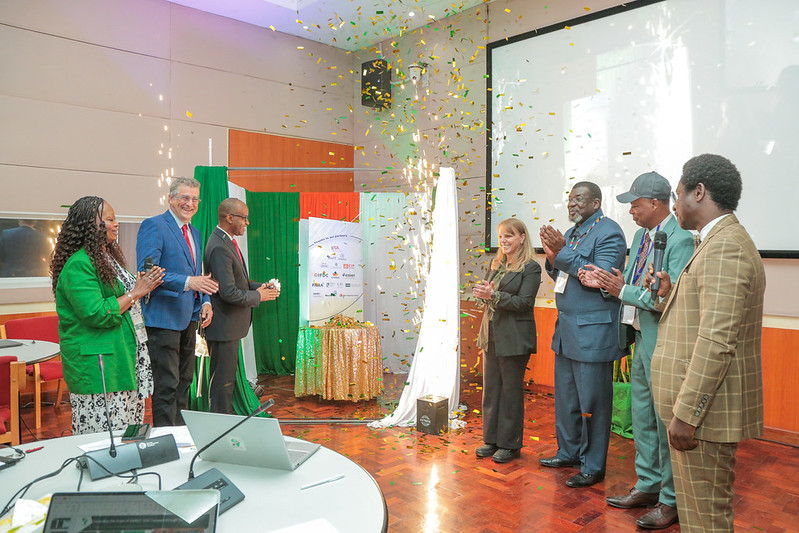
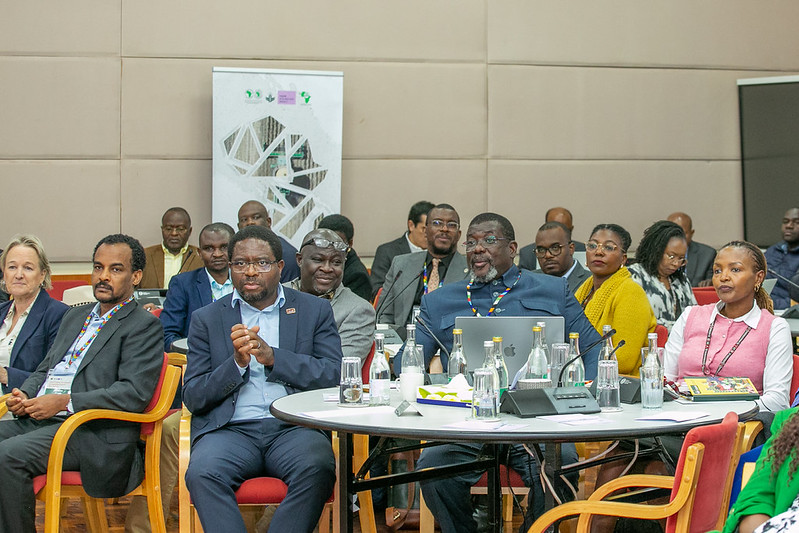
The African Development Bank (AfDB) has formally launched Phase III of the Technologies for African Agricultural Transformation (TAAT) on 29th of June 2026, marking a significant milestone in Africa’s journey toward food security, climate resilience, and sustainable agricultural growth.
The launch, which was held at the ILRI Campus in Nairobi, Kenya, follows the Bank’s Board approval of an additional US$16 million to implement the programme’s third phase, reaffirming the Bank’s commitment to scaling proven agricultural technologies that improve productivity, strengthen seed systems, and transform livelihoods across the continent.
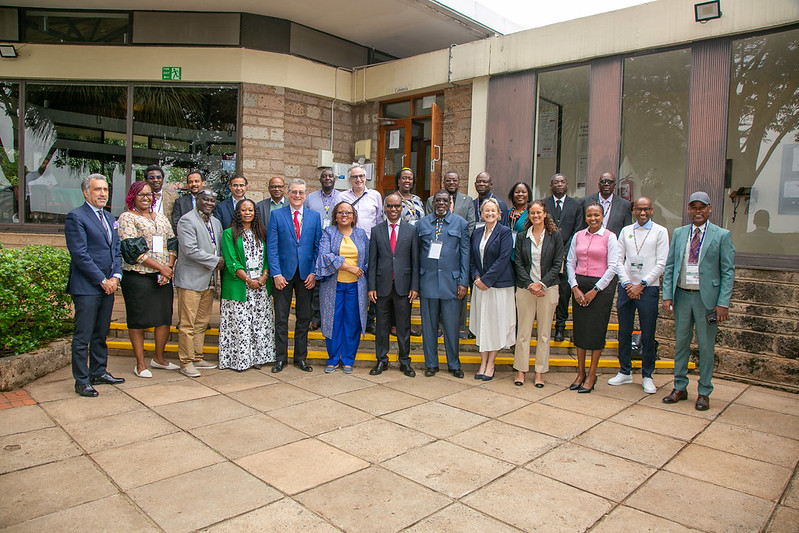
The TAAT III launch brought together a number of key institutions playing a critical role in driving agricultural transformation across Africa, including International Institute of Tropical Agriculture (IITA), the Gates Foundation, ILRI, AATF, AfricaRice, Alliance Biodiversity-CIAT, CIMMYT, CIP, ICARDA, FARA, ICRISAT, IFPRI, IRRI, IWMI, WorldFish, World Vegetable Center, Landscape Alliance, The Economics of Land Degradation Initiative, the African Union Commission, Sasakawa Africa Association, CORAF, the Kenya Agriculture and Livestock Research Organization (KALRO), African Agricultural Leadership Institute, Zambia Agricultural Research Institute, TASAI, ACTESA, Savannah Agricultural Research Institute, Ghana
Implemented by the International Institute of Tropical Agriculture (IITA) on behalf of CGIAR Centres and African Agricultural Research, Innovation and Education Institutions (AARIEIs), TAAT has evolved into Africa’s largest agricultural technology delivery platform.
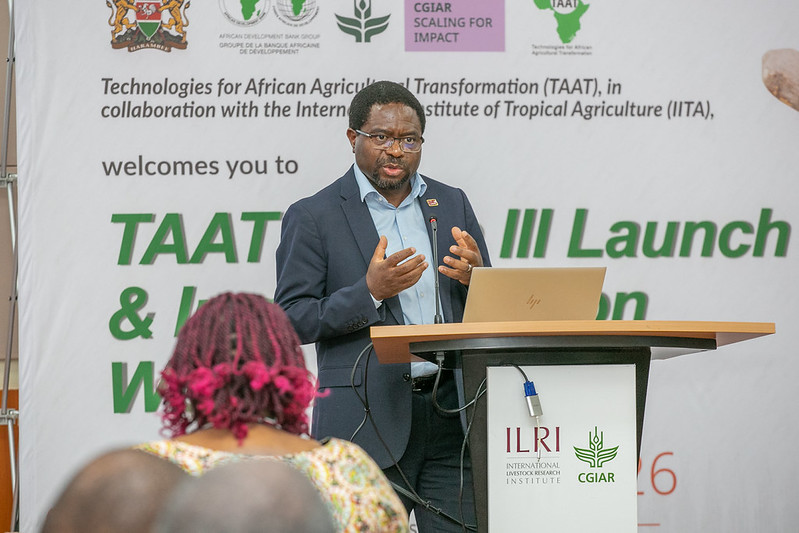
The Director General of the International Livestock Research Institute (ILRI), Prof Appolinaire Djikeng, in his welcome remarks, hailed the TAAT Clearinghouse model as one of the most important achievements of the TAAT programme. “The TAAT Clearinghouse has become much more than a technology brokerage arm. It is now a broker of innovation, a connector of science and investment, a facilitator of partnerships, and a catalyst for continental agricultural transformation,” Prof Djikeng said.
In her opening remarks, the CGIAR Chief Scientist, Dr Sandra Milach, commended the vision and achievements of the TAAT Programme over the past eight years. She added further that “the transition of the TAAT Clearinghouse into CGIAR represents a strategic institutional evolution that ensures that the TAAT infrastructure becomes a permanent continental asset capable of connecting CGIAR science to national priorities, development finance, private-sector investment and country implementation.”
A key component of TAAT III is building the TAAT infrastructure’s sustainability. To ensure sustainability beyond direct funding from the Bank, the TAAT Clearinghouse, the technical arm of the TAAT programme, will transition into the CGIAR and will be hosted within the Scaling for Impact programme. This will ensure the critical work being done by TAAT goes on.
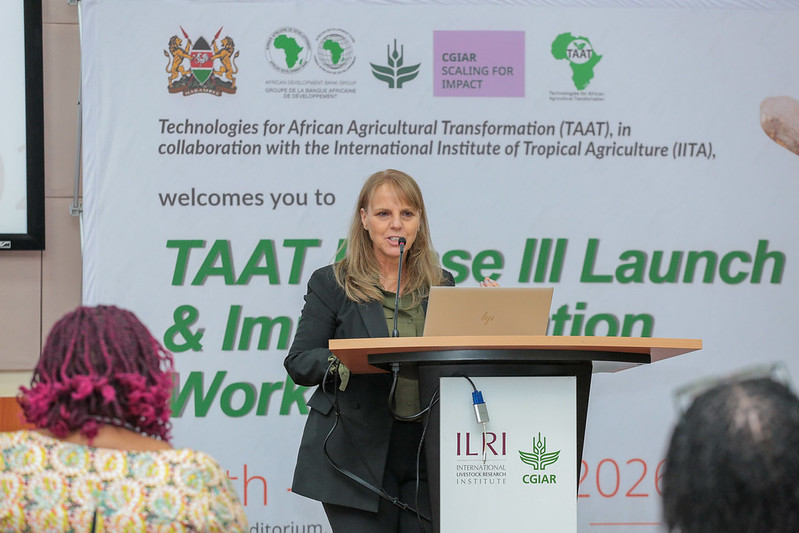
In his keynote remarks presented virtually, Dr Martin Fregene, the Officer in Charge of the Vice Presidency for Agriculture, Human and Social Development at the African Development Bank, affirmed that no institution can transform African agriculture alone. TAAT III, according to him, demonstrates what is possible when governments, CGIAR, development partners, financial institutions, and the private sector work together around a common objective.
“Let us make TAAT III the platform that permanently connects science to finance, partnerships to implementation, and innovation to impact. Together, we can build resilient food systems that feed Africa, Dr Fregene added.
Eight Years of Proven Impact
Since its establishment in 2018 under the African Development Bank’s Feed Africa Strategy, TAAT has demonstrated that agricultural transformation is possible when proven technologies are delivered at scale.
To date, the programme has:
- Reached more than 25 million smallholder farmers
- Increased productivity by up to 69 per cent
- Influenced US$3.18 billion in agricultural investments
- Supported the distribution of 488,000 tonnes of improved climate-resilient seed
- Facilitated the delivery of 3.1 million tonnes of fertiliser under the African Emergency Food Production Facility
- Produced over 4,333 metric tonnes of breeder seed
- Enabled production of 309,073 metric tonnes of certified seed
- Validated more than 180 proven agricultural technologies
- Developed national Seed Roadmaps in eight African countries
Through commodity compacts, policy reforms, digital innovation, and strategic partnerships, TAAT has helped governments accelerate access to improved seed, climate-smart technologies, mechanisation, digital extension services, and resilient farming systems.
Building on Success
Phase III builds upon the remarkable achievements of TAAT I and TAAT II while placing greater emphasis on sustainability.
The programme will strengthen Africa’s Regional Technology Delivery Infrastructure by increasing certified seed production, expanding digital advisory services, enhancing climate resilience, and integrating TAAT technologies into large-scale agricultural investment programmes financed by governments, development partners, international financial institutions, and the private sector.
Unlike previous phases, TAAT III places sustainability at the centre of implementation through stronger private-sector participation, innovative financing models, and demand-driven technical assistance to African countries.
The programme will also support countries in mainstreaming proven agricultural technologies into national investment programmes, while strengthening regional seed systems and technology-delivery mechanisms.
Transforming Seed Systems Across Africa
One of TAAT’s most significant achievements has been strengthening Africa’s seed sector.
Working with governments and partners, TAAT has developed comprehensive national Seed Roadmaps and investment plans in Sierra Leone, Liberia, Guinea, Benin, Côte d’Ivoire, Kenya, Cameroon, and Zimbabwe.
These investment blueprints identify seed demand, supply gaps, financing needs, policy reforms, institutional strengthening, and private-sector opportunities required to build sustainable national seed systems.
Evidence from TAAT demonstrates that combining certified improved seed with Good Agronomic Practices can more than double crop yields while improving resilience to climate change.
Digital Agriculture for a New Generation
TAAT III also accelerates Africa’s digital agricultural transformation.
The programme will expand e-extension platforms, digital technology catalogues, ICT-enabled advisory systems, and climate information services that connect farmers, governments, researchers, and investors.
More than 180 validated technologies are already profiled within TAAT’s digital technology catalogues (ecatalogs), enabling governments and development partners to identify and deploy the most appropriate technologies for national priorities.
Additional 14 million smallholder farmers
Over the next phase, TAAT seeks to reach an additional 14 million smallholder farmers, while strengthening agricultural institutions, supporting youth and women agripreneurs, increasing private-sector investment, and building resilient food systems across Africa.
By promoting climate-smart agriculture, strengthening agricultural markets, improving access to quality seed, and enhancing regional food security, the TAAT programme aligns closely with the African Development Bank’s strategic priorities of mobilising vast capital, reforming financial architectures, harnessing demographic potential, and accelerating industrialisation.
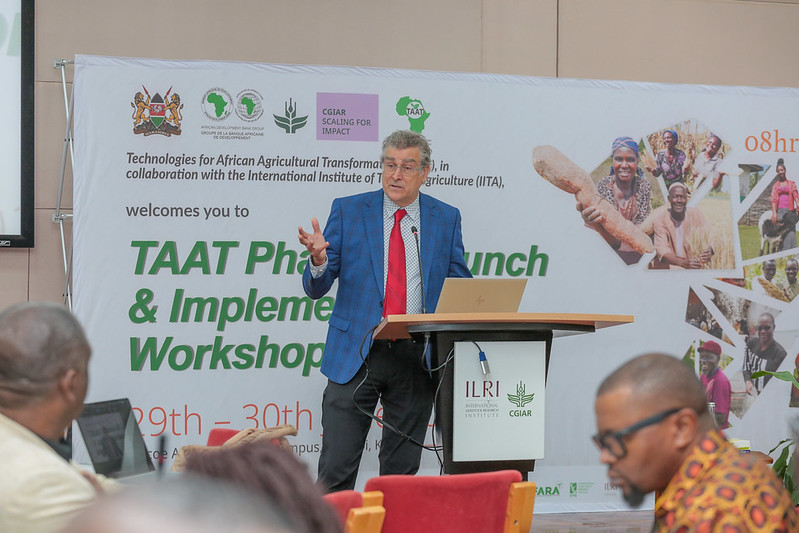
“TAAT III aligns with (i) the Four Cardinal Points of the vision for the African Development Bank Group, particularly the third and fourth cardinal points i.e., turning Africa’s demographics into a dividend by investing in youth and women, and building more resilient infrastructure and adding real value, to industrialise and integrate our market,” Dr Innocent Musabyimana,Chief Technology Officer and TAAT Coordinator at the AfDB said.
TAAT Phase III, according to Dr Tim Krupnik, the Director of the CGIAR Scaling for Impact Programme, presents an unprecedented opportunity for the CGIAR to become the science engine that we’d like to see powering Africa’s agricultural transformation. “It also provides an opportunity to be a template that can be utilised and adapted to improve the work with other financial institutions, through strong partnerships to accelerate impact at scale,” Dr Krupnik said.
As Africa continues to confront climate change, supply chain disruptions, and rising food demand, TAAT Phase III represents a new chapter in transforming agricultural innovation into large-scale development impact.
With science, partnerships, and investment working together, TAAT is helping Africa move beyond technology development toward technology delivery—ensuring millions of farmers gain access to the innovations they need to feed the continent and build prosperous rural economies.
Recent Stories
Related Stories
- TAAT Demonstrates that Food Systems Transformation and Sustainability Can Go Hand in Hand
- Inspired by Nature for Climate and for the Future: How TAAT is Scaling Nature-Based Agricultural Solutions Across Africa
- TAAT moves to Accelerate Food Systems Transformation in Malawi, Mozambique, Nigeria, Rwanda, Tanzania and Uganda
- African Development Bank approves Phase III of TAAT programme
- How TAAT is Anchoring Kenya’s push for Self-Sufficiency in Maize