 IITA – Bénin Campus, 08 BP 0932 Tri Postal, Cotonou – République du Bénin
 @Taat_Africa
 TAAT Africa
 @taatafrica
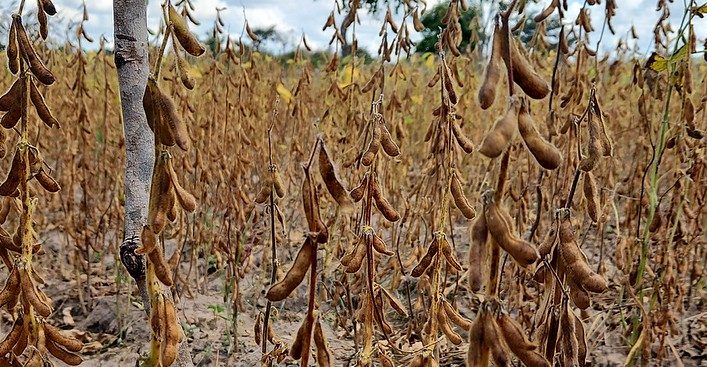
Malawi: How TAAT is Unlocking Soybean Productivity for improved human and animal nutrition
Malawi currently ranks as the world’s most tobacco-dependent economy, with the crop accounting for nearly 70% of its foreign-exchange earnings.
This narrow reliance has left the nation vulnerable to global market shifts, a situation that has recently been worsened by acute foreign exchange shortages and a severe fuel crisis.
To build a more resilient floor for the economy, the Soybean and Youth in Agribusiness (ENABLE-TAAT) Compacts of the Technologies for African Agricultural Transformation (TAAT) programme, in partnership with the Ministry of Agriculture, Irrigation and Water Development (MoAIWD), Department of Agricultural Research Services (DARS), are working to establish soybean as a viable, high-value alternative.
Drive for Diversification
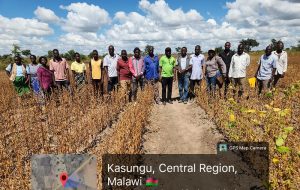
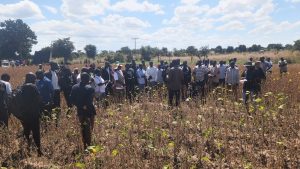
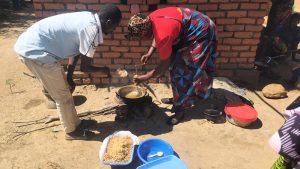
From April 22nd to 24th, 2026, the two TAAT Compacts led by the International Institute of Tropical Agriculture (IITA) partnered with DARS to host an on-site processing and a Farmers’ Brown Field Day.
Held at the Kapaladzala EPA in Kasungu District, the event followed the theme: “Unlocking TAAT Soybean production and processing technologies for improved human and animal nutrition.” This gathering served as a practical demonstration of moving beyond theory to show how modern agricultural technologies can be integrated directly into the national economy
Variety Performance & Technical Support
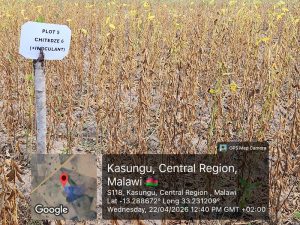
A central focus of the field day was the technical validation of climate-resilient varieties. Of the five varieties on display, Chitedze 6, Chitedze 7, and Serenade SC showed the highest resilience to current climatic conditions in Kasungu. DARS representatives noted that Kasungu’s soil, combined with these specific seeds, creates an ideal environment for high-yield production.
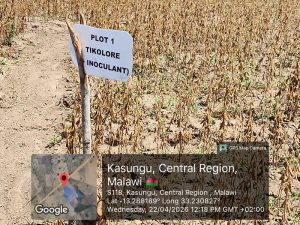
These varieties, specifically Chitedze 6, 7, and Tikolore, are of IITA origin. This highlights a deep institutional partnership in which IITA develops genetic germplasm and provides technical capacity for DARS to manage a robust national breeding program. Traditional farming methods in Malawi often yield only 600–800 kg/ha, but these improved varieties, when paired with the TAAT technology package (improved seed, fertiliser, inoculant, and Good Agricultural Practices), have the potential to reach 3–4 t/ha
The $3 Business Case: A “Forex” Argument
In a nation facing a foreign exchange crisis, the most compelling evidence presented was the cost gap between synthetic fertiliser and organic inoculants. In Malawi, a single bag of NPK fertiliser is priced at approximately 220,000 MWK ($125.40 USD), and prices are rising. For a one-hectare field, a farmer typically needs two bags.
In contrast, six sachets of Biofix inoculant, the amount required for the same hectare, costs just 6,000 MWK (roughly $3 USD). Properly inoculated soybeans extract the majority of their nitrogen naturally from the air, meaning these $3 sachets allow farmers to achieve yields nearly equivalent to expensive synthetic fertilisers.
Switching to this solution allows farmers to reduce their primary input expenses by 98%, providing a vital financial lifeline during the country’s ongoing economic crisis.
Voices from the Field
Dr Chikagwa Malunga, Senior Deputy Director of Agriculture Research at DARS-Malawi, urged the 200 participants (62% of whom were youth) to embrace soybean agribusiness to counter local malnutrition and unemployment. Profitable agribusiness, she noted, provides a reason for youth to “stop going to look for greener pastures where they are uncertain of.”
This shift toward market-led farming is already yielding results. Maxwell Pansipamtima Nyirenda, Secretary for the Bondwe Cooperative, reported that his members have approximately 150 bags of soybeans ready for market, attributing the milestone directly to the skills gained through the TAAT/IITA-DARS initiative.
Youth agripreneurs like Timothy Munthali, CEO of Tawonga Ediles, also led sessions on value addition, turning raw soybeans into nutritious food products that surprised many attendees with their quality and market potential.
The market logic is increasingly clear to local growers. While maize currently fetches approximately 400 MWK/kg, soybean grain is valued at 1,600 MWK/kg. This fourfold increase in value, combined with lower production costs, is changing how farmers approach their land.
Beyond direct profits, the TAAT compact is actively promoting soybeans as a strategic rotation crop for Malawi’s traditional maize fields. Continuous maize cultivation heavily depletes the land; therefore, introducing soybeans serves as a vital Good Agricultural Practice (GAP) that naturally fixes nitrogen and restores essential soil nutrients to the staple crop fields.
Strategic Partnerships for National Scaling
The “Science of Scaling” requires innovative finance alongside good seeds. Mr James Mtiesa, Agronomy Manager at SeedCo Malawi, detailed a “Prepayment Programme” that allows farmers to secure quality seeds and fertilisers six months before the season begins. This enables farmers to “lock down” their inputs and avoid late-season price volatility.
The presence of representatives from Sustainably Growing Africa’s Food Systems (AGRA), International Fund for Agricultural Development (IFAD), and the Kasungu Agricultural Development Division (ADD) underscored the broad institutional support for this initiative. Kasungu ADD operates as a direct regional unit under the Ministry of Agriculture, Irrigation and Water Development (MoAIWD), highlighting the deep public-sector engagement at the field level.
TAAT is aligning these interventions with the Sustainable Agricultural Production Programme Phase II (SAPP II)—an initiative jointly funded by IFAD, the EU, and MoAIWD—ensuring that these technologies move beyond demonstration plots to drive national economic transformation.
Modernising seed systems
The TAAT/IITA-DARS partnership is fundamentally modernising Malawi’s seed system by shifting the focus to a market-led business case. This approach directly reinforces the Ministry of Agriculture, Irrigation and Water Development (MoAIWD) ‘s current national agenda, which prioritises accelerating agricultural commercialisation, improving rural irrigation, and aligning with the Malawi Vision 2063 development strategy.
This initiative bridges the gap between global research and field reality, making climate-resilient varieties and low-cost technologies accessible to the smallholders who need them most. Soybean is no longer just a crop in this era of economic uncertainty; it is “Green Gold,” securing both farmers’ livelihoods and the nation’s economic future.
Recent Stories
Related Stories
- Malawi Hosts Soybean Brown Field Day to Showcase TAAT Technologies and Boost Value Addition
- Kenya: TAAT holds ToT Workshop on Soybean Agronomy, Seed Production and Entrepreneurship
- TAAT fosters Regional Approach to Innovative Wheat Seed Enterprise Development
- Guinea-Bissau: How TAAT is Cultivating the Next Generation of Agribusiness Leaders
- Comoros: TAAT targets Food Systems Resilience through Innovations and Entrepreneurship