 IITA – Bénin Campus, 08 BP 0932 Tri Postal, Cotonou – République du Bénin
 @Taat_Africa
 TAAT Africa
 @taatafrica
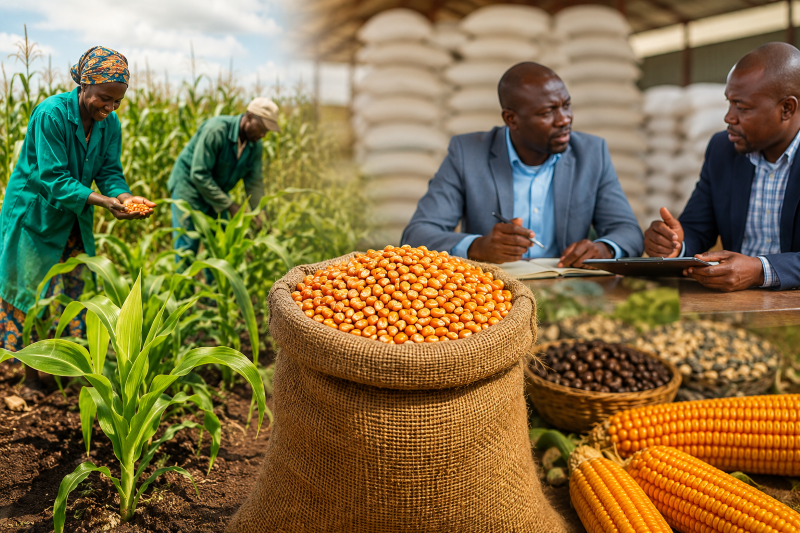
TAAT and Partners present Zambia’s Seed Sector Assessment to Stakeholders
Through the Technologies for African Agricultural Transformation (TAAT) programme, efforts are underway to help Zambia strengthen its seed sector by generating evidence, fostering dialogue among key stakeholders and identifying practical priorities for action.
Zambia has built one of the most dynamic formal seed sectors in Africa, particularly in maize, where the country has emerged as a major producer, importer and regional exporter. Yet, behind this growing capacity are persistent challenges that continue to affect farmers’ access to quality seed, including counterfeit seed, gaps in extension services and uneven agro-dealer coverage.
Against this backdrop, TAAT is supporting a process designed to better understand these challenges and translate evidence into collective action. With support from the TAAT’s Policy and Maize Compacts led by the African Agricultural Technology Foundation (AATF), the African Seed Access Index (TASAI) is conducting a comprehensive assessment of Zambia’s formal seed sector.
Undertaken between November 2025 and April 2026, the assessment examined five key areas: research and development, industry competitiveness, seed policy and regulations, institutional capacity, and services to smallholder farmers.
The assessment came at a significant moment for Zambia’s seed industry. The country is the largest maize seed producer among the ten leading countries assessed by TASAI and is also Africa’s largest maize seed importer and a major regional exporter.
During the 2024–2025 marketing season, Zambia exported more than 92,000 metric tonnes of seed to 31 countries. Its seed sector is supported by an active research and breeding base, with 52 breeders working across the five focus crops assessed by TASAI, while 69 new varieties were released between 2023 and 2025.
However, the scale of the industry does not automatically translate into equitable access to quality seed for smallholder farmers. Counterfeit and illegal seed remain among the sector’s most significant concerns, with 24,023 metric tonnes confiscated during the 2024–2025 marketing season. At the same time, extension services remain overstretched, while rural farmers continue to face gaps in agro-dealer coverage.
These constraints underline the need to strengthen not only seed production, but also the wider system through which quality seed reaches farmers.
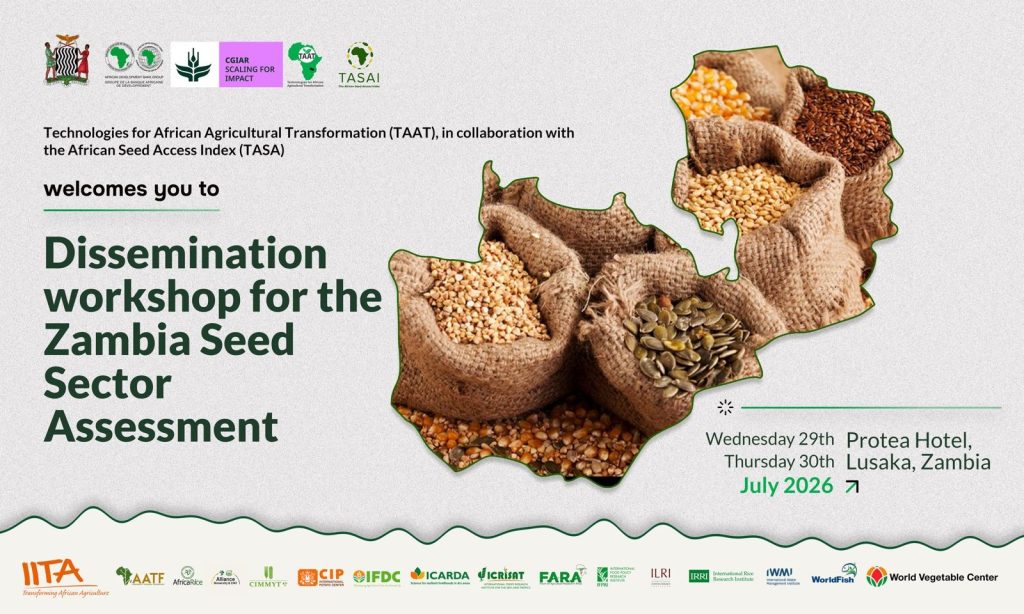
It is within this context that TAAT is supporting a process that moves beyond diagnosis towards collective action. On 29 and 30 July 2026, seed-sector stakeholders will gather at the Protea Hotel in Lusaka for a dissemination and validation workshop organised by TASAI in close collaboration with the Zambia Seed Trade Association (ZASTA).
The meeting is expected to bring together between 35 and 40 actors from across Zambia’s seed industry to review the assessment findings, validate key conclusions and contribute to identifying priorities for further action.
The workshop will provide an opportunity for key institutions representing seed regulation, research and the private sector to examine the findings and discuss the priorities emerging from the assessment. These include the Seed Certification and Control Institute, the ZASTA and the Zambia Agriculture Research Institute (ZARI).
Their contributions will help address issues ranging from seed quality assurance, seed trade and sector development to breeding programmes, basic seed production, coordination and collaboration between research institutions and private-sector actors.
The process will also introduce participants to the SeedSAT approach to seed-systems analysis. Through group work, stakeholders will assess indicators covering breeding and variety release, early-generation seed, commercial seed production, marketing and distribution, farmer awareness, quality assurance, policy and regulation, as well as national planning and coordination.
The resulting insights and recommendations will complement the assessment findings and help define priority areas for action across Zambia’s seed system.
According to Solomon Gizaw, Head of the TAAT Clearinghouse, “Generating evidence is only the first step. The real value lies in bringing stakeholders together to use that evidence to shape better policies, stronger institutions and practical actions. Through this process, TAAT is supporting Zambia in building the enabling environment needed to ensure that quality seed reaches farmers more reliably and contributes to lasting agricultural transformation.”
Recognising that agricultural transformation depends on more than the availability of technologies alone, Dr Munyaradzi Jonga, Leader of the TAAT Maize Compact, said, “For TAAT, this approach reflects the importance of looking at agricultural transformation beyond the availability of technologies alone. A strong seed system requires effective research and breeding, a competitive seed industry, functioning regulatory institutions, reliable quality assurance, efficient distribution networks and informed farmers able to access and use improved seed.”
“By supporting a structured assessment and bringing key stakeholders together around a common evidence base, TAAT is helping create a foundation for more targeted interventions in Zambia’s seed sector,” he also added
The workshop is therefore expected to serve not only as a platform for presenting findings, but also as a mechanism for shaping the next steps. Stakeholder comments and proposals will feed into the final Zambia Seed Sector Assessment report. At the same time, validated priorities and additional SeedSAT data will contribute to further analysis of the country’s seed system.
As Zambia continues to strengthen its position as a major regional seed hub, the challenge will be to ensure that the strength of its seed industry translates into wider and more reliable access to quality seed for smallholder farmers.
Through this process, TAAT is helping Zambia turn evidence into coordinated action, strengthening the foundations of a seed system capable of delivering quality seed more reliably to farmers and supporting sustainable agricultural transformation.
Recent Stories
Related Stories
- Zimbabwe Hosts National Seed Summit to Accelerate Food Systems Transformation
- Liberia Hosts Seed Sector Investment Roundtable to Unlock Agricultural Transformation
- TAAT set to scale Regenerative Agriculture in the Central African Republic
- South Sudan: TAAT holds High-level Consultative Workshop on Food Systems Transformation
- Seeing Is Believing: Nigeria’s Seed Industry Heads to the Field to Test Africa’s Next Generation of Crops